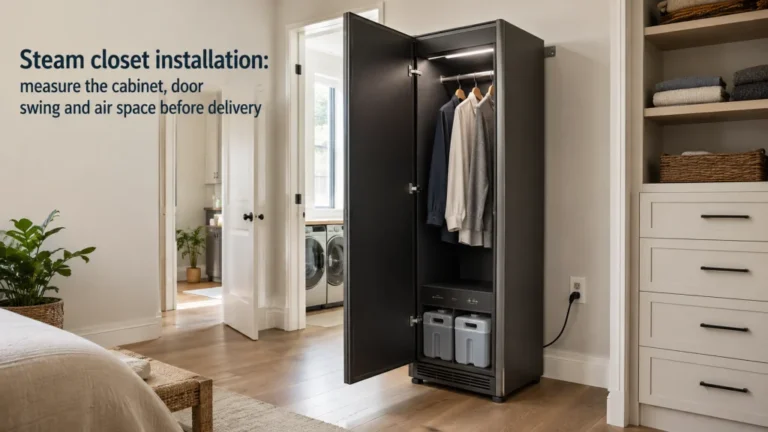
Steam closet troubleshooting is safest when you first separate normal cycle behavior from a problem the owner can actually correct. Start with the exact model, the visible message or symptom, and the user-accessible state of the door, water tanks, filters, garment load, and selected cycle. Damp clothes, lingering odor, wrinkles, pauses, and operating noises do not all point to the same cause, and a system error should not be treated like a loading mistake. The goal is to finish with one of four outcomes: correct the use condition, perform documented maintenance, confirm normal operation, or stop and use qualified service.
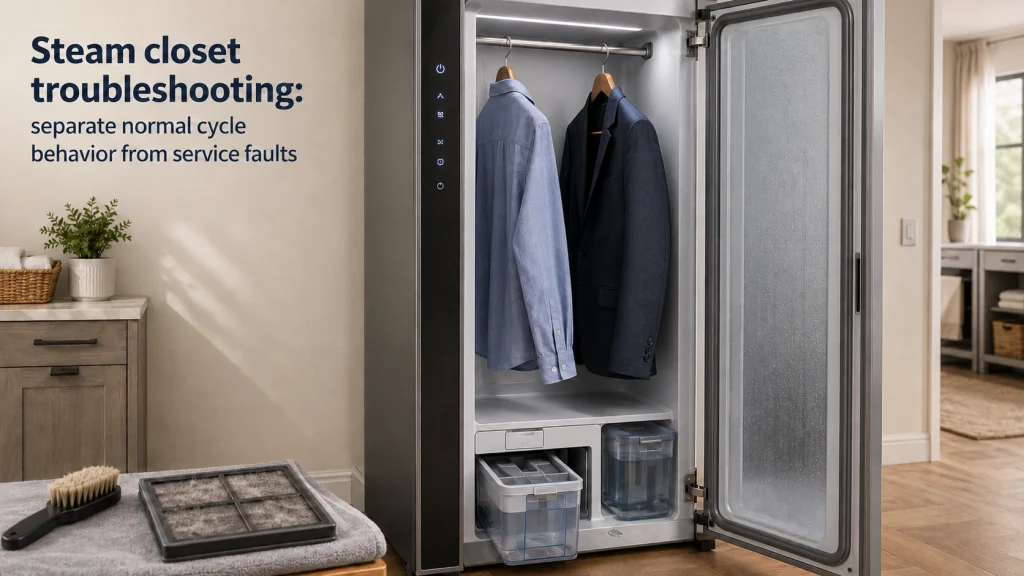
Separate normal cycle behavior from a real fault first
A cabinet can hiss, move hangers, pump water, pause while producing steam, or change its operating sound without being broken. The first task in steam closet troubleshooting is therefore classification, not repair: what exactly happened, at what point in the cycle, and did the display show a message? Manufacturer support treats some steam, water, compressor, airflow, and moving-hanger sounds as normal, while persistent abnormal vibration, a damaged seal, or system errors can require service. That distinction matters because trying to “fix” normal behavior can create a problem that was not there before.
This page stays with external checks and does not cover internal electrical, heater, pump, fan, compressor, refrigerant, sensor, or control-board repair. For their broader role among garment care products, keep troubleshooting separate from buying. If you need the operating basics before deciding something is wrong, the main steam closet overview provides that context. Once those safe checks are exhausted, the next step may be service rather than another experiment.
Identify the exact model and visible symptom before trying a fix
Do not begin with a generic search for “closet error” and then copy a reset or code explanation from another brand. Write down the exact model number, full message or code, whether the cycle started, and whether the problem repeats with a normal load. Also classify it as power, water, door, drying, odor, wrinkle, sound, or vibration related. This small amount of sorting prevents a tank alert from being treated like a system failure and prevents a system failure from being dismissed as routine maintenance.
Model identification matters because manufacturers do not share one error language, one water requirement, one filter layout, or one reset procedure. Similar cabinets can still use different names for tanks, filters, locks, cycles, and service messages. Use the exact owner manual or official support page for your model as the controlling instruction whenever a step depends on a button sequence, tank type, cycle name, or error code. If you cannot verify that a proposed action belongs to your model, do not perform it merely because it worked on a visually similar cabinet.

This 3 by 5 inch top-spiral notebook uses Rite in the Rain all-weather paper. The selected yellow version uses a Universal page pattern and a rust-resistant Wire-O binding. It contains 100 pages on 50 sheets in a compact pocket-size format.
Check On AmazonIf you click this link and buy, we earn a commission at no additional cost to you.
If the cabinet will not start, check the documented external conditions first
When a steam closet is not working at all, separate “no power” from “has power but will not start.” With the unit intact, verify that its power cord is fully seated in the outlet, that the household circuit has not tripped, and that the control panel is actually awake. A dark display and an awake display therefore lead to different checks. If it powers on, check the control lock, door closure, and any displayed tank or user-action message. Steam preparation can also look like inactivity while the cycle is still progressing.
Use only the control-lock, Start/Pause, and power checks documented for the exact cabinet; do not invent a universal button combination. If stability, outlet suitability, cord condition, or placement is questionable, move that issue back to steam closet installation. A cabinet that still will not power on or begin a cycle after the documented external checks belongs in manufacturer support or qualified service. Opening the appliance to test voltage, switches, wiring, or control components is outside the owner-level boundary.
Treat fill-water and drain-tank alerts as model-specific owner checks
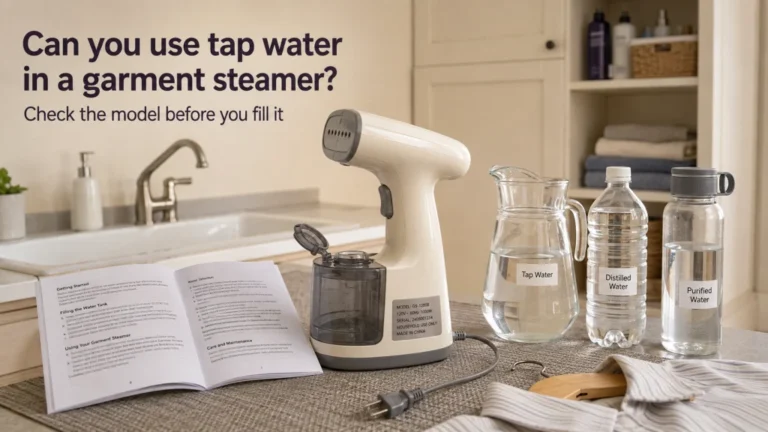
Water alerts are among the clearest examples of a user-correctable state that can look more serious than it is. Official support commonly starts with supply level, drain level, and whether each tank is fully seated. Follow the exact model instruction for what water belongs in the supply tank, because brands can specify different water requirements. Never add chemicals unless the exact manual explicitly calls for them in a defined procedure.
If the message clears after the tank is correctly filled, emptied, and reinstalled, you have resolved a tank state rather than repaired an internal failure. If the same alert returns with the tanks correctly prepared, stop repeating random tank removal or improvised cleaning and check the model-specific support path. Routine tank cleaning, filter care, and accessible surface care belong under steam closet maintenance, not fault diagnosis. The useful boundary is simple: reseat, fill, empty, and clean only where the manual authorizes it, then escalate a persistent alert.
If steam or hot air escapes with the door closed, inspect the loading path and seal
Steam or hot air escaping when the door is opened can be normal on supported models, but visible leakage around a door that should be fully closed deserves a different check. First make sure no sleeve, hem, bulky garment, hanger, or accessory is caught between the cabinet and the door. Reposition the load so the door can close completely without fabric pressing into the gasket. Do not push the door harder to overcome an obstruction, because the obstruction itself is the condition that needs correcting.
Next, visually inspect the accessible gasket without pulling it apart or attempting to remove it. If the gasket is torn, deformed, loose, or otherwise damaged, manufacturer guidance can route the cabinet to service because the seal affects both containment and drying performance. Persistent leakage after the load is clear is also a reason to stop treating the problem as a simple loading issue. Do not continue running repeated hot-steam cycles around a damaged seal in the hope that it will reseat itself.

This slim penlight delivers up to 350 lumens and supports multiple light modes. It is USB-rechargeable and includes a nylon holster. The selected black model is IPX-rated for water resistance and comes in the Stylus Pro penlight form factor.
Check On AmazonIf you click this link and buy, we earn a commission at no additional cost to you.
If clothes are wet at cycle end, separate loading and cycle choice from airflow or seal problems
A steam closet not drying well does not automatically have a failed heater or fan. Manufacturer troubleshooting starts with simpler causes: crowded garments, thick or very wet items, poor spacing, a dirty filter, a blocked door, or a damaged gasket. Cycle choice matters because refresh is not always dedicated drying. Compare the garment condition with the exact cycle description before repeating the same program.
Give heavy items room for air to move and keep fabric clear of the door. Clean an accessible filter only by the documented method, and reinstall it fully dry when required. A damaged gasket, persistent wet results with a normal load, or a fault message changes the next step. At that point, use model-specific support or service instead of assuming an internal part and opening the cabinet.
| Result after a cycle | First owner-level distinction | When to escalate |
|---|---|---|
| Clothes remain wet | Check spacing, fabric thickness, cycle purpose, filter state, door closure, and gasket condition. | Persistent wet results with a normal load, a damaged gasket, or a service message. |
| Odor remains | Decide whether the garment needs washing and whether tanks, filters, or the interior need maintenance. | Persistent abnormal odor from the appliance, especially with electrical symptoms or smoke. |
| Wrinkles remain | Check garment placement, hanger fit, fabric limits, and the selected cycle. | Escalate when poor results come with a fault, leak, or abnormal operation. |
These results can all feel like “the cycle did not work,” but they do not share one cause. Wet clothes point to drying conditions, odor to soil or maintenance, and wrinkles often to fabric or setup. Keep the symptoms separate before changing anything. That prevents a performance limit from being mistaken for an internal failure.
If odors remain, decide whether the problem is the garment or the cabinet state
A steam cabinet is a garment-care tool, not a substitute for washing every dirty or strongly contaminated item. Manufacturer guidance for current cabinets specifically distinguishes light refreshing from garments with strong odors, oily contamination, or long-set smells that may need washing or professional cleaning instead. If a garment already carries a strong odor, running the same refresh cycle again may simply repeat a job the cabinet was not designed to complete. Check the care label and the supported cycle rather than assuming more steam is always the answer.
The other side of the odor problem is maintenance. Stale tank water, a dirty filter, overdue interior care, or an old fragrance component can contribute to smells on models that use them. Use only the cleaning steps allowed by the exact manual, and do not borrow chemical treatments from another brand. If the odor is burning, electrical, sharply abnormal, or accompanied by smoke or overheating, stop using the cabinet and treat it as a safety issue rather than a cleaning problem.

This Free and Gentle liquid detergent comes in an 84 fl oz bottle rated for 64 loads. The formula is made without dyes or perfumes and is formulated for sensitive skin. It is suitable for both high-efficiency and standard washing machines.
Check On AmazonIf you click this link and buy, we earn a commission at no additional cost to you.
If wrinkles remain, check garment setup before calling it a malfunction
Wrinkle reduction has a fabric and loading limit, so a poor result does not by itself prove a mechanical fault. Clothing stored with deeply set wrinkles can need pressing, and delicate or oversized garments can bunch on an unsuitable hanger instead of hanging freely. Buttoning or zipping items where the manual instructs, placing hangers correctly, and choosing the right supported cycle are meaningful troubleshooting steps because they change how steam and movement reach the fabric. A pants-crease feature, shelf, moving hanger, or special-care position also works only when the garment is loaded as that model expects.
If the cabinet otherwise starts, heats, moves, drains, and completes cycles normally, treat remaining wrinkles first as a use-and-fabric question. The article on how to use a steam closet is the better place to work through cycle selection and garment placement in detail. Troubleshooting becomes appropriate again when the performance change is sudden, consistent across suitable loads, or accompanied by an alert, abnormal sound, leak, or another fault symptom. That keeps a realistic performance limit from turning into unnecessary appliance diagnosis.

This handheld steamer uses 1875 watts and has a 7.3 oz water tank. It offers five steam settings, heats up in about 40 seconds, and runs for up to 20 minutes. The selected white version includes three attachments for clothes and upholstery steaming.
Check On AmazonIf you click this link and buy, we earn a commission at no additional cost to you.
Use manufacturer-labeled sound patterns to separate normal operation from abnormal noise
Steam closets combine moving garment hardware, water movement, heated air, and sometimes a compressor, so healthy operation is not silent. GE support identifies brief startup vibration and pauses during steam production as normal under stated conditions. Samsung lists compressor, airflow, steam, pump, drain, and water-flow sounds as normal AirDresser sound sources. LG also documents moving-hanger, garment-contact, leveling, and compressor noises, so the exact model still controls the judgment.
A normal sound should match the manufacturer description and occur without another fault symptom. A noise that becomes much louder, persists abnormally, or comes with smoke, burning odor, or violent movement should not be normalized. Check only accessible causes such as hanger seating, unused hangers, garment contact, and cabinet stability. If those conditions are correct and the abnormal sound remains, use service rather than opening the machine.
A sound check is not a way to identify an internal component by ear. It is a way to classify what you can safely observe. Match the sound to documented operation first. Escalate when the evidence no longer fits a normal or user-correctable condition.
Treat dirty tanks, filters, and accessible airflow parts as maintenance, not fault repair
Filters and water tanks are common crossover points between normal ownership and troubleshooting. A clogged filter can reduce airflow and drying performance, while dirty or stale tanks can contribute to odor, yet cleaning those removable parts is still maintenance rather than appliance repair. Use the cleaning method specified for the cabinet, including whether a filter may be rinsed, how completely it must dry, and what type of water belongs in the supply tank. Do not reach beyond user-removable parts to clear internal ducts, drains, pumps, or hidden airflow paths with tools.
This distinction also helps prevent unnecessary service calls. If the filter is visibly dirty and the manual says the owner should clean it, complete that maintenance and then retest with a normal load. If the problem remains after the filter and tanks are correctly maintained, do not keep escalating the cleaning into disassembly. Maintenance can restore an accessible condition, but it does not prove that an internal fan, heater, sensor, pump, or compressor is healthy.

This pack contains 24 microfiber cleaning cloths measuring 16 by 12 inches each. The cloths are described as ultra-absorbent, lint-free, streak-free, and non-abrasive. They are reusable and washable and come in blue, white, and yellow.
Check On AmazonIf you click this link and buy, we earn a commission at no additional cost to you.
Treat steam closet error codes as an exact-model lookup task
Steam closet error codes are not shared across brands, so copy the message exactly before acting. Include letters, numbers, and any instruction to fill, empty, close, clean, descale, or contact support. Then use the official manual or support page for your cabinet and region. A tank message may have a simple user action, while a system code can be routed directly to service.
Do not borrow a code meaning or reset sequence from another brand or model family. The permitted response to a code can range from reseating a tank to stopping use and requesting repair. If official support classifies the code as a system fault, that is the boundary. A forum workaround does not override the documentation for the appliance in front of you.
Warning: Never assume a GE, LG, Samsung, or other cabinet uses the same code meaning or reset sequence as another brand. Look up the exact model and follow the manufacturer service instruction when the code is classified as a system error.
The point of the lookup is to find the documented owner action or stop point. It is not to reverse-engineer the cabinet from a short message. Once the support path says service, stop there. That keeps a simple display code from becoming unsafe internal troubleshooting.
Stop and contact service for safety symptoms or manufacturer-defined system faults
Some symptoms should end owner troubleshooting immediately. Stop using the cabinet for smoke, sparks, a burning or electrical smell, overheating, a damaged power cord, water reaching electrical areas, uncontrolled operation, or a manufacturer-defined service error. A damaged door seal or persistent leak also belongs in service when official support says the owner should not continue. If the manufacturer instructs you to disconnect power and it can be done safely, follow that instruction without touching wet or damaged electrical areas.
Service is also appropriate when the same fault remains after the manufacturer-listed external checks. Repeating cycles adds little once the door, tanks, accessible filters, load, and permitted control checks are correct. Record the model number, displayed message, symptom, and checks already completed. That gives support useful evidence without guessing which internal component failed.
Stop-use boundary: Do not continue operating a steam closet with smoke, burning odor, electrical symptoms, a damaged cord, a service-class error, persistent uncontrolled leakage, or abnormal movement that remains after documented external checks.
A clear stop point is part of good troubleshooting. Owner checks should rule out accessible conditions, not prove the health of hidden components. When the evidence crosses into a service condition, hand the appliance off. More experimentation is not automatically more useful.
Do not remove panels or turn troubleshooting into internal appliance repair
Third-party repair pages sometimes move quickly from damp clothes or long cycles to fan tests, heater continuity checks, sensor resistance, drain clearing, or control-board inspection. Those steps are outside the scope of safe household troubleshooting for a steam closet because they can expose electrical, heated, moving, pressurized, or sealed-system components. Do not remove rear, side, top, or control panels to reach internal parts, and do not probe live wiring with a meter. Do not bypass a door switch, lock, sensor, thermal protection, or other safety control to force a cycle to run.
The same boundary applies to compressors, refrigerant circuits, internal pumps, steam generators, heaters, and hidden drainage paths. If official support stops at tank, filter, door, control, loading, or reset checks and then directs the owner to service, follow that limit. A cabinet that cannot be resolved through its removable parts and normal controls is no longer an owner maintenance problem. Keeping that boundary firm protects both the appliance and the person standing in front of it.
Finish with one of four outcomes instead of endlessly retrying cycles
A troubleshooting session should end with a decision, not another vague retry. Once the cabinet and symptom are identified, route the problem through checks that can be made without opening the appliance and stop when the evidence reaches a clear outcome. This separates normal behavior, incorrect use, maintenance, and service conditions. It also prevents one solved issue, such as an empty tank, from being confused with a separate drying or odor complaint.
Use this symptom-to-action path before choosing an outcome from the table. Start with the symptom you can actually see, hear, or read on the display, then follow only the branch that matches it. A branch that resolves with loading, controls, tanks, or cleaning ends there; it does not justify checking hidden parts. A branch that reaches a safety symptom, service-class message, or persistent unexplained fault ends with service.
- Smoke, sparks, burning or electrical odor, overheating, damaged cord, water at electrical areas, or uncontrolled operation: stop use and follow the manufacturer service instruction.
- A visible alert or error code: copy it exactly and look it up for the cabinet. If the listed action is a user step such as closing the door, filling or emptying a tank, or cleaning an accessible filter, complete that step once. If the message is classified as a system fault or returns after the permitted action, contact service.
- The cabinet will not start but has no safety symptom: separate no power from power-with-no-start, then check the documented door, lock, Start/Pause, tank-message, and external power conditions. If one of those conditions explains the problem, correct it. If the cabinet still will not begin a cycle, move to support or service.
- The cycle finishes but clothes stay wet, smelly, or wrinkled: check the cycle purpose, garment condition, spacing, hanger setup, accessible filter, tanks, and door seal as relevant to that symptom. Correct use or maintenance when those conditions explain the result. Escalate when the problem persists with a suitable load or appears with a fault, leak, damaged seal, or abnormal operation.
- Noise, vibration, steam leakage, or unusual movement: compare the behavior with the manufacturer’s normal-operation description and check only accessible causes such as garment contact, hanger seating, door blockage, and cabinet stability. If the behavior falls outside the documented normal pattern or continues after those conditions are corrected, stop the cycle and use the support path for the appliance.
Once a branch resolves, use the outcome labels below to decide what happens next. Normal behavior needs no repair, a use condition needs correction, and a maintenance condition needs the specified cleaning or care step. Service is the end point when the branch says to stop, not an invitation to restart the tree with a more invasive check. Repeat a step only when the manufacturer specifically asks you to do so.
| Outcome | What it means | Next action |
|---|---|---|
| Normal operation | The sound, pause, moisture, or movement matches official support and no fault is present. | Continue normal use and documented care. |
| Correct-use issue | The cause is door blockage, loading, hanger setup, cycle choice, lock state, or another supported user condition. | Correct the setup and run an appropriate cycle. |
| Clean or maintain | An accessible filter, tank, interior, or other owner-serviceable part needs documented maintenance. | Complete the exact procedure, then retest once. |
| Service or stop use | A system code, damaged seal or cord, persistent leak, electrical symptom, abnormal movement, or unresolved fault remains. | Stop owner troubleshooting and contact qualified service. |
If the issue becomes a replacement decision, compare options only after the fault is clear. The best steam closets article belongs to that buying stage. It should not replace a correct-use or maintenance check. A cabinet that only needs an accessible fix does not need to become a shopping problem.
Final Thoughts: troubleshoot the user-accessible state and stop before internal repair
Steam closets can produce unfamiliar sounds, moisture, pauses, and garment results that look more dramatic than the underlying problem. Start with the cabinet identity, the visible symptom, and the things the owner is actually meant to handle: controls, door closure, tanks, accessible filters, garment loading, and cycle choice. If one of those conditions explains the problem, correct it and retest once under normal conditions. If official documentation identifies a system fault or the symptom persists after the allowed checks, move to service.
The important boundary is not whether you can find a deeper repair procedure online. It is whether the manufacturer expects that step to be performed by the owner. Staying with normal controls and removable parts gives you cleaner evidence, avoids unnecessary disassembly, and makes the service conversation more useful if a repair is needed. Troubleshoot what you can verify, maintain what the manual assigns to the household, and stop when the next step belongs inside the appliance.
FAQs
💧 Why are my clothes still damp after a steam closet cycle?
Check the cycle purpose, garment thickness, load spacing, accessible filter, door closure, and gasket condition. If a normal load repeatedly stays abnormally wet after the documented checks, use model-specific support or service.
🚪 Is steam leaking around the closed door normal?
Steam can escape when a door is opened on some models, but leakage around a door that should be closed calls for a loading and seal check. Remove anything caught in the door, and request service if the gasket is damaged or leakage persists.
🔒 Why does the cabinet have power but refuse to start?
Check the display, door closure, control or child lock, Start/Pause condition, and any tank message described by the exact manual. If the supported external checks do not resolve it, do not open the cabinet to test switches or wiring.
🧾 Can I use an error-code fix from another steam closet brand?
No. Error meanings and allowed reset steps are model-specific, so use the official documentation for the exact cabinet and follow its service boundary.
👔 Does a failed wrinkle or odor result mean the steam closet is broken?
Not necessarily. Strong odors, heavily soiled garments, set-in wrinkles, unsuitable hanger placement, and the wrong cycle can all create poor results without an appliance fault.
References and Sources
- GE Profile steam closet troubleshooting: Supports the no-start, door, wet-clothes, odor, wrinkle, normal-noise, tank-alert, system-error, and service branches used here.
- LG Styler error-code support: Supports the model-specific code lookup and service boundary for listed LG system errors.
- LG Styler damp-clothes troubleshooting: Supports load spacing, heavy-fabric, filter, ventilation, and cycle-related drying checks.
- Samsung AirDresser message support: Supports model-specific Fill Water, Empty Water, and other display-message handling.
- Samsung AirDresser noise support: Supports the distinction between documented compressor, airflow, steam, pump, drain, and water sounds and noises that should be escalated.
- Samsung AirDresser garment-result troubleshooting: Supports wet-garment, gasket, wrinkle, odor, filter, and tank checks plus the service boundary for a damaged gasket.