A steam closet makes the most sense when lightly worn garments need frequent refreshing and the household values unattended care more than fast, targeted wrinkle removal. It can reduce some wrinkles, odors, and drying work, but it does not replace washing, stain removal, pressing, or every trip to a professional cleaner. The real buying test is whether your wardrobe creates enough repeatable refresh work to justify permanent floor space, cycle waiting, water tanks, filters, and model-specific installation requirements. By the end, you should know whether the category fits your routine and which detail still needs verification before purchase.
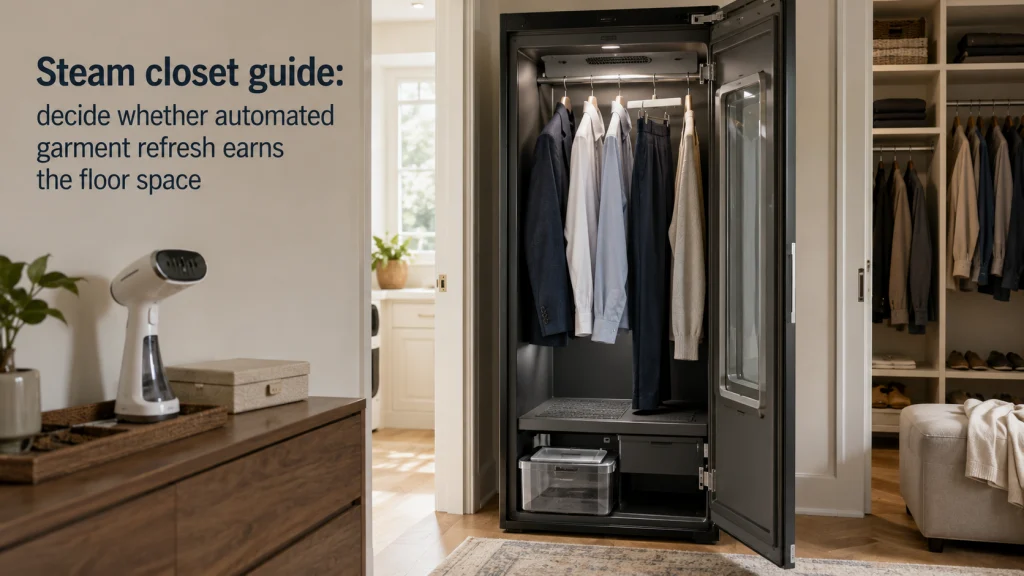
A hands-off garment cabinet still creates a permanent household routine
A steam closet for clothes looks simple because the active work is small: hang garments, choose an allowed cycle, and return later. The hidden part is the permanent footprint, door clearance, outlet access, water handling, filters, and time the machine needs to finish. The main question is therefore not whether steam can relax fabric, but whether automated refreshing happens often enough to earn that space. If you only fight one wrinkled shirt occasionally, the cabinet may solve more problems on paper than it solves at home.
The category fits better when suits, work clothing, delicate knits, outerwear, or other lightly worn pieces regularly need attention before another wear. It fits less well when most clothing goes straight into the washer or when the main problem is stains, crisp pressing, or last-minute wrinkle removal. A garment care closet earns its keep only when unattended batch care replaces enough repeated hands-on work. Start by counting the garment jobs you want to stop doing by hand.

This retractable tape measure has a 25-foot blade with both imperial and metric markings. Its thumb lock holds the blade at the needed extension, and the case includes a belt clip. The blade is rated to ±1/16 inch for the first 10 feet and ±1/32 inch for each additional foot.
Check On AmazonIf you click this link and buy, we earn a commission at no additional cost to you.
Define the category as an enclosed automated clothing care system
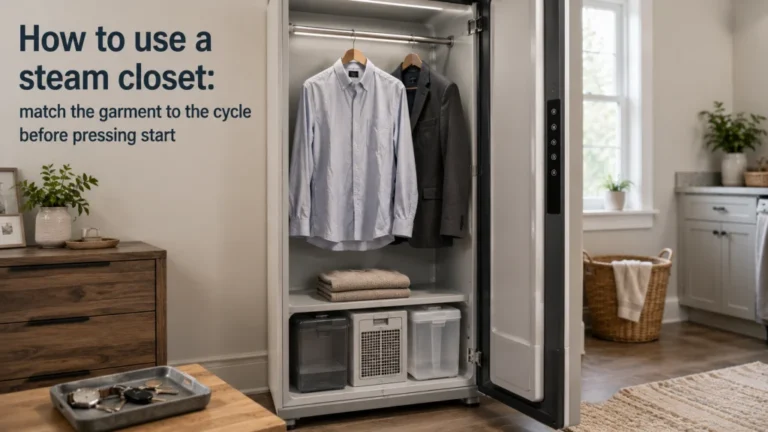
This category is a floor-standing cabinet that treats hanging or shelved garments inside an enclosed chamber with some combination of steam, circulated air, movement, drying, and cycle controls. The exact mechanism varies, so hanger systems, shelves, pants care, drying features, and specialty cycles are not interchangeable across models. The defining point is that garments are treated inside the appliance with little manual handling during the cycle. That separates the category from handheld and upright steamers.
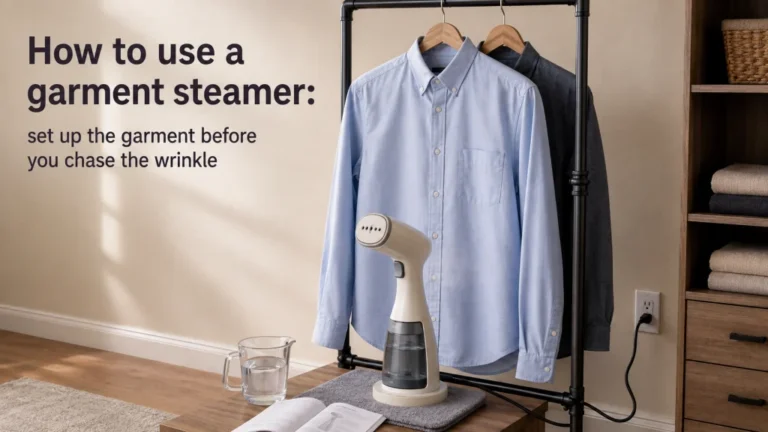
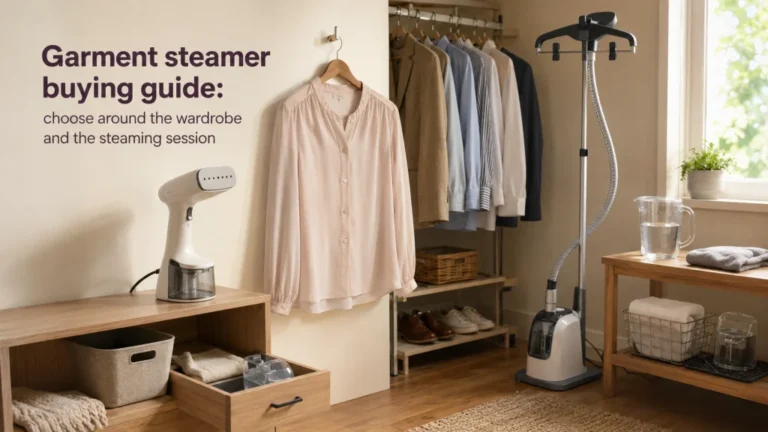
The difference changes how you use the equipment. A manual steamer lets you target a collar, hem, or stubborn crease and stop as soon as the result is acceptable, while the cabinet follows its selected cycle and loading rules. The cabinet trades some direct control for unattended operation. If you are still deciding among steamers, irons, presses, and enclosed systems, start with the garment care products overview before choosing a permanent cabinet.

This handheld Conair steamer uses 1875 watts and heats in about 40 seconds. Its 7.3-ounce water tank supports up to 20 minutes of continuous steam. The unit also includes a quilted aluminum steamer plate and built-in creaser for direct wrinkle finishing.
Check On AmazonIf you click this link and buy, we earn a commission at no additional cost to you.
Separate refresh work from cleaning, stain removal, and pressing
A steam closet can help lightly worn clothing feel ready to wear again by reducing some wrinkles, helping with certain odors, and gently drying approved items. It should not be treated as a washer because it is not designed to remove general soil, body oils, food, makeup, or stains. Current manufacturer support also recognizes limits with deeply set wrinkles, strong odors, oily contamination, and some bulky garments. Those jobs may still require washing, ironing, professional steaming, or dry cleaning.
It also should not be treated as an automatic iron. Steam and movement can relax fabric, but a crisp shirt front, a sharp crease, or one stubborn area may still need direct pressure or targeted work. The useful purchase question is which jobs the cabinet can take over repeatedly in your wardrobe. Use the matrix below to keep refresh work separate from cleaning and finishing work.
| Garment job | Steam closet role | What may still be needed |
|---|---|---|
| Light between-wear refresh | Good potential fit on approved fabrics | Nothing further if the garment is otherwise clean |
| Light wrinkle relaxation | Useful on compatible fabrics | Manual steaming or ironing for stubborn areas |
| Sharp pressing or crease setting | Limited and model-dependent | Ironing or pressing |
| Visible stain or oily soil | Not the right cleaning process | Washing, spot treatment, or professional cleaning |
| Strong embedded odor | May help, but results vary | Deeper cleaning when needed |
Count refresh jobs when estimating value, not every laundry job the household performs. If most garments need actual cleaning after use, the cabinet will sit beside washing and professional care rather than replace them. If many pieces are clean enough to rewear but need moisture, odor, or wrinkle attention first, the cabinet has a clearer purpose. That workload should drive every later comparison.
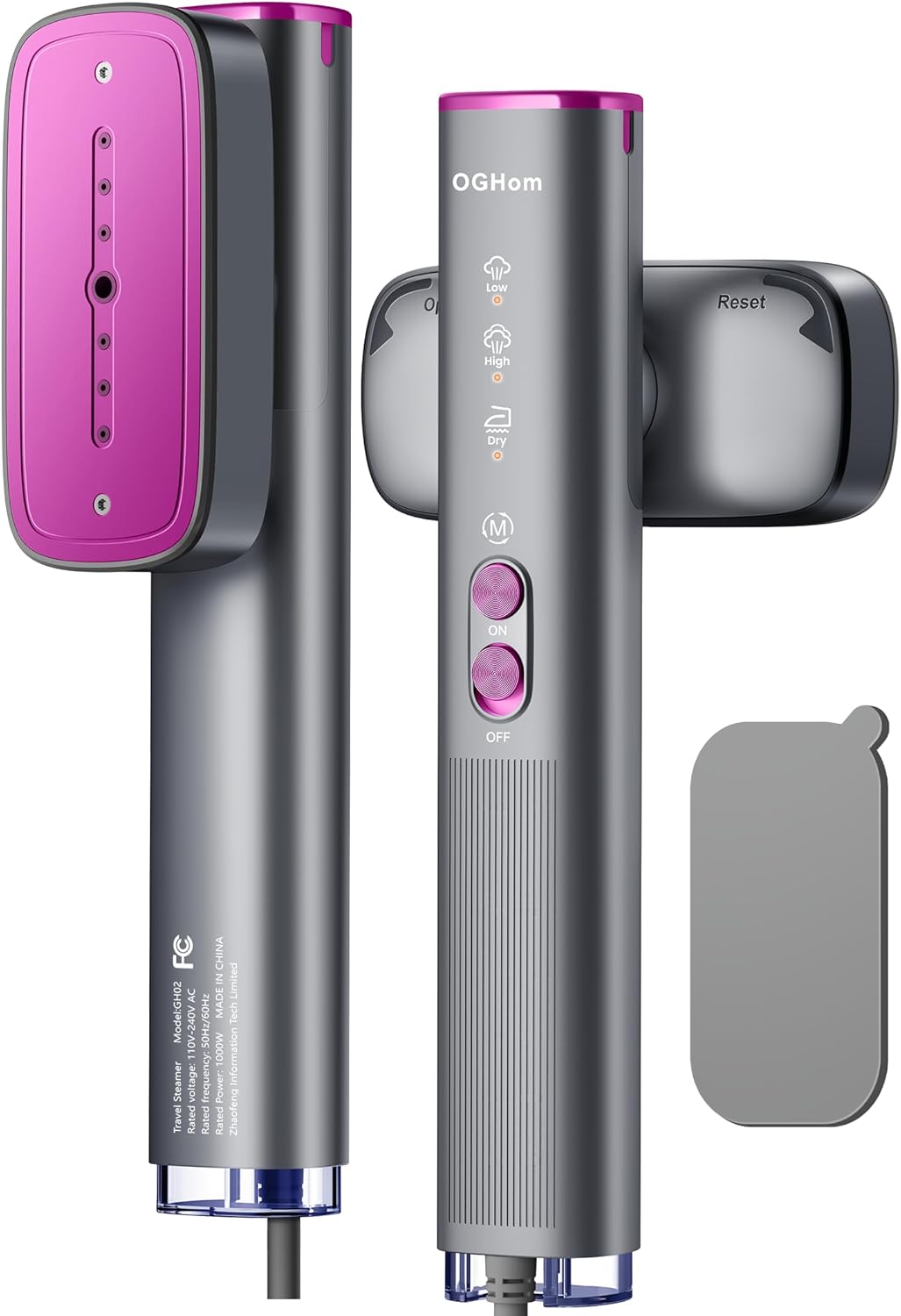
The OGHom GH02 combines steam and dry ironing in one handheld unit. Its 1000-watt system offers dry, low-steam, and high-steam modes, and the 120 ml tank is removable for refilling. The unit supports 110-240V input and includes a heat-resistant pad and user manual.
Check On AmazonIf you click this link and buy, we earn a commission at no additional cost to you.
Decide whether repeated refresh work earns the floor space and price
The category makes the most sense when the same garment-care inconvenience happens often enough that removing active labor changes the routine. Record how many pieces you currently steam, air out, or send out mainly because they need refreshing rather than true cleaning. Then compare that workload with how many garments the cabinet can handle in the cycles you would actually use. A large purchase price is easier to justify when frequent use is real, not imagined.
Also write down the work that will remain after the cabinet is added. Then list the new routine it creates, including loading rules, waiting for cycles, and keeping the machine accessible enough to use and maintain. This prevents a convenience purchase from being evaluated only by feature count. For a deeper threshold check, use are steam closets worth it.

This foldable handheld steamer uses 1000 watts and is designed for 120V outlets. It has a 30-second heat-up and an electronic pump that supports multi-angle steaming. The compact body folds for storage and comes with a storage bag.
Check On AmazonIf you click this link and buy, we earn a commission at no additional cost to you.
Compare automated cabinet care with targeted manual steaming
A cabinet is strongest when several compatible garments can be loaded together and you can wait for the cycle to finish. A manual steamer is stronger when you need one item quickly, want to focus on a specific area, or need to manipulate the fabric while steaming. These are different workflows rather than two sizes of the same tool. Automated care reduces active labor, while manual steaming preserves speed and direct control.
Storage makes the difference larger. A manual steamer can usually be moved or put away, while a cabinet becomes part of the room and must stay accessible for loading, tanks, filters, and service. If your wardrobe creates only occasional wrinkles, the smaller tool may solve the real problem with far less commitment. The steam closet vs garment steamer comparison breaks that decision down further.

The Conair GS38 is a handheld garment steamer built for targeted wrinkle removal rather than unattended cabinet cycles. It uses a 7.3-ounce removable water reservoir and offers multiple steam settings, including a higher-output Turbo mode. The steamer also includes fabric-care attachments and a built-in creaser for more controlled finishing on different garments.
Check On AmazonIf you click this link and buy, we earn a commission at no additional cost to you.
Separate between-wear refreshing from professional dry cleaning
Do not justify a steam closet by subtracting every future dry-cleaning bill. Professional dry cleaning is a cleaning process, while the cabinet is mainly a refresh system for garments that are still clean enough to wear again. Some professional-care visits may become less frequent, but that depends on why the garment was being sent out in the first place. The garment label and the exact cabinet manual remain the boundary.
A better savings estimate counts trips caused mostly by light wrinkling, mild odor, moisture, or a desire to freshen otherwise clean clothing. Those are the situations most plausibly reduced by cabinet care. True cleaning needs should remain in the budget so the purchase case is not built on work the appliance cannot own. See can a steam closet replace dry cleaning for that boundary in detail.
Convert wardrobe frequency into realistic per-cycle capacity
Capacity is not just the number of hanger positions on a product page. Garment width, thickness, length, shelf use, spacing, and the way air or steam must circulate can reduce practical loading. A thin shirt and a bulky coat are not equal capacity units. The useful number is how many of your typical garments can be treated together within the model’s instructions.
Build one normal batch from your own routine before shopping. If you commonly want two jackets, two shirts, and trousers refreshed together, compare that batch with the allowed hanger and shelf arrangement instead of assuming the maximum advertised count applies. Several back-to-back cycles can erase much of the convenience you expected from automation. The worksheet below keeps capacity tied to real use.
| Question | What to record | Why it matters |
|---|---|---|
| What gets refreshed? | Your common garment types | Different shapes use space differently |
| How many arrive together? | Your normal batch | Shows whether one cycle is enough |
| Which pieces are bulky? | Coats, long items, or shelf items | Bulky pieces reduce practical capacity |
| How often will it run? | Your realistic weekly frequency | Frequency controls value and upkeep |
Once the batch is clear, check the current manual for hanger limits, shelf rules, bulky-item guidance, and cycle-specific loading. Do not add garments simply because empty space remains visible, since circulation and movement can be part of the treatment. A smaller cabinet that handles your normal batch can fit better than a larger one whose capacity is rarely used. Capacity should reduce scheduling friction rather than create it.
Compare wrinkle, odor, drying, and crease claims separately
Wrinkle reduction, odor refresh, gentle drying, fabric care, and sanitizing language describe different outcomes. A cycle that helps a lightly wrinkled wool jacket does not prove the same result on deeply creased cotton, and odor reduction does not mean oily contamination has been cleaned. Current manufacturer support explicitly recognizes limits with some set-in wrinkles, strong odors, bulky items, and dirty garments. Treat every claimed benefit as a separate job with its own conditions.
Crease-care features also vary by system. One cabinet may include a dedicated pants or targeted finishing feature while another relies mainly on steam, air, and garment movement, so the result cannot be generalized across the category. Sanitizing claims belong only to the exact cycle and test conditions stated by the manufacturer and should not become a medical promise. Compare the outcomes your wardrobe needs often, not the number of marketing badges.

The Nirrom N02 combines handheld steaming and dry ironing with a 1200-watt heating system. It heats in about 15 seconds and uses a 140 ml tank rated for up to 10 minutes of continuous steam. The rotating design supports both vertical steaming and flat ironing.
Check On AmazonIf you click this link and buy, we earn a commission at no additional cost to you.
Add cycle time and set-it-and-return-later behavior to the workflow
Hands-off does not mean instant. Cabinet care works best when garments can be loaded before they are needed and the selected cycle can finish without becoming a bottleneck. That can fit after-work routines, post-travel refreshing, or clothing prepared well before wear. It fits poorly when one shirt needs attention immediately before leaving.
Cycle time also affects effective capacity. A small load is not really convenient if another batch must wait behind it, especially when specialty care or drying extends the process. Compare the cycles you would actually use for your fabrics rather than the shortest time shown anywhere on the control panel. The right cabinet should fit the time you already have, not force the household to reorganize clothing around it.

The Jack & Rose K1 is a 1000-watt handheld steamer and dry iron with a 10-square-inch heating panel. It warms up in about 15 seconds and uses a rotating steam head for compact storage. The listing specifies a 5-ounce tank and up to 10 minutes of runtime.
Check On AmazonIf you click this link and buy, we earn a commission at no additional cost to you.
Measure the cabinet, door path, outlet access, and installation conditions before price
Floor dimensions are only the beginning of fit. You need room to open the door, load garments, reach tanks and filters, level the unit, and follow any model-specific clearance or anti-tip instructions. Some current systems use removable water reservoirs and avoid household plumbing, but outlet, flooring, ambient conditions, leveling, and securing requirements can still differ. The exact installation manual should control the final placement decision.
Measure the delivery route too, because a tall, heavy cabinet can fit the final footprint and still be difficult to move safely into position. Do not plan around an improvised electrical setup or a location that blocks normal access to the plug. Verify the checks below before comparing premium features. Use steam closet installation when you need the full placement process.
- Measure cabinet width, depth, height, and usable space in front of the door.
- Confirm the delivery path, floor condition, leveling access, and anti-tip requirements.
- Verify the exact outlet and electrical instructions in the model manual.
- Check how supply and drain tanks are removed and carried.
- Keep required filter, service, and ventilation access clear.
A cabinet that cannot be placed correctly is not a candidate, regardless of its features. No-plumbing language should never be read as no setup at all. A workable location must support both installation requirements and the ordinary loading route you expect to use. Treat installation as part of the purchase rather than a delivery-day surprise.

This CRAFTSMAN tape measure has a 25-foot retractable blade with printed fractional markings. The self-locking blade stays extended during measurements, and the case has a rubber overmold for added grip. The CMHT37225 is a retractable layout tool intended for quick linear measurements.
Check On AmazonIf you click this link and buy, we earn a commission at no additional cost to you.
Add water tanks, filters, interior care, and consumables to ownership burden
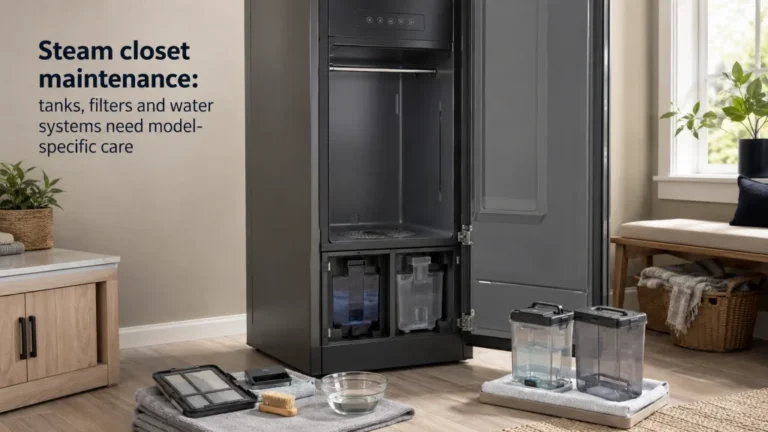
Automated garment care shifts some work instead of eliminating it. Current systems can require supply-tank filling, drain-tank emptying, lint or air-filter cleaning, interior care, and model-specific self-cleaning or descaling. Some also use optional fragrance components that create another consumable or cleaning step. None of this is necessarily difficult, but it belongs in the convenience calculation.
Placement can make that upkeep easier or harder. A cabinet squeezed into a tight location may technically fit yet make tank removal, filter cleaning, or interior access annoying enough that maintenance gets postponed. Exact intervals and cleaning methods vary, so never carry a schedule from one model to another. Use the steam closet maintenance article once a specific cabinet is under consideration.
| Ownership item | What to verify | Friction to consider |
|---|---|---|
| Supply tank | Water rule, fill method, and access | Refill frequency |
| Drain tank | Emptying and cleaning method | Remembering it before the next cycle |
| Filters | Location, cleaning, drying, and replacement | Access and drying time |
| Interior care | Approved cleaning or descaling | Periodic downtime |
| Fragrance component | Whether it is optional or replaceable | Consumable cost and upkeep |
Compare inconvenience, not just the number of maintenance tasks. A tiny task required constantly can matter more than a longer task done occasionally. Tank and filter access should therefore be considered while measuring the room, not after installation. The best ownership fit is the routine you will actually maintain.
This 12-pack contains reusable microfiber cleaning cloths for household surfaces. The cloths are absorbent, lint-free, quick-drying, and designed to be non-abrasive. Each cloth measures 12.6 by 12.6 inches.
Check On AmazonIf you click this link and buy, we earn a commission at no additional cost to you.
Treat fabric permission as cycle-specific and model-specific
Steam sounds gentle, but that does not make every fabric safe on every program. Manufacturers can allow different cycles for cottons, wool, delicates, outerwear, bedding, accessories, or specialty items, and those permissions vary by system. The garment care label still matters because heat, moisture, movement, trim, coatings, adhesives, and structure can change what is safe. When the label or manual is unclear, do not fill the gap with a generic steam rule.
This matters most for expensive, structured, decorated, coated, or hard-to-replace garments. A cabinet should reduce routine effort, not encourage experiments with a favorite item because another fabric tolerated steam. Check both the garment label and the exact cycle guidance before loading unfamiliar material. Capability should be proven by the garment and cycle combination, not by the presence of a Delicate button.
Plan placement, normal use, maintenance, and fault handling before purchase
Decide where water will come from, where the drain tank will be emptied, where accessories will live, and whether the door can stay accessible without blocking a walkway. Then picture the normal route from taking off a garment to loading it, choosing a cycle, unloading it, and putting it away. If that route is awkward, the cabinet can become an expensive place to hang clothes. Routine fit matters as much as technical fit.
Set a safe stopping point for faults too. Normal owner checks can include tanks, filters, door closure, loading, and cycle conditions described in the manual, but damaged cords, burning odor, smoke, sparks, water in electrical areas, uncontrolled operation, or service-reserved work should not become a home repair project. The how to use a steam closet article covers normal operation, while steam closet troubleshooting covers owner-safe symptom checks. Planning both normal use and the stop point makes the purchase easier to live with.
Compare current steam closets only after category fit is established
Once the category fits your workload, compare current options by usable garment capacity, allowed cycles, cabinet dimensions, loading arrangement, electrical and placement requirements, tank access, filters, service support, and the finish outcomes you actually need. Smart controls, fragrance features, premium finishes, and long cycle menus should come later unless one removes a repeated problem. This order stops a feature-rich cabinet from winning before it proves basic household fit. It also makes price comparisons more meaningful.
Current products change, so verify the exact product page and manual rather than relying on an old comparison or a similar-looking predecessor. There is no universal winner because a small wardrobe, frequent business attire, delicate-heavy clothing, and tight floor space create different requirements. When you are ready for a model-level shortlist, use best steam closets with your requirement profile already written down. The product should meet the profile instead of rewriting it after you see the feature list.
Use the unresolved decision to choose what to check next
You do not need to solve every steam-closet question at once. If value is unclear, quantify the repeatable refresh workload before looking deeper into features. If you already want automated care but are unsure about a steamer, compare those workflows directly. If dry cleaning is the sticking point, separate between-wear refreshing from actual cleaning needs.
After the category passes those tests, move to installation, normal use, maintenance, current-model comparison, or troubleshooting. This order keeps the purchase tied to household requirements instead of letting a product page create those requirements for you. It also catches small blockers, such as door swing or tank access, before delivery. The related articles below are organized around those separate decisions.
Final Thoughts: buy the cabinet only when hands-off refresh earns permanent space
A steam closet is easiest to justify when lightly worn garments need frequent refreshing and unattended cycles fit the household routine. It is harder to justify when the real need is occasional wrinkle removal, frequent cleaning, sharp pressing, or equipment that can disappear into storage after use. The cabinet should remove enough repeated hands-on work to matter without creating a placement problem you resent every day. Judge it by the chores it truly removes.
Before buying, verify one normal garment batch, one realistic installation location, the exact fabric permissions, and the maintenance path you will actually follow. If any of those remain uncertain, resolve that point before comparing premium features or price. A smaller tool can be the better choice when automation would sit idle between rare jobs. The cabinet makes sense only after those practical checks support the purchase.

This handheld HiLIFE steamer uses 700 watts and has a 240 ml water tank. The listing specifies 120V-only operation and includes a brush attachment. Its handheld format is designed for targeted garment wrinkle removal at home or in an office.
Check On AmazonIf you click this link and buy, we earn a commission at no additional cost to you.
Explore the steam closet decision in more detail
Use the next article that matches the question still blocking your decision. Each one narrows the scope to a single purchase, ownership, or troubleshooting issue. You do not need to repeat the entire category analysis every time a new question appears. Move only to the detail that can still change your decision.
| Topic | What you’ll find |
|---|---|
| Are steam closets worth it? | A purchase-threshold check built around frequency, space, maintenance, and removed chores. |
| Steam closet vs garment steamer | Automated batch care compared with fast, targeted manual steaming. |
| Can a steam closet replace dry cleaning? | The boundary between refreshing, stain removal, pressing, and professional cleaning. |
| Steam closet installation | Placement, power, leveling, access, door path, and setup checks. |
| How to use a steam closet | Loading, cycle choice, tanks, unloading, and owner-safe operation. |
| Steam closet maintenance | Water tanks, filters, interior care, drying, and cleaning duties. |
| Best steam closets | A current-model comparison after category fit is already established. |
| Steam closet troubleshooting | Owner-level symptom checks and safe stopping points. |
Start with the unresolved decision rather than reading by feature count. That keeps the next step tied to what still needs verification before buying or using the cabinet. If a question is already settled, skip it instead of collecting more information for its own sake. The goal is a clear household decision, not the longest possible shopping process.
FAQs
👔 Can a steam closet replace ironing?
Not completely. It can reduce light wrinkles, but deeply set wrinkles, sharp pressing, collars, and precise creases may still need direct finishing.
🧼 Does a steam closet actually clean clothes?
Think of it primarily as a refresh system, not a washer. Visible soil, oily contamination, stains, and garments needing true cleaning still require the care method allowed by the label.
💨 Is a steam closet better than a garment steamer?
It is stronger for unattended batch refreshing when you can wait for a cycle. A manual steamer is usually better for one garment, fast touch-ups, and targeted wrinkle work.
📏 How much space does a steam closet need?
Use the exact model dimensions plus door opening, loading space, tank and filter access, leveling, service access, and required clearances. The cabinet footprint alone is not enough.
💧 Do steam closets need plumbing?
Some current systems use removable supply and drain tanks, but installation varies. Verify the exact manual instead of assuming every cabinet has the same water requirements.
🧥 How many clothes can go in one cycle?
That depends on the model, garment type, hanger or shelf arrangement, and selected cycle. Bulky pieces can reduce practical capacity even when space remains visible.
References and Sources
- LG Styler overview: Supports current category mechanics, garment movement, wrinkle reduction, deodorizing, and model-dependent features.
- Samsung AirDresser installation: Supports grounded-outlet, leveling, placement, weight, and anti-tip considerations.
- Samsung AirDresser care: Supports water-tank, filter, interior-care, and descaling duties.
- Samsung AirDresser wrinkle and odor support: Supports limits involving set-in wrinkles, strong odors, oily contamination, and bulky items.