A garment steamer is the better fit when you want fast, targeted wrinkle control on one item and do not mind guiding the tool by hand. A steam closet makes more sense when several garments can be loaded together and you value unattended refreshing enough to give a cabinet permanent floor space. Neither system guarantees the crisp finish of pressure-based ironing, and neither removes the need to check fabric-care instructions. The practical choice comes down to the shape of your repeated sessions: urgent touchups, unattended batches, storage space, maintenance, and budget.
Start with control versus automation, not price
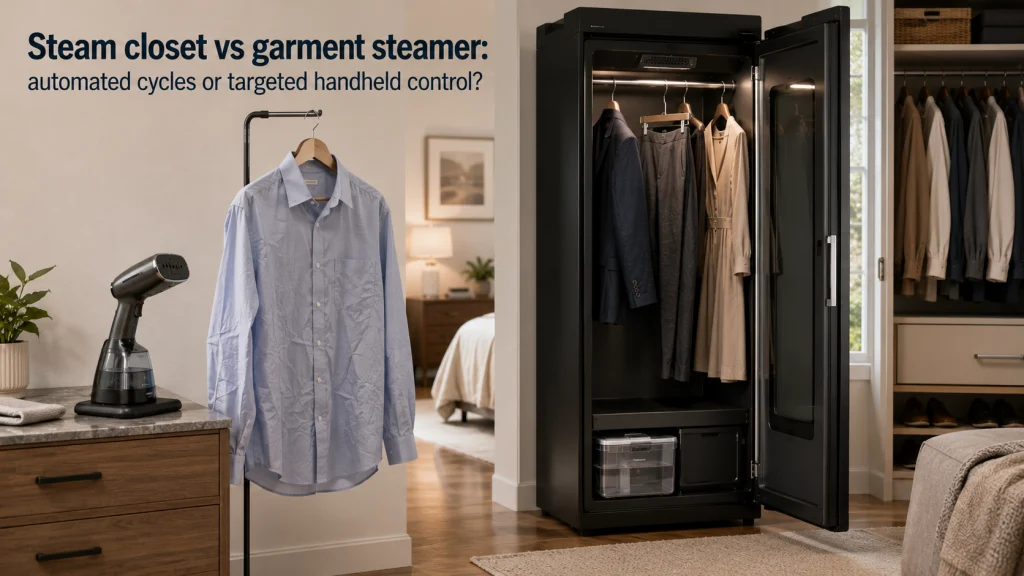
The clearest way to compare a steam closet vs garment steamer is to picture two different mornings. One shirt has a wrinkled collar and placket, and you want to work only those areas before leaving. In that situation, a manual steamer gives you direct control over where the steam goes, how long you stay on one section, and when the job is finished. You do the movement yourself, but you also decide exactly which wrinkle deserves attention.
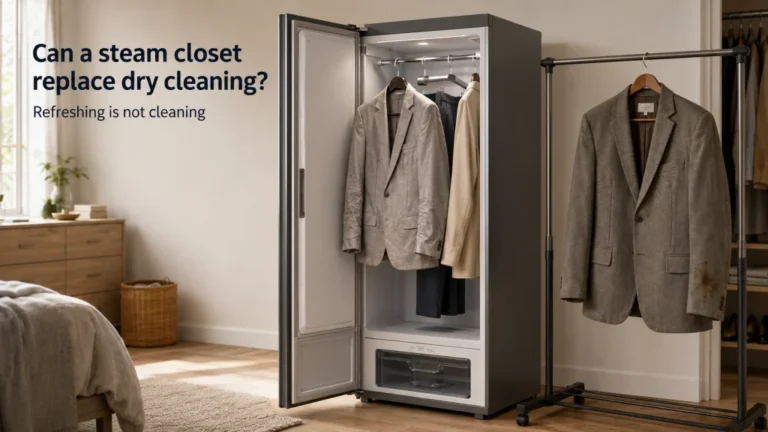
Now picture several jackets, trousers, or lightly worn garments that can be loaded together and left alone while the appliance runs a cycle. A steam closet changes the labor rather than simply making the same task more powerful. You still load the garments, choose an appropriate cycle, manage the water system, and unload them afterward, but you are not standing there moving a steam head over each piece. If that unattended part is what you value, the cabinet has a real advantage; if you mainly need one-item corrections, the extra appliance can be solving a problem you rarely have. Both options are garment care products, but one buys direct control while the other buys unattended batch care.

This 1875W handheld steamer heats in about 40 seconds and uses a 7.3-ounce tank for up to 20 minutes of continuous steam. Its quilted aluminum plate and built-in creaser give extra control for collars, plackets, and other targeted areas. The included silicone band, delicate-fabric spacer, and bristle brush support different garment surfaces.
Check On AmazonIf you click this link and buy, we earn a commission at no additional cost to you.
The physical workflows are fundamentally different
A manual garment steamer is an active tool. You fill its tank, heat it, hang the garment, hold or position the fabric safely, and move the steam head across the areas that need attention. The result depends partly on how well you expose the wrinkled area and how deliberately you work around seams, hems, collars, lapels, and other shapes. That active control is why a handheld or upright steamer can feel efficient even when you are doing all the labor yourself.
A steam closet is an enclosed appliance that processes garments after you load them and start a cycle. Current cabinet systems can combine steam or humidification, moving or specialized hangers, airflow, and drying functions, but the exact method and fabric permissions depend on the model. The cabinet does not follow your eye to a stubborn crease halfway through a cycle, so its convenience comes from automation rather than continuous targeted correction. This article compares those two ownership patterns only; irons, pressing systems, professional cleaning, and stain removal are separate decisions.
| Step | Manual steaming workflow | Steam closet workflow |
|---|---|---|
| Prepare | Retrieve the steamer, fill the tank, hang the garment, and wait for steam readiness. | Check garment compatibility, load the cabinet, confirm tank status, and select the appropriate cycle. |
| Work | Guide the steam head over each area, reposition the garment, and decide when each wrinkle is acceptable. | Close the door and let the programmed cycle handle the enclosed treatment without continuous hand movement. |
| Finish | Stop when the targeted areas are smooth enough, then let the unit cool and manage remaining water as instructed. | Return after the cycle, inspect the garments, unload them, and handle tanks, filters, or interior care when required. |
Manual steaming concentrates labor during treatment, while a cabinet shifts more work toward loading, waiting, unloading, and maintaining a larger appliance. Neither path removes every garment-care step. The better workflow is the one that fits your household.

This 700W handheld steamer has a 240 ml tank that can provide up to 15 minutes of continuous steam. Its 9-foot cord and handheld format fit an active workflow where the user moves the steam head and repositions the garment. The listing specifies 110-120V operation and includes a fabric brush.
Check On AmazonIf you click this link and buy, we earn a commission at no additional cost to you.
One-item urgency favors the manual steamer
If you regularly notice a few wrinkles only after getting dressed, a manual steamer matches that problem unusually well. You can aim at the exact front panel, sleeve, hem, or collar that looks wrong instead of committing the whole garment to an enclosed cycle. Independent garment-steamer testing also treats maneuverability, handling, steam consistency, tank behavior, and wrinkle removal across different fabrics as separate performance factors, which is a useful reminder that the tool is judged by how well it performs in your hand. A small urgent job therefore rewards controllability more than automation.
The trade-off is that manual work remains manual. You must hold the unit or hose, keep a safe orientation, manage the cord, refill when needed, and stay with the garment until you are satisfied. A heavier filled steamer may feel very different from the same unit when empty, and a compact tank that stores beautifully can become annoying if your normal session grows beyond one or two pieces. For households that mainly need targeted corrections, though, those inconveniences are often smaller than dedicating floor space to a full cabinet.

This 1000W dual-voltage steamer and iron heats in about 15 seconds and has a 5-ounce water tank. Its rotating head supports both hanging steaming and flat ironing, while the listing gives a maximum steam runtime of about 10 minutes. Auto shutoff and a compact 1.6-pound body suit quick one-item touchups and travel.
Check On AmazonIf you click this link and buy, we earn a commission at no additional cost to you.
Unattended batch refresh is where a steam closet earns its place
A cabinet starts to make more sense when your repeated job is not one wrinkled shirt but several garments that benefit from the same refresh session. You can load compatible items, start the selected cycle, and return later instead of moving a steam head across every surface. That does not make the process instant, but it can reduce active hand time. The value is strongest when the garments are already part of a routine, such as workwear or jackets that are worn again before a full wash or professional cleaning is needed.
Capacity still needs a reality check because a tall cabinet can look much larger than its useful garment spacing. Independent cabinet testing has found that crowding can reduce effectiveness, and long or bulky pieces can change how many items are practical in one session. The exact hanger count on a specification sheet is therefore not the same thing as a guarantee that every garment combination will process equally well. A steam closet is a batch appliance, but it is a small garment-care batch, not a substitute for a full laundry load.
| Session shape | Manual garment steamer | Steam closet |
|---|---|---|
| One visible wrinkle before leaving | Directly target the problem area | Usually more process than the job requires |
| Several compatible garments to refresh | Each item still needs active handling | Can process a small batch without continuous hand work |
| Mixed fabrics or unusual garment shapes | Easy to treat items separately after checking care instructions | May require different loading methods or separate cycles |
| Frequent last-minute corrections | Strong fit if the unit is easy to reach and fill | Weaker fit when the urgent item cannot wait for a full cycle |
The important question is not which machine can touch more fabric at once, but whether your normal session benefits from unattended processing. If you almost always care for one garment at a time, cabinet capacity may stay unused. If you repeatedly gather several suitable garments, the ability to walk away becomes a meaningful household feature rather than a novelty. That distinction should come before comparing screens, smart controls, or other premium features.
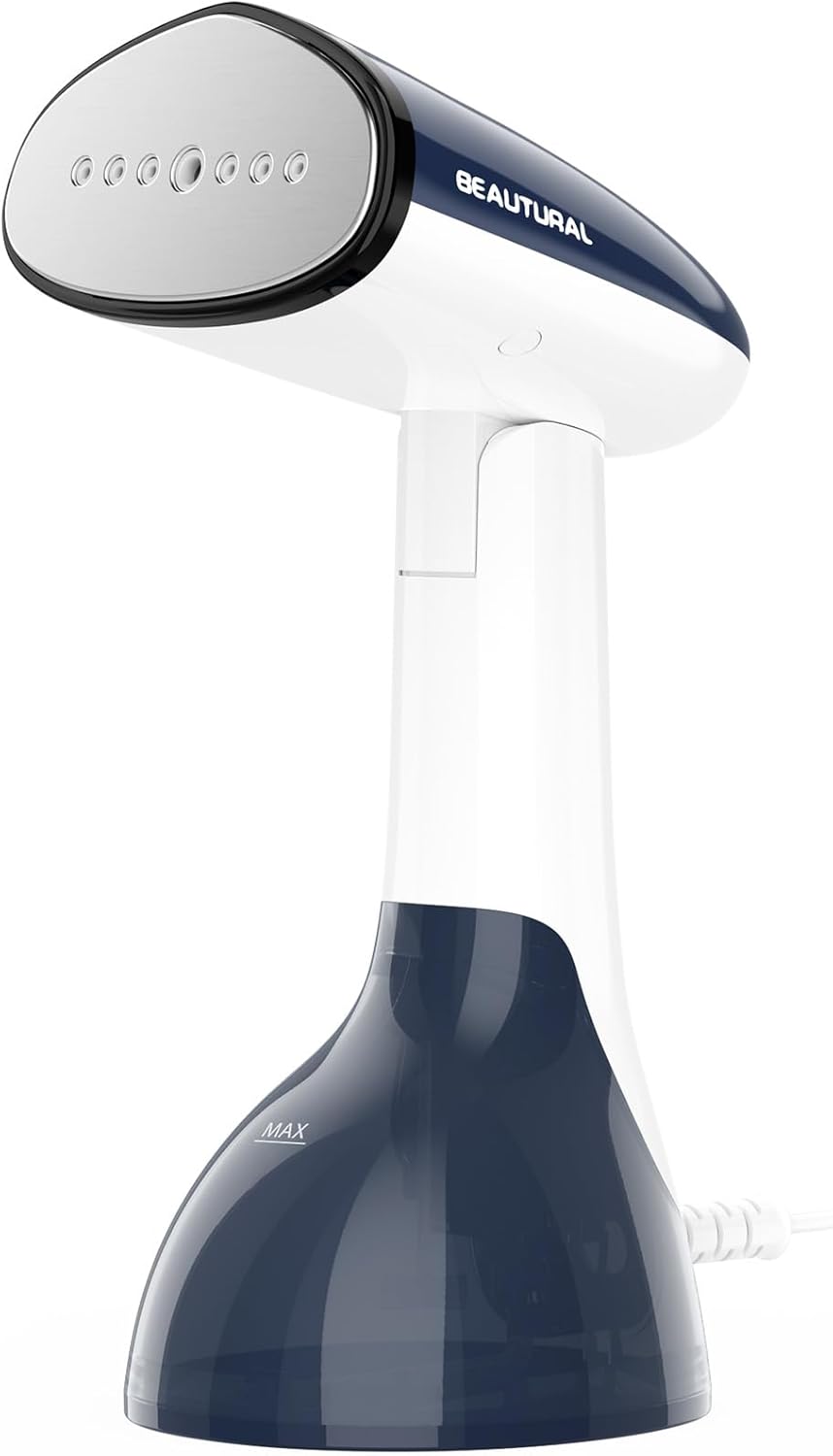
This 1200W handheld garment steamer uses a removable 260 ml water tank and heats in about 35 seconds. Its aluminum heating plate and pump-steam design support both hanging garments and repeated wrinkle-removal work around the home. The larger detachable tank gives it more session capacity than very small travel steamers while keeping the appliance in a handheld format.
Check On AmazonIf you click this link and buy, we earn a commission at no additional cost to you.
Neither system automatically gives a pressed, crisp finish
Steam helps relax wrinkles, but wrinkle relaxation is not the same mechanical action as pressing fabric between a hot soleplate and a firm surface. Independent steamer testing continues to separate steaming from ironing because a steamer can smooth hanging garments without producing the same sharp creases, flat plackets, or deliberately pressed edges. That matters if your definition of finished clothing includes a crisp dress-shirt front or a precise trouser crease. A steamer can be excellent at making a garment look smoother without becoming an iron by another name.
Cabinet reviews show the same boundary from the other direction. Automated closets can refresh, reduce wrinkles, and improve the appearance of suitable garments, yet heavy or set creases can remain and performance changes with fabric, loading, and garment shape. Some cabinets include dedicated garment-support features, but those features are model-specific and should not be generalized to every steam closet. If crispness is non-negotiable, keep a pressure-based finishing method in the routine rather than buying either steam system with the expectation that it will erase that need.

This 1600W steam iron uses a stainless-steel soleplate with variable temperature and steam controls. Dynamic Steam and vertical-steam functions support both flat pressing and hanging touchups. The D3030 also includes Auto Clean and automatic shutoff.
Check On AmazonIf you click this link and buy, we earn a commission at no additional cost to you.
Garment shape changes which kind of control is useful
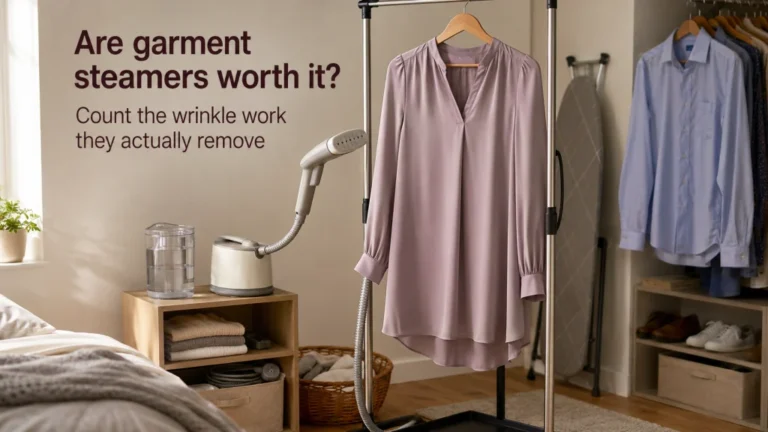
Structured jackets, layered pieces, long dresses, sleeves, collars, and garments with areas that sit close together do not present one flat surface. With a manual steamer, you can reposition the garment, change your angle, and spend more time on a problem area while leaving a delicate or already-smooth area alone. That flexibility can be especially useful when the garment has one stubborn section rather than uniform wrinkling. The penalty is that every repositioning step is yours to perform.
A cabinet supports garments according to its own hangers, shelf, interior height, and cycle design. A long hem that bunches, a knit that should not hang in the usual way, or a structured piece that needs a particular support method can change the result. This is where exact model documentation matters more than broad claims about what a steam closet can handle. Before treating an expensive or delicate item in either system, check the garment care label and the appliance instructions rather than assuming that steam is automatically safe for every fabric or construction.
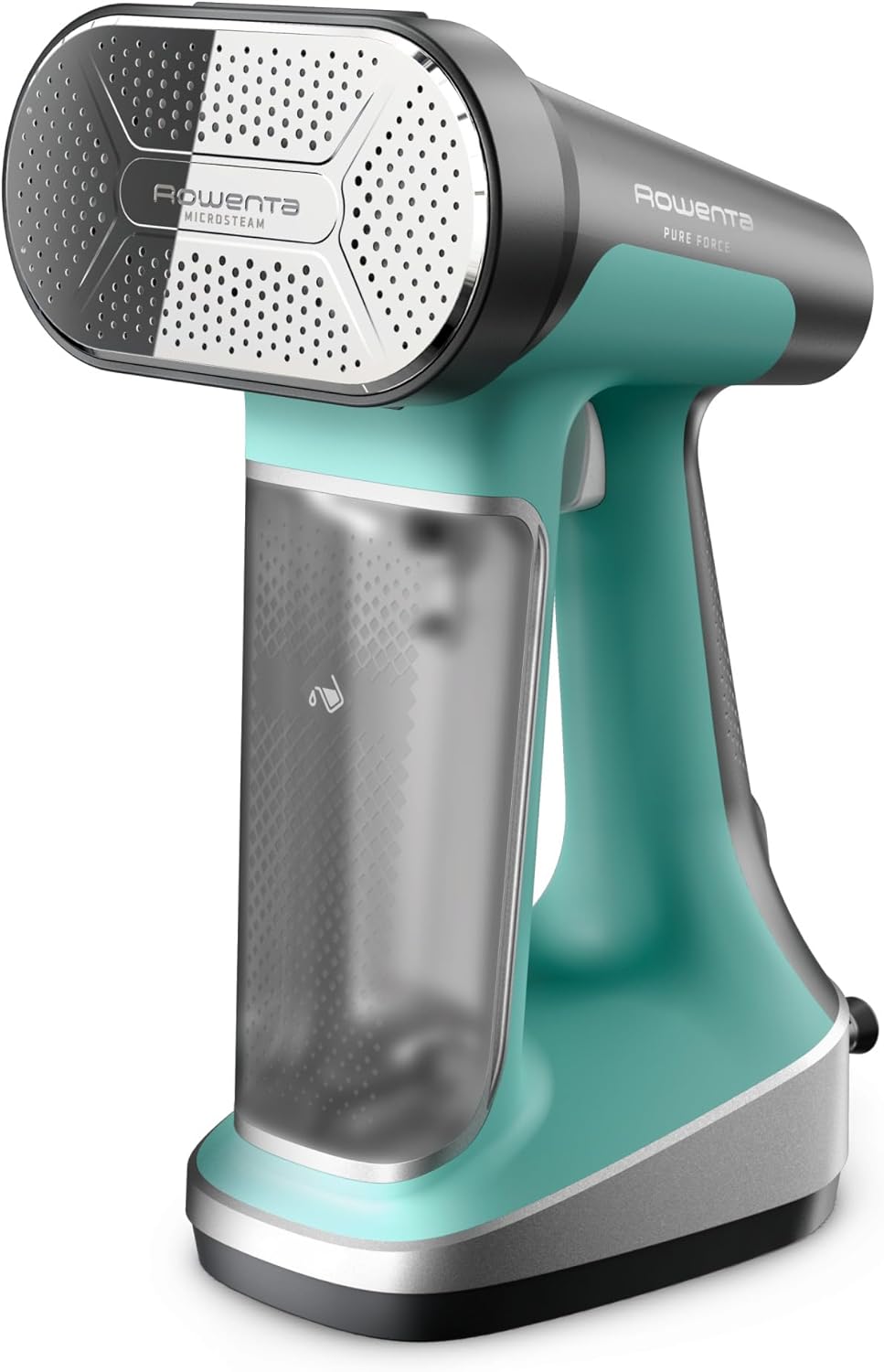
This 1875W 2-in-1 garment tool is designed for vertical steaming and horizontal ironing. Its 7.1-ounce tank supports a handheld format, and the model includes automatic shutoff. The DR8822 combines both functions in one unit so the same tool can work against a hanging garment or a flat surface.
Check On AmazonIf you click this link and buy, we earn a commission at no additional cost to you.
Compare carried weight with cabinet capacity and waiting
The manual-steamer burden is concentrated in your hands and in the short setup around each garment. Tank size can reduce refilling, but added water also adds weight, and a larger upright unit can trade hand weight for a hose, base, pole, and more storage. This is why a specification such as tank capacity should be translated into a real question: will the unit stay comfortable through the amount of clothing you normally steam? The better size is the one that matches your session without creating a refill or handling problem you dislike more than the wrinkles.
The cabinet burden appears elsewhere. You need enough useful interior room for the garments, enough patience for an automated cycle, and a place where the appliance can stay ready without blocking another household function. You are not holding the cabinet while it works, but you also cannot target one wrinkle and declare the job finished the moment it looks acceptable. This is the central trade in a steam closet vs handheld steamer comparison: manual systems spend your active attention, while cabinets spend floor space and elapsed waiting in exchange for less hands-on movement.
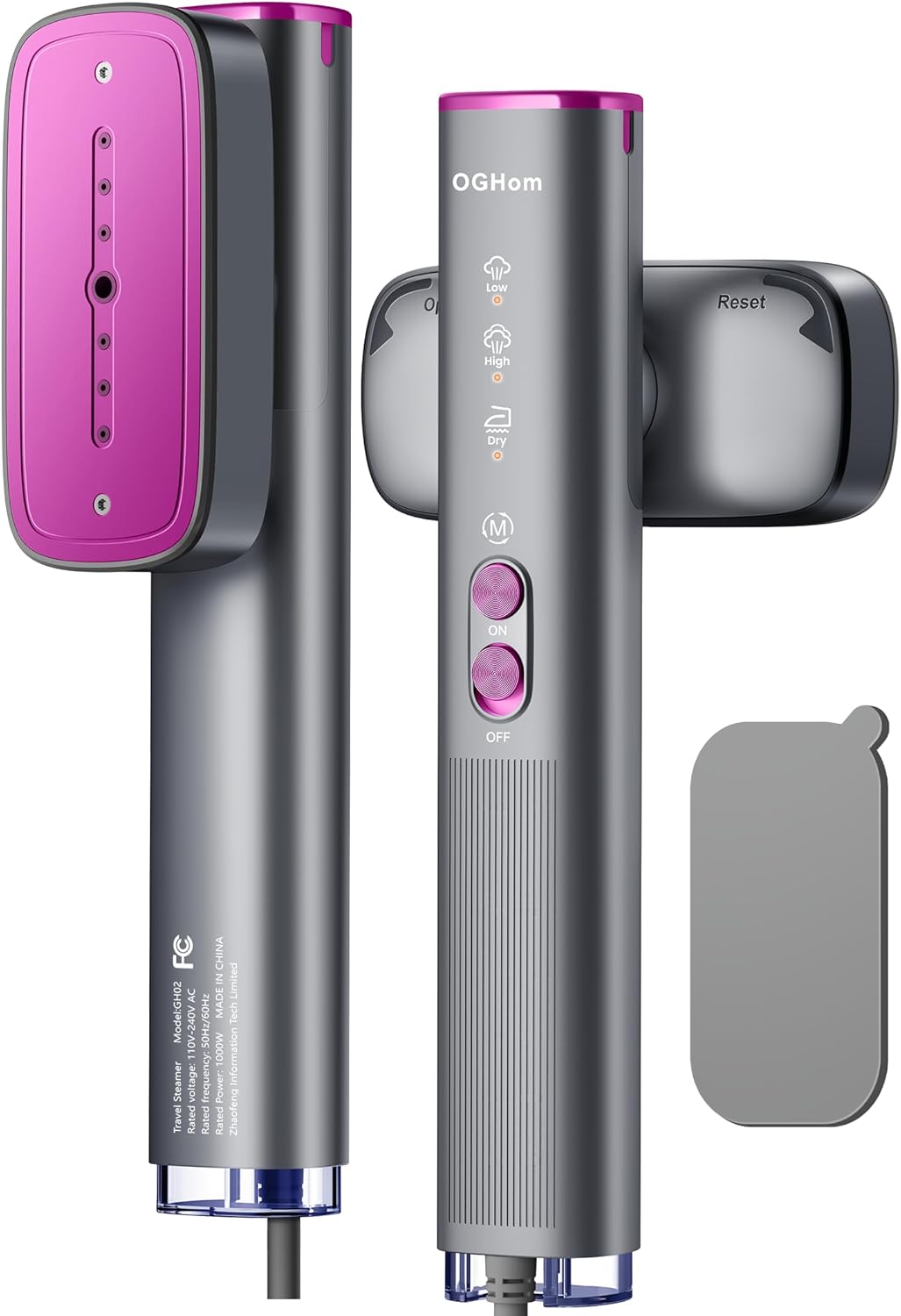
This 1000W handheld steamer supports 110-240V input and uses a 120 ml reservoir. It offers dry, low-steam, and high-steam modes through a 90-degree rotating head. The compact tank and handheld body make refill frequency and session size easy to compare against the convenience of a larger appliance.
Check On AmazonIf you click this link and buy, we earn a commission at no additional cost to you.
Storage is temporary for one system and permanent for the other
A handheld steamer can often live on a shelf, in a drawer, or in a small utility space once it has cooled and been emptied according to its instructions. Even an upright steamer is generally an appliance you can move or store, although the pole, hose, hanger, cord, and base may make that less tidy than product photos suggest. If storage friction is high, a compact unit may be used more often simply because it is easier to retrieve. The real measurement is not only the steamer’s body size, but the whole path from storage to use and back again.
A steam closet is closer to adding a narrow floor-standing appliance to the room. It needs a stable location, appropriate electrical access, door clearance, ventilation or clearance specified by the manufacturer, and any required anti-tip or installation provisions for the exact model. That floor area remains committed even when no garments are inside. For a small home, rental, or frequently changing layout, permanent placement can outweigh the convenience of unattended cycles long before purchase price becomes the deciding factor.
Storage can be temporary. Check the entire stored setup, including the base, hose, pole, cord, tank, and cooldown location, then make sure the retrieval path is easy enough that the appliance will actually be used.
Placement is effectively permanent. Check the exact cabinet footprint, door swing, required clearances, electrical access, anti-tip instructions, and whether the surrounding room still works normally when the appliance is installed.
A poorly stored steamer can still become inconvenient, while a well-placed cabinet can fit naturally into the right laundry or utility space. The useful comparison is how much space stays committed between sessions. That space cost remains even when the appliance is switched off.

This black storage case is made for selected Jack & Rose, FEPPO, Nesugar, and Kssvzz portable steamers. It includes a mesh pocket for small accessories and is sold as the case only. The organizer keeps a compatible handheld unit and its accessories in a defined storage package between uses.
Check On AmazonIf you click this link and buy, we earn a commission at no additional cost to you.
Both systems create a water and maintenance routine
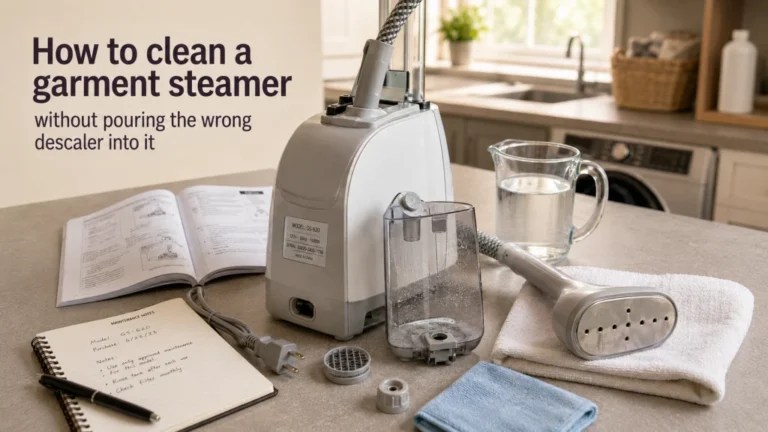
Manual steamers are simple, but they are not maintenance-free. The tank still has to be filled with the water type allowed by the manufacturer, the unit needs to cool safely, and mineral buildup or residue may need attention according to the use-and-care instructions. Small tanks create more frequent refill decisions, while larger tanks can increase handling weight and leave more water to manage after the session. The best ownership routine is the one you will actually follow rather than the one that sounds easiest on a feature list.
Steam closets can add supply and drain tanks, filters, interior cleaning, trays, or cleaning cycles depending on the design. Current manufacturer information for cabinet systems also makes clear that the water system and interior need periodic attention, even when no permanent plumbing is required. That means automation moves labor around; it does not remove ownership chores. If you dislike emptying tanks, cleaning filters, or keeping a large appliance ready for the next load, those tasks belong in the comparison before any smart feature or premium finish.
- Check the exact water type the manufacturer permits.
- Confirm which tanks, filters, trays, or internal surfaces require routine cleaning.
- Plan where a hot manual steamer can cool safely before storage.
- Verify cabinet installation, clearance, anti-tip, and service instructions for the exact model.
- Stop using either appliance and seek qualified service for damaged cords, burning odors, sparks, uncontrolled operation, or water entering electrical areas.
Those checks keep the comparison grounded in ownership rather than showroom convenience. A product that reduces active wrinkle-removal work can still create a maintenance routine you dislike. Conversely, a manual steamer with a modest tank can remain the easier appliance if its cleanup fits naturally into the way you already care for clothes. The right system is the one whose repeated chores are acceptable, not merely the one with the longer feature list.

This upgraded HiLIFE handheld steamer is listed at 1100W with a 300 ml water tank. The listing describes a no-leak design, 30-second heat-up, compact body, and 120V-only operation. Those specifications make tank capacity, refill planning, and electrical fit easy to compare before purchase.
Check On AmazonIf you click this link and buy, we earn a commission at no additional cost to you.
Purchase price is only part of the commitment
The price gap between a manual steamer and a floor-standing automated cabinet can be large, but a universal payback calculation would be misleading. The cabinet only creates value when its specific convenience is used often enough to matter in your household, and that depends on wardrobe, refresh frequency, available space, and what other garment-care methods you would otherwise use. A low-cost manual steamer can still be better value when you prefer targeted control. Higher purchase price does not automatically buy a better fit.
Service complexity also differs. A small steamer is relatively easy to replace if it eventually fails, while a large connected or heat-pump-based cabinet is a major appliance that may involve delivery, installation constraints, warranty terms, parts, and service access. That does not make the cabinet a bad purchase, but it raises the consequence of choosing the wrong system. Before paying for automation, make sure you are buying repeated labor reduction rather than an appliance that mostly stands unused.
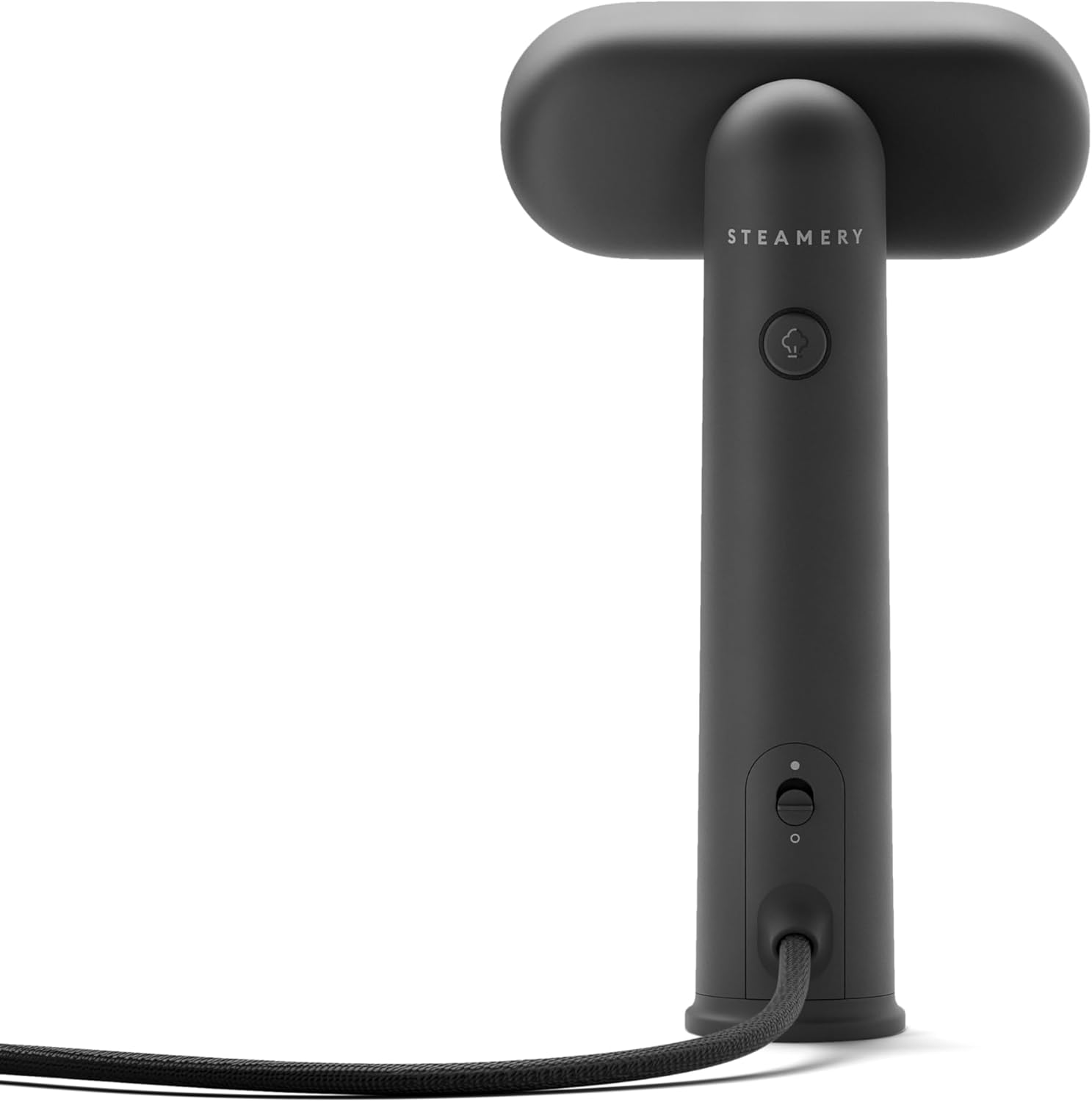
This 1200W travel steamer is listed with 16 g/min steam output and an 18-second heat-up. A rotating steam head and packable handheld format keep the appliance compact for storage and travel. The listing describes dry-steam technology in a portable garment-care design.
Check On AmazonIf you click this link and buy, we earn a commission at no additional cost to you.
Choose the system that matches the sessions you repeat
Choose a manual garment steamer when most jobs are urgent, targeted, and small enough that active hand work is not a major burden. It is also the stronger default when storage is limited, you move often, or you want a lower-commitment way to smooth hanging garments without adding a permanent appliance. A garment steamer vs steam closet decision should therefore begin with how many items you usually care for at once, not with which system looks more advanced. The simpler tool wins whenever its limitations do not interfere with your real routine.
Choose a steam closet when you repeatedly have several compatible garments to refresh, you value being able to walk away during the process, and the cabinet can stay in a practical location without creating space problems. Choose neither when you rarely steam clothing, need a truly crisp pressed finish most of the time, or would still reach for your existing iron or professional garment care for the majority of jobs. Buying nothing is a valid outcome if the new system does not remove enough repeated work. The point is to match the appliance to the session, not to build a more complicated laundry area.
| If this describes your routine | Best next direction | Why |
|---|---|---|
| Most sessions involve one or two items, visible problem areas, and a short deadline. | Manual garment steamer | Targeted control matters more than unattended batch processing. |
| Several compatible garments are refreshed together and you strongly value walking away during the cycle. | Steam closet | The permanent space and higher commitment buy a form of labor reduction you will repeatedly use. |
| You rarely steam, usually want a sharply pressed finish, or already have a routine that handles the problem well. | Keep the current routine | Neither new appliance removes enough repeated work to justify its cost, storage, or maintenance. |
| You like the idea of automation but cannot give a cabinet a practical permanent location. | Manual garment steamer | Space is a hard constraint, so the cabinet advantage does not outweigh the ownership burden. |
| You dislike active steaming and routinely process several suitable garments at once. | Steam closet | Your main problem is hands-on labor rather than targeted control. |
Use this sequence as a filter, not a universal ranking. If two rows fit equally well, let the harder constraint decide, usually permanent floor space, tolerance for active hand work, or the finish you expect. That keeps premium features from overpowering a basic fit problem and preserves the no-purchase outcome.

This Conair GS47 combines a handheld fabric steamer with a ceramic soleplate for ironing. The listing specifies a 25-second heat-up and up to 12 minutes of steam time. Its 2-in-1 format covers quick hanging touchups as well as occasional flat finishing.
Check On AmazonIf you click this link and buy, we earn a commission at no additional cost to you.
After choosing the system, narrow the appliance within that system
If manual steaming fits your routine, the next comparison should stay inside that category instead of reopening the cabinet question. The garment steamer buying guide walks through tank size, handling, storage, controls, and other ownership factors that separate manual steamers from one another. Once those constraints are clear, the current garment steamer comparison can help you evaluate what is presently available without changing the basic system choice. That sequence keeps feature shopping from overriding the workflow decision you already made.
If unattended cabinet care is the better match, use the steam closet overview to narrow capacity, placement, garment support, maintenance, and installation needs before looking at current options. The steam closet value analysis is useful when the unresolved question is whether the automation justifies its space and ownership burden, while the current steam closet comparison belongs at the end of that process. Keep the exact cabinet dimensions and manual beside you when you compare those options, because installation and usable garment space can vary by model. System first, exact appliance second is the safer way to avoid paying for capabilities your household will not use.

This 1500W handheld garment tool combines vertical steaming, flat ironing, and dry pressing in one unit. Its titanium-infused ceramic soleplates heat in about 25 seconds, while the 200 ml tank provides up to 9 minutes of continuous steam. The clamping design can press both sides of a garment at once, making it useful for collars, cuffs, seams, and other areas where added pressure helps.
Check On AmazonIf you click this link and buy, we earn a commission at no additional cost to you.
Final thoughts: choose targeted immediacy or unattended batch care
A manual garment steamer is a control tool: you spend attention exactly where the garment needs it and then stop. A steam closet accepts a small batch, runs without continuous hand work, and demands permanent space in return. Neither arrangement is automatically the more practical one.
Before buying, picture your most common garment-care session from retrieval through cleanup. Count the items, note how urgent the job is, decide how crisp the finish needs to be, and identify where the appliance will live after the job. Then include water handling, cleaning, service access, and the care instructions for the garments you actually own. The right choice is the system whose everyday compromises feel minor because its main advantage solves a task you genuinely repeat.

This 1200W Reewit handheld tool combines steaming and dry ironing with a 90-degree rotating head. It heats in about 20 seconds, supports 100-240V input, and measures about 10.63 by 2.48 by 4.1 inches. The dual-voltage handheld design works without requiring permanent floor space.
Check On AmazonIf you click this link and buy, we earn a commission at no additional cost to you.
FAQs
👔 Is a steam closet better than a handheld steamer for wrinkles?
Not universally. A handheld steamer gives you targeted control over one wrinkle or one garment, while a steam closet trades that control for unattended processing of a small batch.
🧺 Can a steam closet replace a garment steamer completely?
It can replace some routine refreshing, but not every targeted touchup. If you often need to correct one collar, hem, sleeve, or stubborn area immediately, manual steaming can still be the more practical tool.
📐 Does a steam closet need permanent floor space?
Yes, treat it as a floor-standing appliance rather than something you store after each use. Check the exact model’s footprint, door clearance, ventilation requirements, electrical access, and installation instructions before buying.
💧 Do both systems need water maintenance?
Yes, although the routine differs by model. Manual steamers need tank and mineral-care attention, while cabinets may add supply and drain tanks, filters, interior cleaning, or dedicated maintenance cycles.
✨ Will either system give dress shirts a crisp ironed finish?
Do not assume so. Steam can relax wrinkles, but a crisp finish often depends on heat plus pressure, so keep an iron or another pressing method if sharp creases and flat plackets matter to you.
References and sources
- LG Styler steam closet: Supports the distinction between enclosed automated garment care and handheld steaming, plus general water-system and maintenance expectations.
- Good Housekeeping garment steamer testing: Supports manual-steamer handling, wrinkle-removal, tank, storage, and finish trade-offs across tested fabrics.
- Homes & Gardens steam closet testing: Supports cabinet-space, batch-loading, maintenance, and heavy-crease limitations observed in independent use.