Choosing among the main types of mixers gets easier once you separate four decisions that are often mashed into one feature list: mixer class, ownership fit, within-class criteria, and current product selection. A hand mixer and a stand mixer can overlap on many jobs, but storage, batch demands, handling, cleanup, and the need for hands-free mixing change which path deserves more attention. Wattage, speed count, bowl size, and attachments matter only after you know what work you expect the machine to do and what ownership burden your kitchen can absorb. By the end, you should know which mixer question to answer next and which specification is actually worth checking.
Why mixer shopping gets confusing so quickly
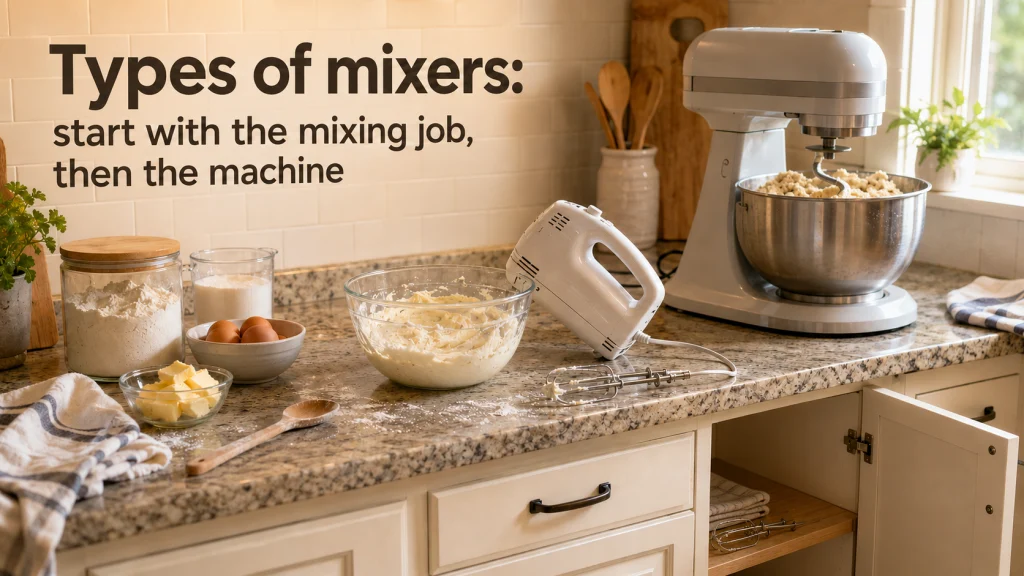
Search for types of mixers for a home kitchen and the advice can turn into a pile of unrelated questions within a few minutes. This article is deliberately limited to household electric hand mixers and stand mixers, not commercial, spiral, or other specialty mixer classes. Should you buy a hand mixer or a stand mixer, how much bowl capacity matters, whether wattage proves power, whether more speeds are useful, and whether attachments justify the extra cost are still separate decisions. The cleaner approach is to identify the mixing job first, then answer those decisions in order.
That matters because a mixer can look impressive on paper and still be awkward in the kitchen where it has to live. A stand mixer may remove hand effort during longer jobs, yet it also asks for counter or cabinet space, enough clearance to operate, and a realistic plan for moving or storing a heavier appliance. A hand mixer is easier to put away, but the operator still holds and guides it through the job, which can matter with thicker mixtures or longer mixing sessions. For the broader equipment logic behind this sequence, the small kitchen appliance decision framework puts household fit ahead of feature count for the same reason.

Hamilton Beach 62682G offers six speeds plus QuickBurst and a 250-watt motor. It includes two traditional beaters and a whisk, with a snap-on case that keeps the attachments together. Bowl Rest lets the mixer sit on the bowl edge between mixing steps.
Check On AmazonIf you click this link and buy, we earn a commission at no additional cost to you.
Use the decisions in the right order
The useful way to think about electric mixer types is as a sequence rather than a ranking. First choose the class of machine that matches the recurring job, then decide whether a stand mixer would be used often enough to justify its footprint and handling. After that, compare the criteria that matter inside the chosen class, such as control, comfort, bowl access, usable capacity, architecture, and attachment needs. That order keeps later comparisons tied to a defined household job instead of letting a feature list set the agenda.
This order also keeps specifications in their proper role. Independent mixer testing finds meaningful model differences, but wattage and speed count do not necessarily predict better performance. That is a warning against shopping by one number when the mixer must also fit your storage, batch size, and routine. If you are wondering how to choose a mixer, write down the job and the household constraint before you write down a wattage target.
| Evidence field | Evidence type | What it can actually answer |
|---|---|---|
| Exterior dimensions and weight | Specification | Whether the mixer fits, clears cabinets, and can be moved as planned. |
| Bowl capacity and included tools | Specification | Nominal size and package contents, not full proof of real task performance. |
| Wattage and speed count | Specification | Electrical input and control labels, not an automatic performance ranking. |
| Mixing, whipping, and kneading results | Measured performance | How a specific model performed under defined test conditions. |
| Noise and control convenience | Measured performance | How easy and comfortable a tested model is to operate under the stated method. |
Use the table as a gate, not as a checklist to complete all at once. If the class decision is still open, there is little value in comparing attachment ecosystems or hunting for a specific bowl size. If the class is settled, the next article can go deeper without repeating the whole category decision. That is how a broad mixer search turns into a smaller, answerable buying question.

OXO Good Grips 11-Pound Digital Kitchen Food Scale has an 11-pound maximum capacity and reads in 0.1-ounce or 1-gram increments. Its pull-out display helps keep large bowls from blocking the readout. A zero function and unit conversion button support repeatable ingredient and batch measurements.
Check On AmazonIf you click this link and buy, we earn a commission at no additional cost to you.
Send the class decision to the hand-versus-stand comparison
The first branch is not about which machine is universally better. It is about whether the household needs a mixer that you hold and move through the bowl or a stationary machine that supports the bowl and mixing mechanism for you. Hand mixers are commonly associated with lighter, shorter jobs and easier storage, while stand mixers are built around hands-free operation and can be better suited to heavier or larger work. The practical difference is the amount of physical work, space, and setup you are willing to trade for that capability.
A household that makes frosting, whipped cream, cake batter, and similar batches occasionally may value quick retrieval and a small storage footprint more than hands-free operation. Another household may mix dense dough, larger batches, or recipes that benefit from sustained mixing while other prep continues, which changes the value of a stationary machine. Those are class-level questions, and they deserve a direct comparison rather than a detour into individual features. Use the stand mixer vs hand mixer comparison when that basic class choice is still unresolved.

KitchenAid Classic K45SS uses a 4.5-quart stainless steel bowl and tilt-head design. Its 10-speed control supports a range of mixing tasks, and the mixer includes a flat beater, dough hook, and wire whip. The stationary bowl-and-head layout makes it a direct stand-mixer example for comparing hands-free operation with a hand mixer.
Check On AmazonIf you click this link and buy, we earn a commission at no additional cost to you.
Follow the hand-mixer path after the class is settled
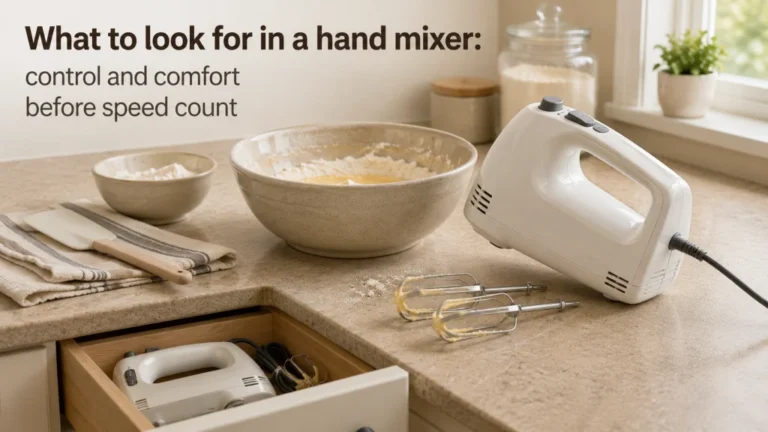
Once a hand mixer is the likely class, the decision becomes much more specific. Weight and balance matter because the machine stays in your hand, while low-speed control helps keep dry ingredients in the bowl at startup. Cord setup, beater design, attachment release, storage, and cleanup can matter more than an impressive maximum-speed number. This is where kitchen mixer types stop being an abstract category and turn into an ownership decision.
Do not assume that a dough hook or a higher wattage label automatically converts a hand mixer into the right tool for repeated heavy dough work. The exact model, its manual, its tested performance, and the effort required to control it still matter. The main advantage of staying on the hand-mixer path is that you can judge these factors without paying for stand-mixer capacity or giving up permanent counter space you do not need. The trade-off is that the user’s hand and arm remain part of the mixing system.
Keep hand-mixer criteria focused on control and handling
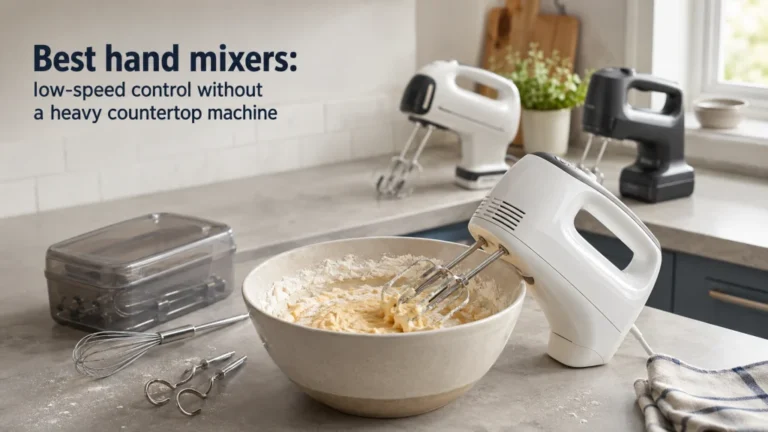
The deeper hand-mixer criteria belong in what to look for in a hand mixer. That decision should examine how the controls behave, how comfortable the mixer is to hold, whether the cord or battery arrangement fits the workspace, which attachments are genuinely useful, and how easily the beaters and body can be cleaned and stored. Manufacturer feature lists establish what is included, while handling and task-specific performance determine whether those features are useful in practice. When those ownership criteria are already clear, move to current hand-mixer recommendations to compare available models against the brief.
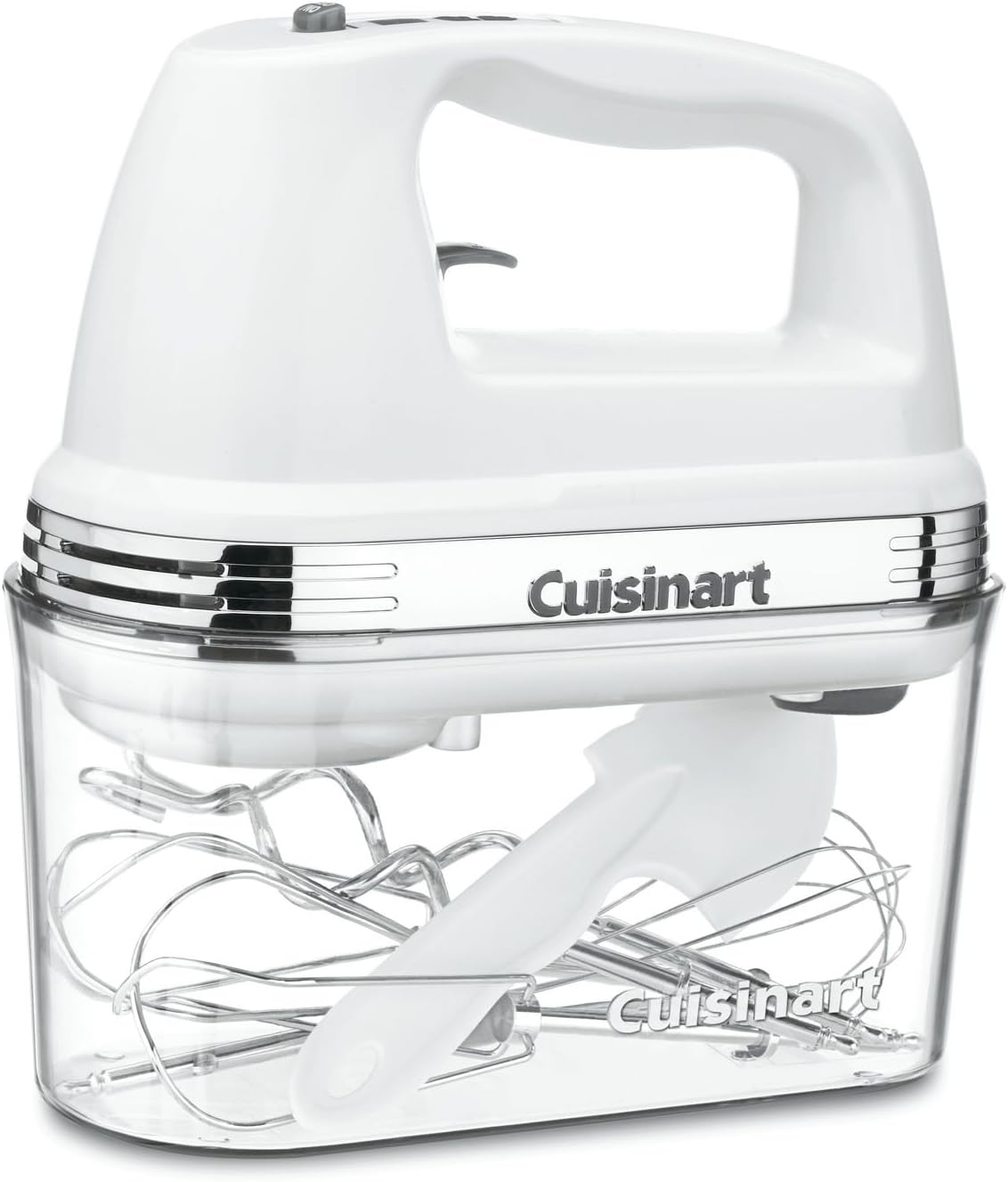
Cuisinart HM-90S pairs a 220-watt motor with nine speed settings, including three low mixing speeds. It comes with extra-long dishwasher-safe beaters and a storage case. That control range and contained storage directly support the section’s focus on startup control, handling, cleanup, and keeping attachments organized.
Check On AmazonIf you click this link and buy, we earn a commission at no additional cost to you.
Treat stand-mixer ownership as a separate threshold
Choosing the stand-mixer class does not finish the buying decision. A stationary mixer reduces holding effort but adds footprint, lifting, bowl access, cabinet clearance, accessory storage, and cleanup demands. A capable mixer can still be a poor fit if retrieving it is annoying. That is why stand-mixer shopping should begin with the ownership threshold before it moves into architecture or capacity.
Judge where the mixer will operate, not only where it can be stored. A tilt-head design needs space to raise the head, while a bowl-lift design changes how the bowl is attached and accessed, so the same counter location can behave differently with each architecture. If it must be lifted from a low cabinet, weight becomes part of the workflow. A larger bowl can reduce batch splitting, but only when that extra capacity matches the quantities you repeatedly make.
Decide whether a stand mixer is worth owning before choosing one
The stand-mixer worth-it decision is for readers who are attracted to the class but have not yet proved that the appliance fits their routine. It should weigh frequency, batch demands, hand effort, space, storage, cleanup, and the cost of owning capability that may sit unused. A household that bakes occasionally can make a different decision from one that regularly mixes large or demanding batches, even when both households can afford the same machine. Buy, wait, or skip is an ownership judgment, not a contest between feature lists.
Build the stand-mixer shortlist only after ownership makes sense
When the ownership threshold is already clear, the stand mixer guide becomes the right place to compare evergreen stand-mixer criteria without turning the decision into a current-model ranking. That path can connect architecture, usable capacity, footprint, handling, controls, included mixing tools, compatibility, cleanup, and the jobs that justify the machine. If those criteria are settled and the remaining task is to compare currently available options, use current stand-mixer recommendations. At that point the shortlist has a defined job to satisfy instead of a vague mandate to look impressive.

AIEVE’s acrylic slider is sized for KitchenAid 4.5- to 5-quart tilt-head stand mixers. The tray uses a felt bottom so the mixer can slide across the countertop instead of being repeatedly lifted. Its model-specific fit makes it a practical ownership accessory for the section’s focus on moving, positioning, and storing a heavier stand mixer.
Check On AmazonIf you click this link and buy, we earn a commission at no additional cost to you.
Separate architecture, size, wattage, and attachments
Several stand-mixer questions look related but should not be answered by the same shortcut. Architecture changes bowl access and the way the mixer occupies vertical space, size changes batch fit and physical footprint, wattage is an input specification rather than a direct performance score, and attachments create compatibility and storage questions of their own. Combining all four into a generic feature list makes it easy to overvalue whichever number looks biggest. Each question deserves evidence that actually matches the decision.
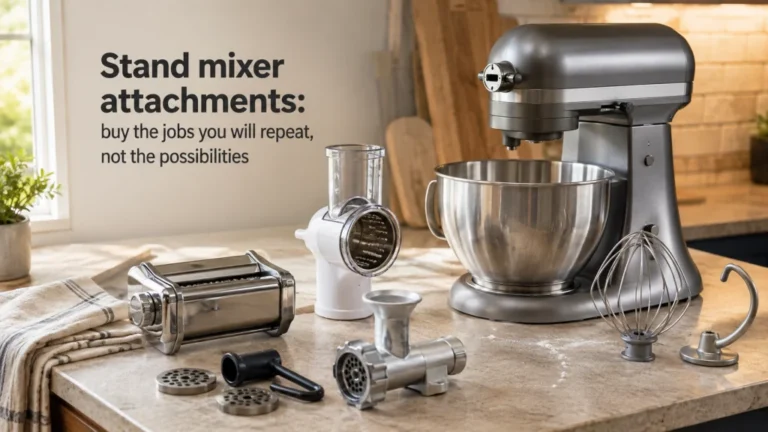
Start with tilt-head vs bowl-lift mixers if bowl access, stability, counter setup, or overhead clearance is the unresolved issue. Use stand-mixer size and usable capacity when batch fit is the problem, and stand-mixer wattage when a power label is driving the purchase. If the attraction is future versatility, stand-mixer attachments and compatibility should come next. This separation prevents a useful feature in one household from becoming a reason to overbuy in another.

KitchenAid KSMMGA connects to the power hub of household KitchenAid stand mixers. It includes fine, medium, and coarse grinding plates plus two sausage stuffer tubes. The attachment and its parts store together in a case, making compatibility and accessory storage concrete considerations instead of abstract feature-list items.
Check On AmazonIf you click this link and buy, we earn a commission at no additional cost to you.
Let bread-dominant use define its own workload
Bread dough changes the mixer question because the workload can be more demanding than whipping, aerating, or mixing a thin batter. That does not mean every mixer with a dough hook is automatically suited to every dough, batch size, or frequency. The exact manual may set limits on speed, quantity, or operating method, and those instructions take priority over a generic attachment label. Repeated dense-dough work should therefore be evaluated as a workload, not as a badge on the accessory list.
The stand mixer for bread dough framework is the right next step when bread is the main reason for buying. It should help define dough type, batch demands, frequency, stability, usable bowl capacity, model-specific limits, and the amount of hand kneading you are actually trying to replace. That keeps the question separate from broad current stand-mixer rankings, where bread ability can otherwise be reduced to a single claim. The result is a more defensible brief for whatever mixer you compare later.

Bosch Universal Plus bundle pairs a 500-watt mixer with a 6.5-quart bowl, wire whips, a dough hook, and a NutriMill dough-hook extender. The mixer provides four variable speeds plus pulse. Those dough-oriented tools and bowl capacity make it a relevant model to evaluate against the section’s bread workload, batch, frequency, and manual-limit questions.
Check On AmazonIf you click this link and buy, we earn a commission at no additional cost to you.
Build a mixer brief before comparing products
A short worksheet keeps every new feature from restarting the shopping process. Record the usual task, batch size, workload, operating location, and storage location. Add frictions such as lifting, cord management, bowl access, cleanup, or attachment storage. Then record the one or two questions that still need evidence instead of collecting aimless specifications.
This brief also gives you a way to separate measured performance from marketing language. A number such as wattage, capacity, or speed count belongs in the worksheet only when you know what decision it informs and when the exact model documentation supports it. Compatibility should be verified by model or system, especially for bowls, attachments, and replacement parts that can look similar while fitting differently. If a requirement cannot be tied to a recurring household job, it probably should not be driving the purchase.
- Recurring job: what mixtures you make and how often you make them.
- Batch demand: the amount you usually prepare, not the largest batch you can imagine making once.
- Handling limit: how much holding, guiding, lifting, or repositioning you are willing to do.
- Space check: operating footprint, storage location, and any overhead clearance needed for access.
- Cleanup burden: beaters, bowls, attachments, splash points, and storage after washing.
- Evidence still missing: exact dimensions, tested performance, compatibility, included parts, or manual limits.
Take that brief with you when you read a comparison or a current product list. It makes it much easier to reject a feature that does not solve your job and to notice when a smaller or simpler machine is already enough. It also creates a stop condition: once every important requirement has evidence, you can stop adding criteria. Mixer shopping gets considerably calmer when the brief, rather than the product page, controls the decision.

Escali Primo has an 11-pound capacity and measures in 0.05-ounce or 1-gram increments. Its tare function subtracts container weight, while the sealed two-button controls are designed for straightforward use around food prep. Those measurements help turn the worksheet’s batch-demand field into a number that can be checked against mixer capacity.
Check On AmazonIf you click this link and buy, we earn a commission at no additional cost to you.
Use current recommendations only after the class is clear
Current recommendations are useful when you already know which class you want and what evidence fields matter. A hand-mixer list should not quietly convince a reader that a hand mixer is the right class, and a stand-mixer ranking should not substitute for deciding whether a heavy countertop appliance fits the household. That distinction matters because product availability changes faster than the underlying decision logic. The class and ownership framework should survive even when individual models come and go.
For a settled hand-mixer brief, use the current hand-mixer shortlist and compare each candidate against your control, comfort, storage, and task requirements. For a settled stand-mixer brief, keep that shopping path separate and use the current stand-mixer shortlist. Do not cross the two lists simply because one model has a larger number, more attachments, or a more premium position. The recommendation stage should confirm the decision you already made, not redefine it.

Hamilton Beach’s 4-quart stand mixer uses seven speeds and a 300-watt motor with planetary mixing action. It includes a whisk, flat beater, dough hook, and splash guard. This current model gives a settled stand-mixer brief a concrete option to compare against bowl size, control, included tools, and the jobs the household actually plans to do.
Check On AmazonIf you click this link and buy, we earn a commission at no additional cost to you.
Final thoughts: let the mixing job control the machine
The mixer category becomes easier once you stop asking one machine to answer every question at once. Choose the class from the recurring job, check whether the ownership burden fits your kitchen, and then compare only the criteria that can change that household decision. Specifications are evidence, not verdicts, so a larger number or longer feature list deserves weight only when it changes the work you actually do. That keeps the final choice grounded in use rather than in whichever specification is easiest to compare.
If a hand mixer meets the job with less storage and cleanup friction, there is no prize for buying a larger machine. If a stand mixer meaningfully reduces hand effort or handles a recurring workload that justifies its space, then the next step is to verify architecture, capacity, compatibility, and model-specific limits. Keep the worksheet beside the exact dimensions and manual when you shop. The right mixer is the one whose capability and ownership demands both fit the household.

KitchenAid’s fitted tilt-head mixer cover is made from quilted 100% cotton and measures about 14.4 by 18 by 10 inches. It includes a storage pocket and is shaped for KitchenAid tilt-head stand mixers. It is a useful ownership accessory when the final decision includes keeping a stand mixer on the counter and organizing small accessories between uses.
Check On AmazonIf you click this link and buy, we earn a commission at no additional cost to you.
Choose the next mixer question
You do not need to read every mixer article before buying. Use the next unresolved decision to choose where to go, whether that is the class, the ownership threshold, a design question, a hand-mixer control question, or a bread-specific workload. If two questions are still open, answer the earlier one first because architecture or wattage matters less when the class or ownership fit is unsettled. The table is a routing tool, not a reading assignment.
| Topic | What you’ll find |
|---|---|
| Stand mixer vs hand mixer | Choose the mixer class from task, effort, space, and frequency instead of feature count. |
| What to look for in a hand mixer | Evaluate control, comfort, cord or battery setup, beaters, attachments, and storage. |
| Is a stand mixer worth it? | Decide whether the appliance earns its cost, footprint, handling, and cleanup burden. |
| Stand mixer guide | Build an evergreen stand-mixer shortlist from fit, capacity, architecture, and ownership needs. |
| Tilt-head vs bowl-lift mixers | Compare bowl access, vertical clearance, stability, and the way each design occupies the counter. |
| What size stand mixer do I need? | Match usable capacity and physical size to real batch demands and kitchen space. |
| Stand mixer wattage | Understand what the wattage label can and cannot tell you about mixer performance. |
| Stand mixer attachments | Check usefulness, exact compatibility, storage, cleanup, and whether an attachment prevents another purchase. |
| Stand mixer for bread dough | Define dough workload, frequency, batch demands, and model-specific operating limits before shopping. |
| Best stand mixers | Compare current stand-mixer options after the class and buying criteria are already settled. |
| Best hand mixers | Compare current hand-mixer options after control, handling, storage, and task requirements are clear. |
The goal is not to create a longer reading list. Follow only the branch that matches the question still on your worksheet, then move to the next one or stop if the current equipment is already sufficient. A shopper who only needs better low-speed control should not have to solve stand-mixer architecture, and a bread-focused buyer should not rely on a broad popularity ranking to define the workload. Keeping each decision narrow makes the evidence easier to check and reduces accidental overbuying.

STANLEY 33-425 is a 25-foot PowerLock tape measure with a 1-inch blade. Its lock holds a measurement in place, and the case includes a belt hook. It gives readers a simple way to record counter footprint and overhead clearance before following the article’s size, architecture, or ownership branch.
Check On AmazonIf you click this link and buy, we earn a commission at no additional cost to you.
FAQs
Mixer questions often sound simple because the same two appliance classes appear in many recipes. The useful answer usually depends on the job, batch, duration, available space, and how much handling the household wants to do. These answers stay at that decision level rather than pretending one class is best for everyone. If an exact model is involved, its manual and verified specifications still control capacity, compatibility, and operating limits.
Use the questions below to check the loose ends that commonly remain after the main decision is clear. They focus on fit, capability, and the evidence needed to avoid treating a convenient feature as proof that you need more machine. If one answer exposes a missing dimension, workload detail, or manual limit, add that item to the worksheet before shopping further. If nothing important is missing, a simpler option may already be sufficient.
🥣 What are the main types of electric mixers for a home kitchen?
The two main classes covered here are hand mixers and stand mixers. Choose between them by task, batch demands, mixing duration, handling effort, storage, and counter space before comparing finer features.
✋ Is a hand mixer enough for regular baking?
It can be enough for many light and moderate mixing jobs, especially when compact storage and quick setup matter. If your recurring work involves long mixing, dense mixtures, or larger batches, compare the class demands rather than assuming the hand mixer will cover every job.
📦 How should I judge whether a stand mixer fits my kitchen?
Check the operating footprint, storage location, weight, bowl access, and overhead clearance required by the exact design. A mixer that technically fits in a cabinet can still be a poor ownership fit if moving it makes normal use inconvenient.
⚡ Does higher mixer wattage mean better performance?
Not by itself. Independent testing has found that wattage does not necessarily translate into better mixer performance, so use tested results and task-specific evidence rather than treating the largest number as the winner.
🎛️ Do I need a mixer with lots of speed settings?
More settings can offer finer control, but the count alone does not prove better performance or easier use. Pay attention to usable low-speed control, how the controls operate in your hand or at the stand, and how the model performs on the tasks you actually make.
🍞 Does a dough hook prove a mixer is good for bread?
No. A dough hook shows that the mixer has a dough-oriented tool, but the exact model’s capacity, operating limits, stability, tested performance, and your batch demands still determine whether it suits repeated bread work.
References and sources
The article uses external evidence only where the decision depends on a factual performance or design claim. Independent testing supports the caution against treating wattage or speed count as automatic performance rankings, while manufacturer documentation establishes basic hand-mixer and stand-mixer design differences. These sources are not a shopping list and do not imply a specific product recommendation. Exact model instructions still take priority when capacity, attachments, speed limits, cleaning, or operating procedures vary.
- Consumer Reports mixer buying guide: Supports the class-level comparison, testing framework, clearance concerns, and the finding that wattage and speed count do not necessarily predict better performance.
- KitchenAid hand mixer buying guide: Documents common hand-mixer feature categories such as speed settings, design, portability, attachments, and handling considerations.
- KitchenAid stand mixer buying guide: Documents the basic tilt-head and bowl-lift architectures, bowl access differences, size considerations, and attachment categories.
These sources support narrow claims rather than serving as decoration, and they do not establish that one mixer class or brand is universally better. For any exact mixer under consideration, verify the product page and owner manual before relying on dimensions, compatibility, package contents, capacity, or operating limits. Similar-looking bowls, beaters, and attachments are not proof of interchangeability. Stop at the manufacturer boundary when exact documentation reserves a procedure for service or gives model-specific safety instructions.