Best hand mixers: low-speed control without a heavy countertop machine
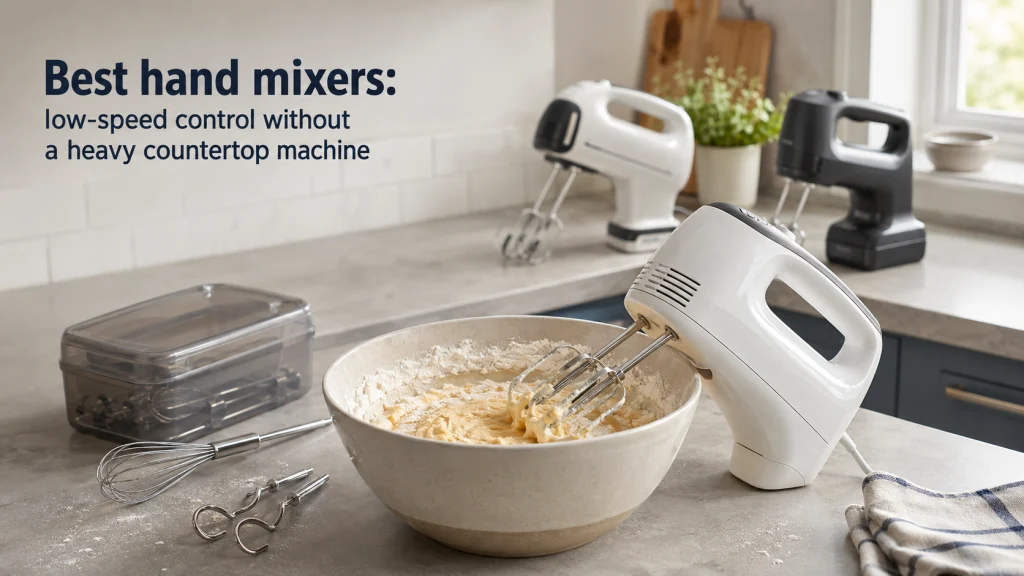
Best Hand Mixers

A useful first screen for a hand mixer is simple: it should start in a bowl of flour without sending the flour over the counter. That makes low-speed control and comfortable handling more important buying gates than the highest speed on the dial, while independent mixing and whipping tests show which machines still perform once
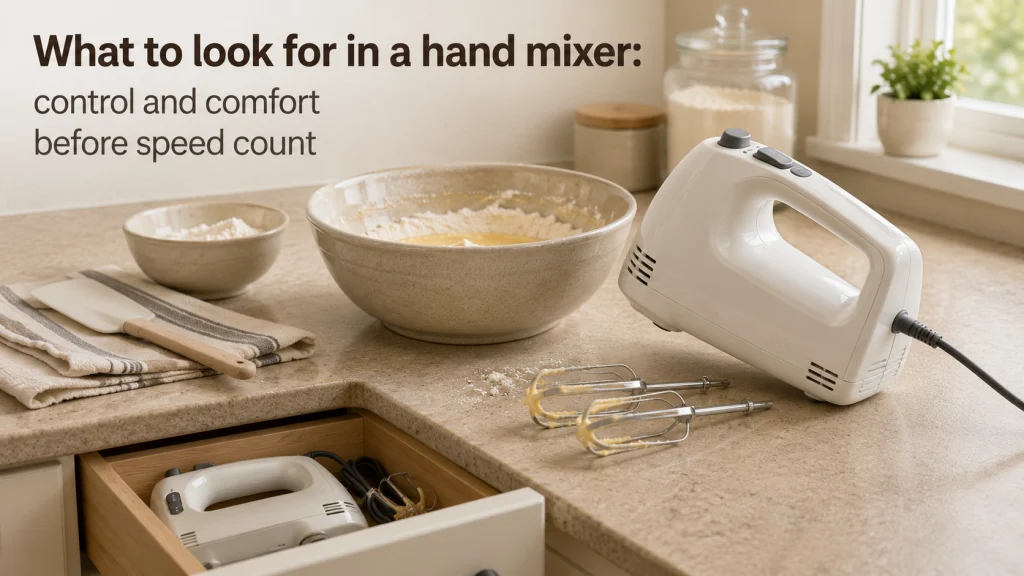
What to look for in a hand mixer: control and comfort before speed count

What To Look For In A Hand Mixer

A good hand mixer should start gently, feel balanced in the hand, clean up without a fight, and be easy to retrieve for the short jobs that justify owning one. Speed count and wattage describe a mixer, but neither number proves that it will perform well or feel comfortable. Build the shortlist around low-speed control,

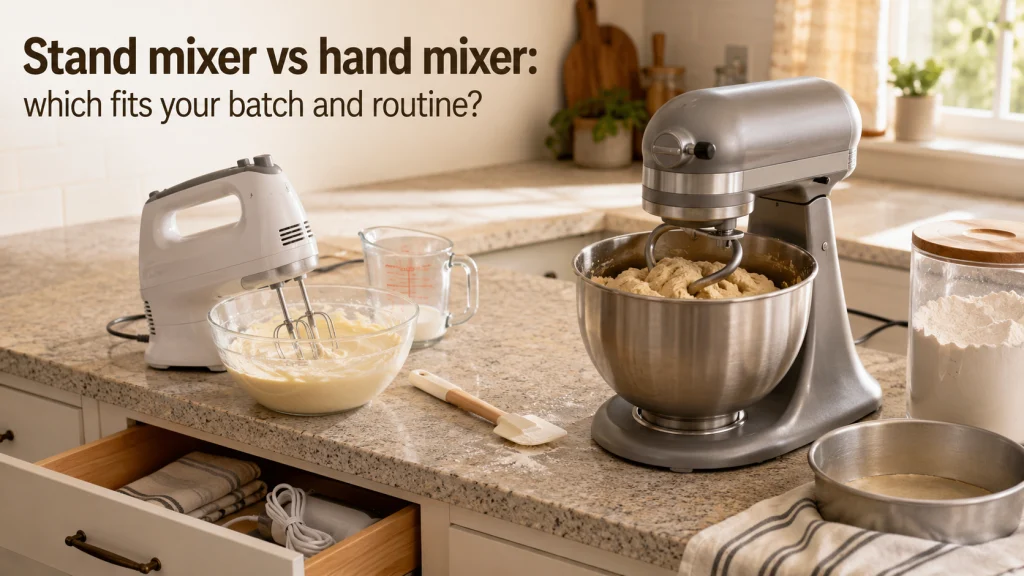
Stand mixer vs hand mixer: which fits your batch and routine?

Stand Mixer Vs Hand Mixer

A hand mixer and a stand mixer can overlap on basic electric mixing, but they solve the work differently. A hand mixer favors quick setup, flexible bowl choice, easy storage, and smaller routine jobs, while a stand mixer becomes more useful as mixing gets longer, denser, or more hands-off. The choice should come from the

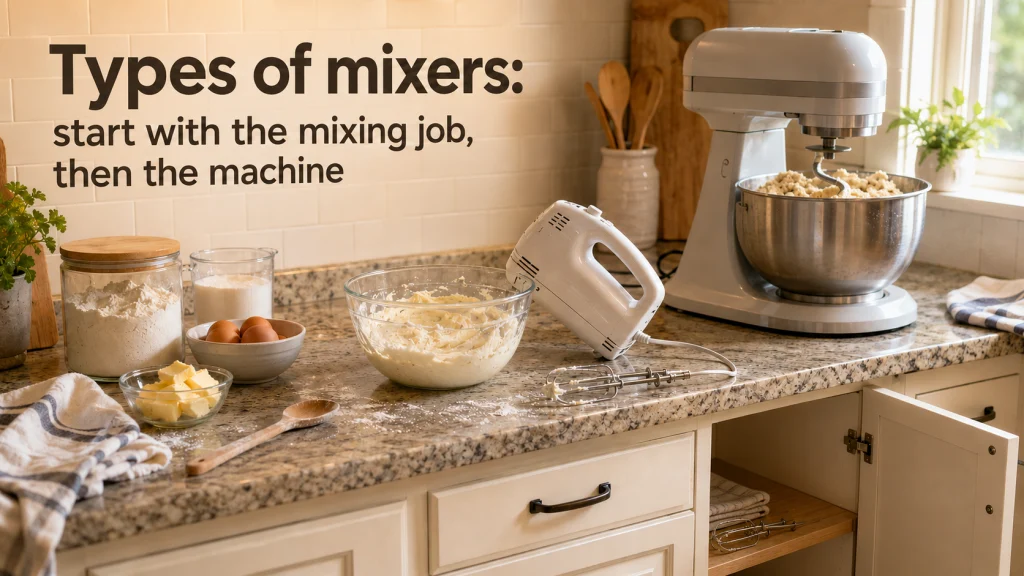
Types of mixers: start with the mixing job, then the machine

Types Of Mixers

Choosing among the main types of mixers gets easier once you separate four decisions that are often mashed into one feature list: mixer class, ownership fit, within-class criteria, and current product selection. A hand mixer and a stand mixer can overlap on many jobs, but storage, batch demands, handling, cleanup, and the need for hands-free