Choosing a household vacuum is mainly a routing decision, not a contest for one universal winner. Upright, canister, stick, and handheld designs move weight, reach, runtime, disposal, storage, and maintenance to different places in the routine. Floors, stairs, session length, power, and emptying all change the answer. The goal is to identify an architecture and ownership system that fit your home before comparing models.
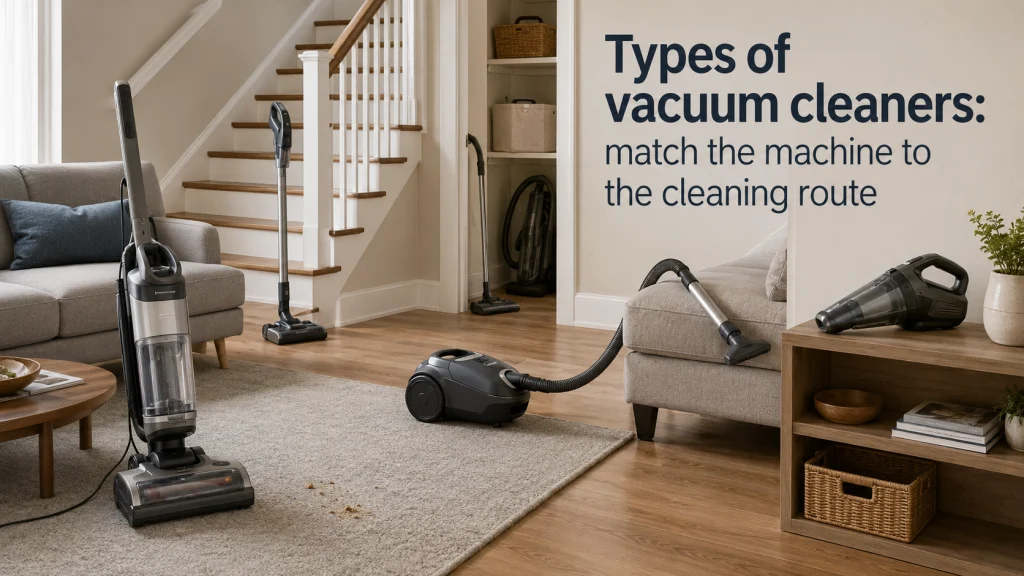
Start with the route through your home
The types of vacuum cleaners that work well in one room can become awkward at the first staircase, thick rug, or low sofa. A stick keeps more working mass in your hand, an upright moves as one main unit, and a canister leaves the motor and dirt container on the floor behind you. A handheld shortens the system further for small jobs rather than whole-room floor cleaning. That route matters before suction claims, accessory counts, or premium features do.
Walk through one normal cleaning session from storage to final emptying. Notice where you lift the machine, change outlets, reach under furniture, cross rugs, and store the vacuum afterward. A first-time buyer can choose by floor type alone and later discover that carrying weight or reach is the real problem. If you are not yet sure a dry manual vacuum is the right system, start with the broader home cleaning appliance decision.

The NV352 uses a Lift-Away pod for moving from floors to stairs and above-floor areas. Brushroll shutoff supports carpet and hard-floor cleaning, while swivel steering helps around furniture. The 1.04-liter dust cup comes with a wide upholstery tool and 12-inch crevice tool.
Check On AmazonIf you click this link and buy, we earn a commission at no additional cost to you.
Keep this decision to manual dry household vacuums
This article covers vacuums a person manually moves through the home to collect dry household debris. That includes uprights, canisters, sticks, and handhelds, while bagged versus bagless and corded versus cordless are attributes that can cross several shapes. Those combinations create different carrying, storage, emptying, and maintenance routines even when they clean the same floor. The useful question is which combination fits the household, not which label sounds more advanced.
Robot vacuums, carpet extractors, wet-dry floor washers, shop-style wet/dry vacuums, and central systems solve different jobs or change who moves the equipment. If the recurring problem is embedded carpet soil or stain recovery rather than dry pickup, move to the carpet cleaner buying decision or the carpet cleaner versus vacuum cleaner comparison. Treating those systems as interchangeable makes the decision less useful. This article also stays at owner level rather than opening motors, wiring, or other service-only parts. For any exact machine, the manual defines permitted debris, surfaces, attachments, maintenance, and safety limits.

The CleanView Compact 3508 is a lightweight manual upright vacuum designed for household floor cleaning. Its compact design includes a removable extension wand for above-floor reach. Scatter-free technology and the extension-wand format keep the product inside the dry manual-vacuum scope covered here.
Check On AmazonIf you click this link and buy, we earn a commission at no additional cost to you.
Compare upright, canister, stick, and handheld architecture first
An upright combines the main floorhead, dirt collection, motor, and controls in one pushed body. A canister separates the main body from the wand and head, so the hand moves a lighter working end while the canister follows. A stick uses a slim wand-and-head layout that usually favors fast retrieval and stair movement. A handheld removes the long floor-cleaning layout and works best when the recurring task is localized.
No architecture wins every route because each moves the burden somewhere else. A canister adds a trailing body and hose, a stick can add hand weight, an upright can become cumbersome on stairs, and a handheld can be inefficient across rooms. Use the matrix to eliminate mismatched forms before comparing models. Then verify the exact floorhead, weight, reach, stored dimensions, and maintenance design.
| Architecture | Typical strength | Main ownership check |
|---|---|---|
| Upright | Direct full-floor cleaning | Push effort, stairs, reach, storage |
| Canister | Reach and mixed-surface flexibility | Carry, hose, floorhead, cord |
| Stick | Fast retrieval and easy movement | Hand weight, bin, power, charging |
| Handheld | Small and above-floor jobs | Runtime, reach, bin, floor-cleaning limits |
Architecture should narrow the field, not finish the decision. Two machines with the same body type can still differ in floorhead behavior, disposal, filtration, tools, and maintenance. That is why the rest of the article separates those choices instead of hiding them inside one ranking. Start with how the machine moves, then evaluate how the exact system cleans and is owned.
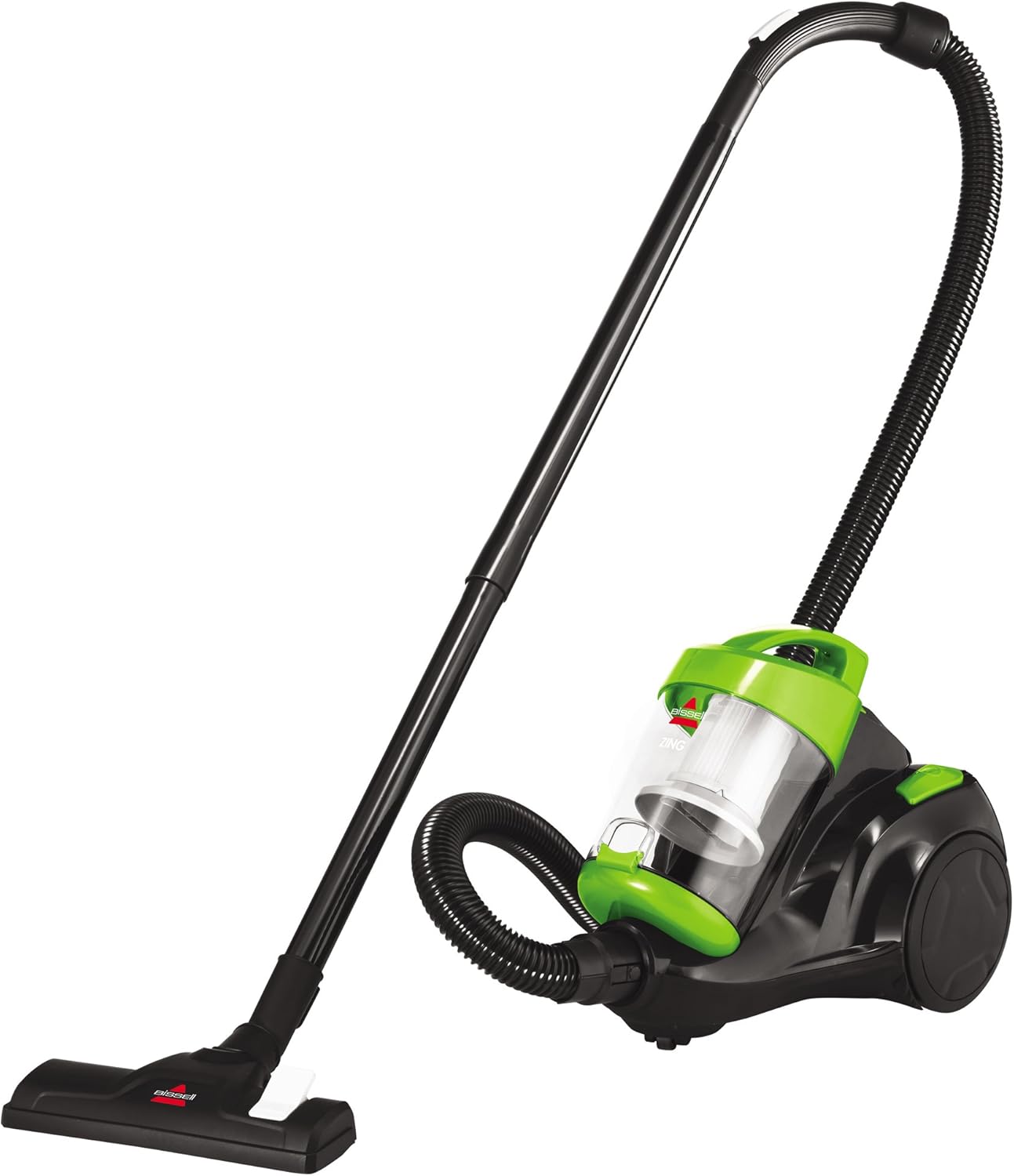
The Zing uses a bagless canister layout that separates the main body from the cleaning end. Its filters are washable and reusable, and the 15-foot cord retracts for storage. At under eight pounds, the canister provides a concrete example of how architecture changes carrying and reach.
Check On AmazonIf you click this link and buy, we earn a commission at no additional cost to you.
Keep robot vacuums outside the manual-vacuum choice
A robot vacuum changes the job from steering a machine to managing automated floor coverage. Navigation, obstacle handling, dock placement, routine frequency, and uncovered areas become part of ownership. That makes it a different decision from choosing an upright, canister, stick, or handheld. If automation is still unresolved, use the robot vacuum buying decision first.
Households comparing automation with direct control should resolve that question before debating manual form factors. The robot vacuum versus regular vacuum comparison focuses on coverage, manual work, and what remains outside the robot’s route. A robot may reduce repeated floor passes while stairs, upholstery, edges, and other jobs still need manually positioned tools. Keeping that boundary clear prevents two different workflows from being ranked as if they were the same product type.

The RoboVac 11S MAX is a self-charging robot vacuum designed for hard floors through medium-pile carpets. Its BoostIQ system adjusts suction automatically within 1.5 seconds as surface demand changes. The automated robot format makes it a clear contrast to a manually steered upright, canister, stick, or handheld vacuum.
Check On AmazonIf you click this link and buy, we earn a commission at no additional cost to you.
Keep shop-style wet/dry vacuums in the utility-cleanup lane
A household canister vacuum and a shop-style wet/dry vacuum can share a general shape without sharing the same job. Household dry vacuums are selected around floors, rugs, furniture, stairs, indoor storage, and everyday dust disposal. Utility wet/dry machines are selected around garages, projects, larger debris, and liquid pickup only when the exact machine permits it. Shape alone is not enough to merge those decisions.
If garage debris, project cleanup, or permitted liquid recovery is the recurring work, use the shop vacuum buying decision. The shop vacuum versus regular vacuum comparison is better when everyday floor cleaning and utility cleanup are competing choices. Do not assume a dry household vacuum can handle liquids, hazardous dust, hot material, or construction debris. The exact manual sets that boundary.

The Stanley SL18116P is a 6-gallon wet-dry vacuum with a 4-horsepower motor rating. Amazon lists it for wet and dry use on surfaces including carpet, hard floor, and upholstery. The machine can also convert to a power blower, reinforcing its utility-cleanup role rather than ordinary household dry-vacuum routing.
Check On AmazonIf you click this link and buy, we earn a commission at no additional cost to you.
Keep installed central vacuum systems separate from portable machines
A central vacuum shifts the suction source into the building and cleaning happens through wall inlets, hoses, and compatible tools. That makes installation, inlet coverage, hose storage, and service access part of the decision. A portable upright, canister, or stick can be moved or replaced without changing the house. Comparing only suction or noise misses that infrastructure difference.
If an installed system is still under consideration, use the central vacuum buying decision before narrowing portable architecture. The central vacuum versus regular vacuum comparison handles installation, portability, hose management, and coverage more directly. Once the portable path is confirmed, manual form-factor comparisons become useful. This keeps a whole-home system decision from collapsing into a feature checklist.

The Cen-Tec Systems 97305 is a low-voltage central-vacuum attachment kit. It includes a 30-foot switch-control hose for use with an installed central-vacuum setup. That hose-and-inlet architecture keeps the suction source separate from the portable cleaning tools the user moves through the home.
Check On AmazonIf you click this link and buy, we earn a commission at no additional cost to you.
Use upright versus canister when floor cleaning dominates
Upright versus canister is the main architecture comparison when one full-size machine will handle most routine floor cleaning. The important difference is how mass, hose, and floorhead are managed, not a rule that one body shape always cleans better. An upright keeps the system together as you push. A canister separates the floorhead and wand from the main body, changing turning, reach, carrying, and tool use.
Floorhead design can matter more than the label when carpet depth or hard-floor behavior is the concern. A canister with a suitable powered head can address carpet, while an upright with the wrong brush behavior can still be a poor fit for a particular rug or floor. Use the upright versus canister vacuum comparison when both architectures survive your first cut. Bring your floor mix, stairs, storage, and above-floor workload into that comparison.

The Kenmore BU4050 is a bagged upright with a Lift-Up cleaning mode. Its Hair Eliminator brushroll is paired with cleaning support for carpet, hard floor, and pet hair. The included Pet Handi-Mate adds an above-floor tool while the main architecture remains a full-size upright.
Check On AmazonIf you click this link and buy, we earn a commission at no additional cost to you.
Use stick versus upright when convenience competes with full-session cleaning
Stick versus upright matters when fast retrieval and easy carrying compete with a more substantial floor-cleaning setup. A stick can be easier to grab for short pickups and often stores in less floor space. An upright keeps more of the machine’s mass on the floor rather than in the hand. That difference can matter over a long session even when the upright weighs more overall.
Frequency is the hidden variable because a convenient machine that gets used often may fit better than one that stays buried in storage. Convenience does not erase a small bin, limited battery, narrow head, or high hand weight. Use the stick vacuum versus upright vacuum comparison when both can handle your surfaces. Judge session length, stairs, storage, and floorhead needs before style or feature count.
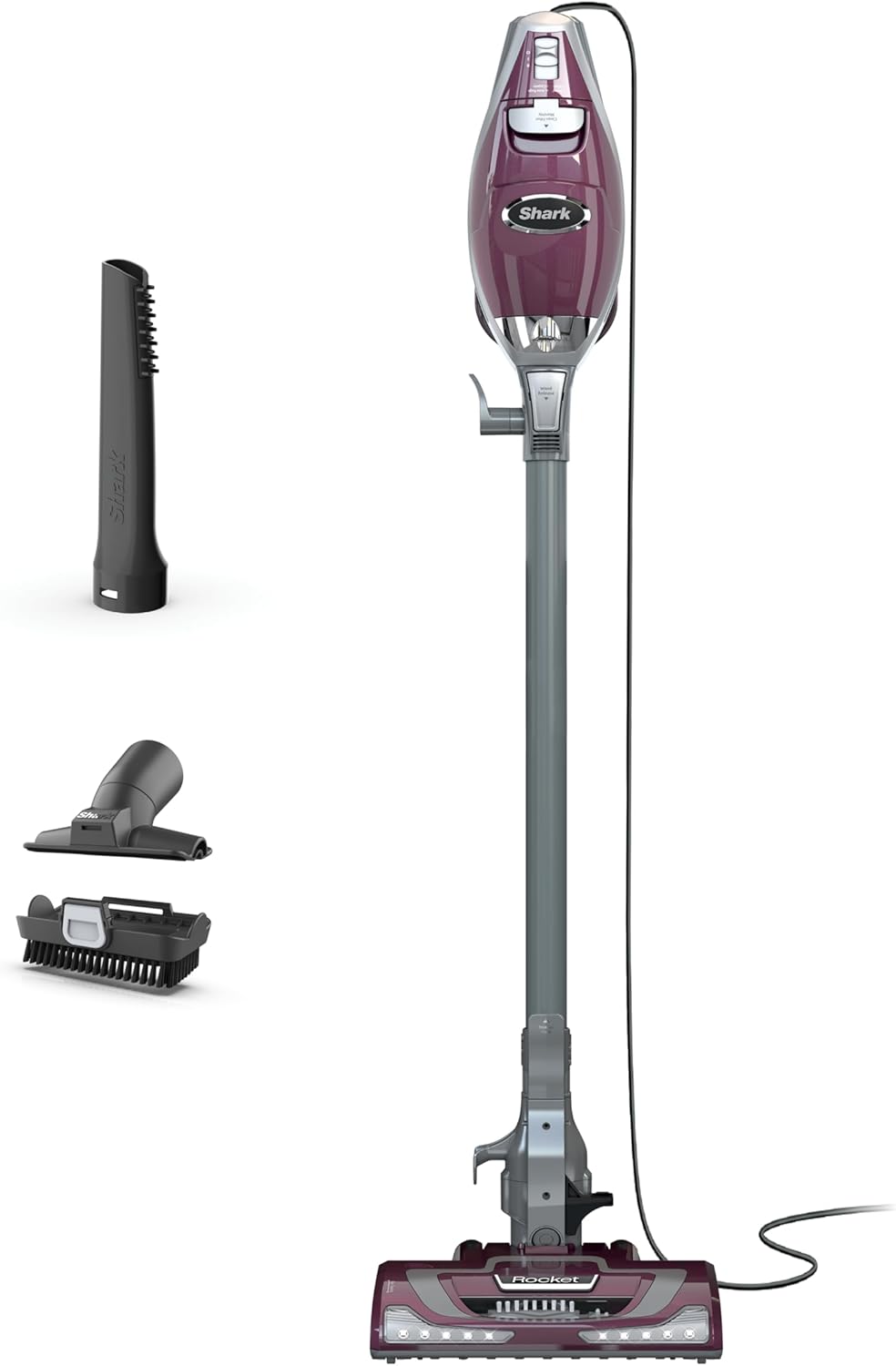
The Shark HV322 is a corded stick vacuum weighing under 10 pounds. It converts to a handheld and includes crevice and upholstery tools for smaller or above-floor jobs. LED headlights, swivel steering, and the XL dust cup keep the model focused on quick handling while retaining corded power.
Check On AmazonIf you click this link and buy, we earn a commission at no additional cost to you.
Treat corded versus cordless as a power-source decision
Corded and cordless are power approaches, not separate cleaning architectures. A cord removes battery runtime from the session but adds outlet changes, cable management, and a physical tether. A battery removes that tether but runtime varies with the exact machine, power mode, floorhead, battery condition, and cleaning load. Evaluate that trade-off after the basic form factor already makes sense.
The useful test is whether a normal cleaning session fits the power system without creating a second chore. Repeated recharging can erase cordless convenience, while awkward outlet changes can make a cord frustrating even with unlimited runtime. The corded versus cordless vacuum comparison carries that decision further. Check charging location, battery support, cord reach, and storage on the exact model instead of trusting one headline claim.

The LEVOIT LVAC-200 is a rechargeable cordless stick vacuum with up to 50 minutes of stated runtime. Its anti-tangle design targets pet hair, and the vacuum is listed for carpets and hard floors. A 180-degree lay-flat design adds under-furniture reach while keeping the power-source decision cordless.
Check On AmazonIf you click this link and buy, we earn a commission at no additional cost to you.
Treat bagged versus bagless as a disposal and maintenance choice
Bagged versus bagless changes what happens after debris leaves the floor. A bag is both a dirt container and a recurring consumable, while a reusable bin removes bag purchases but usually adds direct emptying and filter care. Disposal cleanliness depends on the exact bag closure, bin mechanism, seals, and user routine. Neither label guarantees a clean or messy experience by itself.
Owner discussions repeatedly show the real split: some people dislike buying bags, while others dislike dust or stuck debris during bin emptying. That confirms an ownership trade-off without proving every design behaves the same way. If disposal and recurring consumables are deciding factors, the bagged versus bagless vacuum comparison is the next useful decision. Compare the correct bags, filters, emptying method, and maintenance instructions for the exact machine before choosing a system.

These Type Q HEPA dust bags provide the replaceable collection system used by several Kenmore canister vacuums. Amazon lists compatibility with models including 81214, 81414, 81614, 81615, 81714, 21814, BC7005, BC3005, and BC2005. The six-count pack makes the recurring-consumable side of a bagged system explicit.
Check On AmazonIf you click this link and buy, we earn a commission at no additional cost to you.
Do not choose by a suction number alone
Suction matters, but one number cannot predict how a complete vacuum behaves on every surface. Pickup also depends on airflow, floorhead design, brush action, seals, controls, debris, and how the system behaves as the container fills. Two machines can advertise impressive power while responding differently to carpet, hard floors, or larger debris. Architecture explains movement; the pickup system explains how that movement becomes useful cleaning.
If a specification is driving your shortlist, first ask what was measured, under what conditions, and whether the comparison method stays consistent across machines. A number becomes useful only when it explains a real floor, head, or debris problem. The vacuum suction power explanation shows how to read those claims without turning one metric into the whole verdict. Bring the result back to the surface you clean and the floorhead you will actually use.

The Eureka NEN110A is a 2.5-liter bagless canister vacuum for carpets and hard floors. It combines suction control with an integrated crevice tool and dusting brush for different cleaning tasks. Washable filters and the canister format show why a complete pickup system involves more than one headline suction figure.
Check On AmazonIf you click this link and buy, we earn a commission at no additional cost to you.
Separate filtration claims from the rest of the cleaning decision
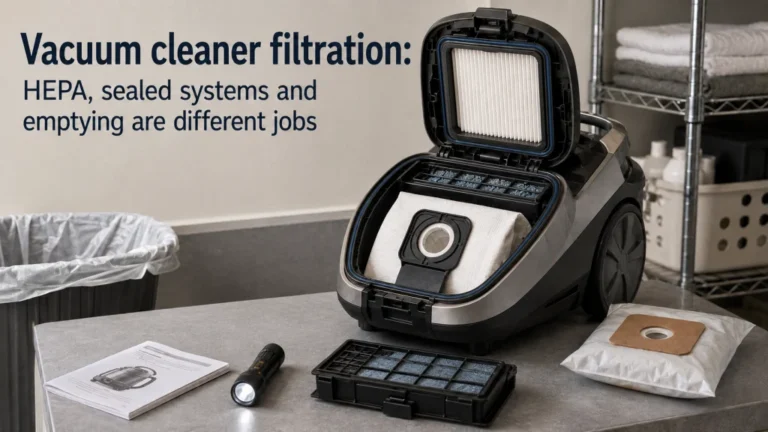
Filtration concerns how the vacuum manages fine particles through the air path and ownership routine, not treatment of a medical condition. A filter label alone does not describe the complete system because seals, fit, dirt-container design, and maintenance also matter. Emptying is a separate event from filtration while the motor is running. Households focused on particle containment should evaluate both operation and disposal.
Filtration decisions get clearer when you split operation from upkeep. Compare how the system seals, how the filter is serviced, and what happens when the dirt container is emptied, then use the vacuum cleaner filtration explanation for the terminology and evidence behind those checks. Clean or replace filters only as the exact manual directs because filter types and instructions vary. A machine can contain particles well during operation yet still create an ownership routine you dislike, so weigh filtration beside disposal, storage, and maintenance.

The Kenmore K3040 is a three-pack of HEPA replacement filters for selected Kenmore canister vacuums. Amazon lists compatibility with models including 81214, 81414, BC2005, BC3005, BC3002, and BC4002. The model-specific replacement format keeps filtration tied to the exact vacuum system rather than a generic filter label.
Check On AmazonIf you click this link and buy, we earn a commission at no additional cost to you.
Let the floorhead answer the surface question
The floorhead is where the vacuum finally meets the surface, so body style alone cannot prove carpet or hard-floor fit. Brushroll design, roller material, height behavior, suction-only options, edge pickup, and brush controls can all change surface behavior. A home with hard floors plus medium-pile rugs may need a different interface from wall-to-wall carpet. That remains true whether the machine is an upright, canister, or stick.
Before you blame or praise the entire vacuum, look at the exact head supplied with the model. Variants can ship with different heads, and furniture clearance or neck articulation can matter as much as brush design on a real route. The vacuum floorhead design article is where to compare those pickup interfaces once the body architecture is settled. A strong motor attached to a head that fights your rugs, floors, or furniture clearance is still a mismatch.

The Kenmore BC1001 is a PowerMate replacement nozzle for selected Kenmore canister vacuums. Amazon lists compatibility with models including 81214, 81414, BC2005, BC3005, BC4005, and 22614. This model-specific powered floorhead makes the surface interface a separate component from the canister body itself.
Check On AmazonIf you click this link and buy, we earn a commission at no additional cost to you.
Choose attachments by recurring jobs, not by count
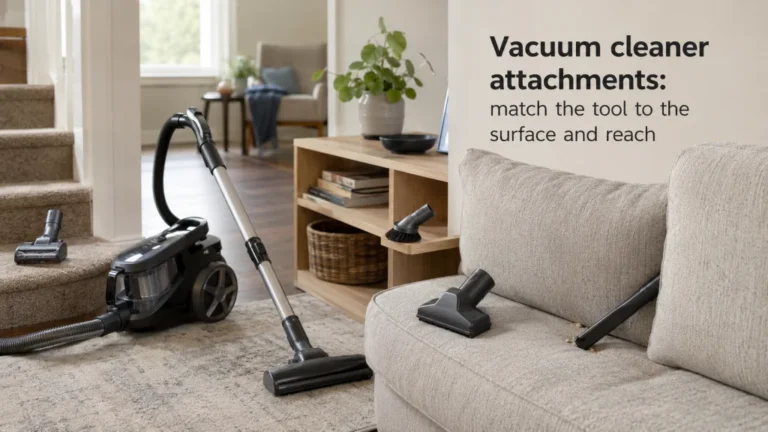
Attachments earn storage space only when they solve work that recurs in your home. A crevice tool can matter near baseboards, an upholstery tool can matter on fabric surfaces, and extra reach can matter above the floor. Ten tools are not automatically better than three if most never leave the closet. The useful question is whether a tool reaches the job and stores without making the vacuum harder to retrieve.
Start from the jobs that currently make you stop, swap equipment, or leave an area unfinished. Then verify whether the candidate vacuum has a compatible tool and whether that tool reaches the job without awkward adapters or storage clutter. The vacuum cleaner attachments article separates common tool roles from bundle marketing and explains why exact interface proof matters. Visual similarity is weak evidence because two tools can look alike and still fail to fit.

This two-pack provides 15.8-inch extension wands for listed BISSELL Zing canister models. The listing names compatibility with 2156A, 1665, 16652, 1665W, and 21562 series machines. The extension format adds reach only where the exact vacuum interface is supported.
Check On AmazonIf you click this link and buy, we earn a commission at no additional cost to you.
Count cleaning the vacuum as part of owning it
A vacuum can keep creating work after the floor looks clean. Hair wraps around brushrolls, filters need care, bins or bags need attention, and hoses can collect obstructions. The maintenance load changes with design and household debris, so a simple machine for one home can feel fussy in another. Ignoring that routine is how a convenience feature becomes a maintenance surprise.
The ownership question is not whether maintenance exists, but whether its frequency and access fit the routine you will actually follow. The vacuum cleaning and maintenance article covers owner care in more detail, while the exact manual controls filter service, brushroll access, bin cleaning, bags, and permitted disassembly for a specific machine. Stop owner-level troubleshooting for damaged cords, sparks, smoke, burning odor, overheating, uncontrolled operation, or liquid reaching electrical areas. A good fit keeps routine care manageable without turning normal maintenance into repair work.

This 4+2 filter kit is listed for multiple Shark Navigator Lift-Away models. The compatibility list includes NV350, NV351, NV352, NV355, NV356E, NV360, UV440, UV540, and CU500 among others. A replaceable filter set turns routine filter care into a visible part of the vacuum's ownership workload.
Check On AmazonIf you click this link and buy, we earn a commission at no additional cost to you.
Treat stairs as a separate handling test
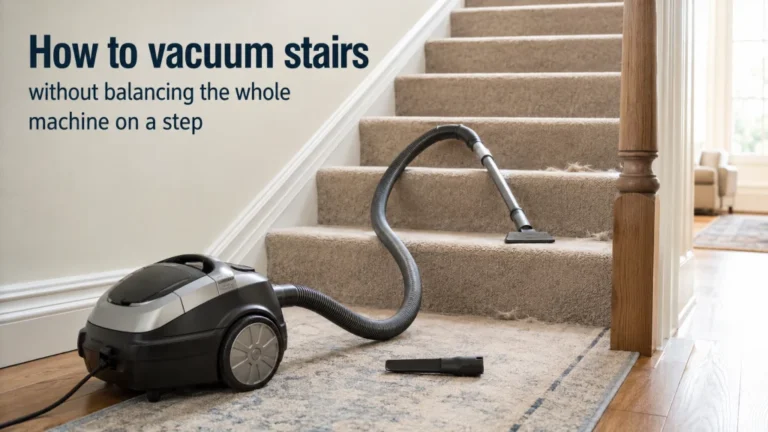
Stairs expose weaknesses that a flat showroom floor rarely reveals. Total weight matters, but balance, carried weight, hose reach, tool setup, and secure placement matter too. A light stick can still tire the hand, while a canister can feel easy at the wand but awkward between levels. An upright hose can help individual steps without making the whole machine easier to carry.
If stairs are a regular part of the route, use the vacuuming stairs article to evaluate handling more closely. Do not balance a machine where its manual does not permit it or stretch cords and hoses into unstable positions. A handheld or convertible mode can help, but it still needs enough reach and runtime. The practical choice is the one you can control safely from the first step to the landing.
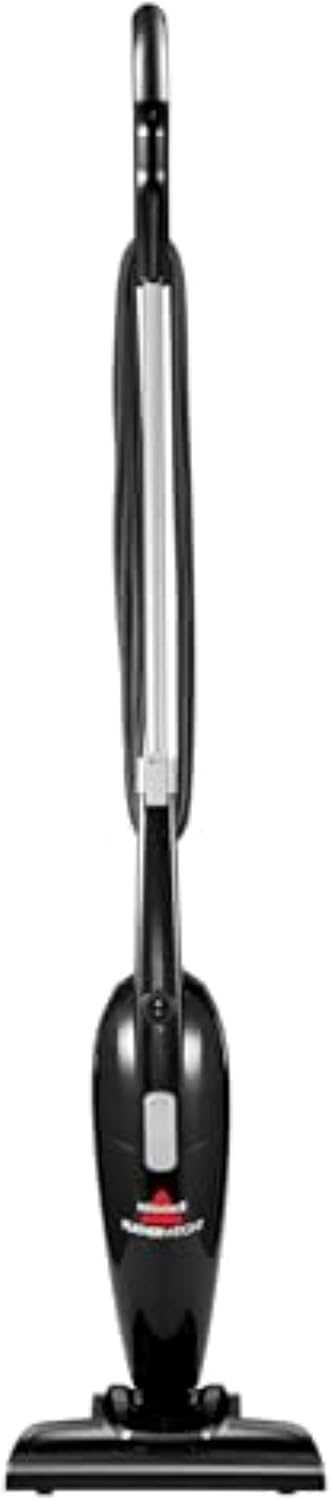
The BISSELL Featherweight 2033M is a lightweight bagless stick vacuum with a crevice tool. Amazon lists it for hard floors and carpets, giving it a compact format for smaller cleaning routes. The narrow stick body and removable tool setup make it a practical product to consider where carrying and stair handling matter.
Check On AmazonIf you click this link and buy, we earn a commission at no additional cost to you.
Separate replacement timing from architecture
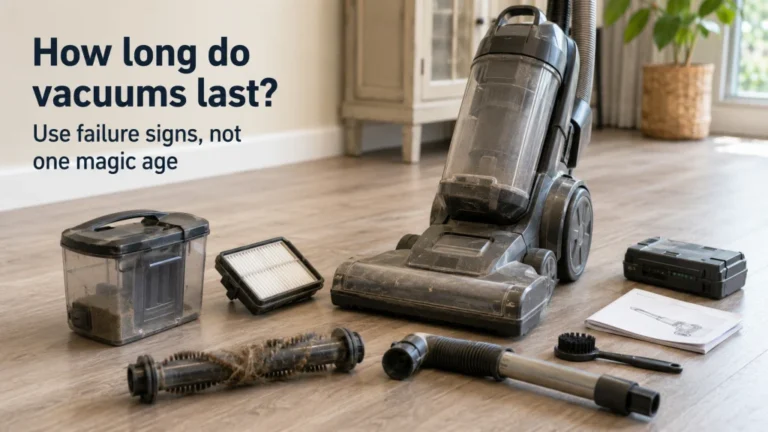
An older vacuum should not be replaced only because another architecture looks more convenient. First decide whether the current machine still performs its job and whether normal owner-serviceable parts or maintenance can correct the problem. A machine that cleans well may need a filter, bag, brushroll, belt, battery, or approved part rather than replacement. A reliable machine that is constantly avoided because of weight or storage presents a different problem.
The vacuum lifespan and replacement article separates maintenance, repair, fit problems, and replacement timing. Parts availability and service access can matter as much as the original feature list when you plan to keep a machine. Stop using it and seek qualified service for serious electrical or overheating symptoms. Replacement should solve a real failure, fit problem, or ownership burden rather than simply restart shopping.

This replacement hose is listed as part 193FFJ for selected Shark Navigator Lift-Away vacuums. The compatibility list includes NV350, NV351, NV352, NV355, NV356, NV356E, NV357, NV360, and UV440. A model-specific hose is the kind of owner-replaceable part that can matter before replacing an otherwise serviceable vacuum.
Check On AmazonIf you click this link and buy, we earn a commission at no additional cost to you.
Use recommendation pages only after the architecture is clear
A recommendation list becomes useful after you know what the machine must do and what friction you will not accept. By then, you should have a plausible architecture, floorhead requirement, power source, disposal system, storage location, and maintenance routine. That keeps a highly rated machine from winning because of features unrelated to your route. It also turns “which vacuum cleaner should I buy?” into conditions a specific model can actually pass or fail.
For a broad shortlist, use the current vacuum recommendations after those constraints are settled. If cordless power is already required, move to the cordless vacuum recommendations; if recurring shedding is the defining workload, use the vacuum recommendations for pet hair. Recommendation pages should confirm a fit you already understand. Before opening them, complete the two quick checks below.
| Cleaning-route check | Write down |
|---|---|
| Floors | Floors, rugs, transitions |
| Movement | Stairs, tight spaces, carrying |
| Session | Pickup or whole-home sessions |
| Storage | Storage and charging location |
Now map those conditions to exact ownership evidence. A model should fit your route before extra features are allowed to influence the choice. This is also where recurring costs and compatibility belong. If an answer is missing, verify it in the exact manual or support material before buying.
| Ownership or spec check | Verify on the exact model |
|---|---|
| Surface fit | Floorhead, controls, clearance |
| Power | Battery or cord fit |
| Disposal | Disposal, filters, consumables |
| Secondary jobs | Attachment compatibility |
- Reject a model that fails a must-have route condition.
- Count bags, filters, batteries, and needed accessories as ownership costs.
- Choose the smaller or simpler machine when it covers the recurring work with less burden.
Use the tables to reject mismatches rather than justify more features. If two machines both pass, disposal, maintenance, charging, storage, and handling can break the tie. Different types of vacuums often clean overlapping surfaces while creating very different routines. The better fit is the one whose compromises line up with the household work you actually repeat.
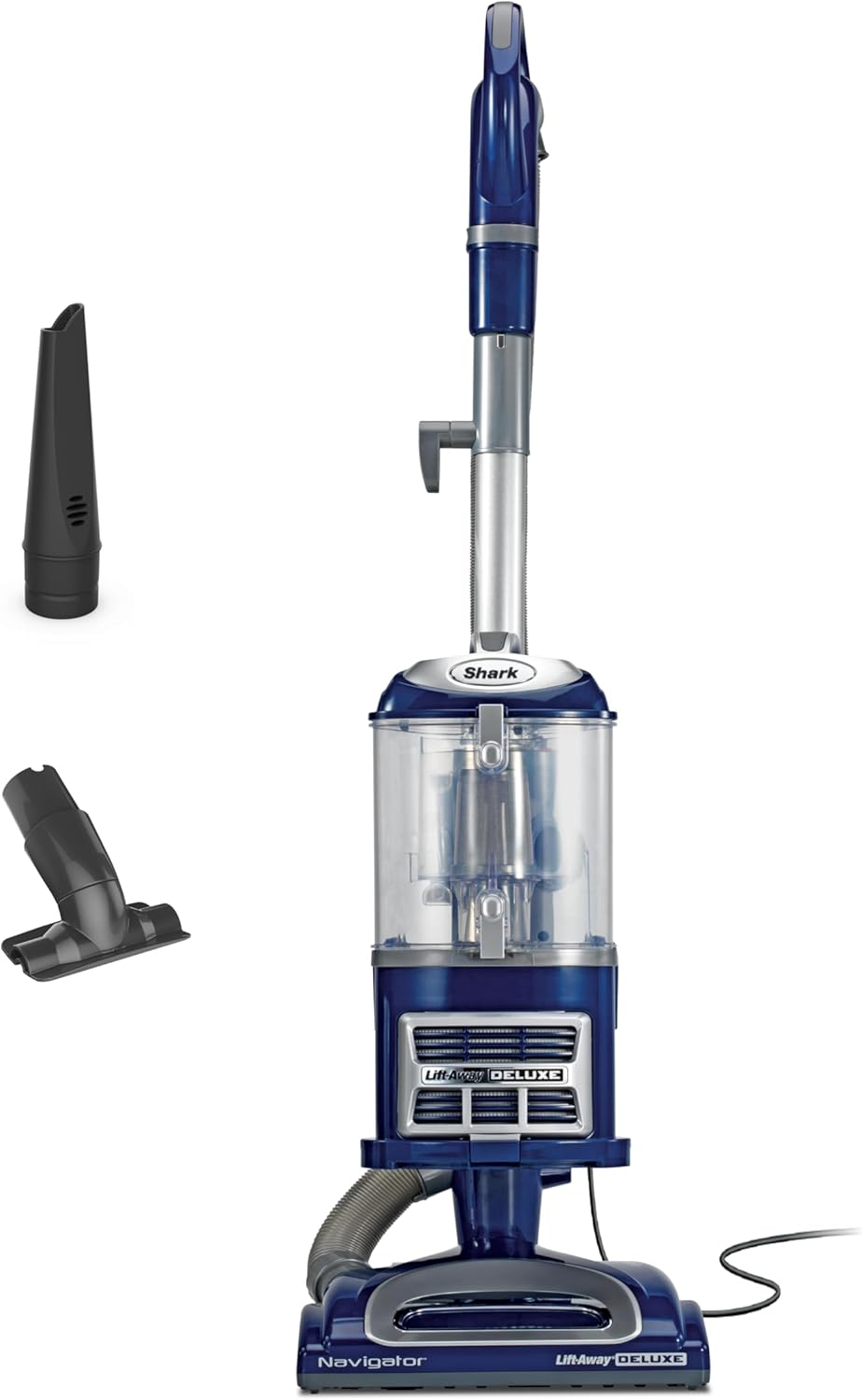
The NV360 is a Lift-Away upright with a HEPA system, swivel steering, and brushroll shutoff. Its 0.9-quart dust cup is paired with upholstery and crevice tools for floor and above-floor work. Those model-level details give readers concrete checks to apply only after the broader architecture and ownership route are settled.
Check On AmazonIf you click this link and buy, we earn a commission at no additional cost to you.
Final thoughts: choose the route before the recommendation
The useful way to compare vacuum cleaner types is to decide where the machine travels and what ownership work you accept. Start with upright, canister, stick, or handheld architecture, then layer in power source, disposal, floorhead, filtration, attachments, and maintenance. That order keeps one appealing feature from hiding a major problem with stairs, storage, runtime, or surfaces. It also makes recommendation lists easier to use because you already know what does not fit.
Measure storage, walk the cleaning route, note the surfaces, and check the exact manual before treating a model as suitable. If a smaller or simpler vacuum covers the recurring work with less handling, there is no reason to buy more machine. If the route truly demands extra reach, different tools, another disposal system, or another architecture, added capability can be justified. The decision works when the vacuum fits the work often enough that you will use and maintain it.

The Eureka NEN186BL is a lightweight canister vacuum with a 1000-watt motor rating. Its listing includes HEPA filtration, automatic cord rewind, and a two-in-one setup for hard floors and carpets. The canister architecture gives the final section a concrete model whose features still need to fit the user's actual cleaning route.
Check On AmazonIf you click this link and buy, we earn a commission at no additional cost to you.
Explore the next manual vacuum decisions
Once the architecture is narrowed, use the article that owns the next unresolved choice. These topics separate form, power, disposal, specifications, maintenance, and shopping. You do not need to read them in order. Pick the row that matches the uncertainty still blocking your shortlist.
A household committed to a cordless stick may jump straight to filtration, floorhead, maintenance, or current recommendations. Another household may still need the upright-versus-canister comparison first. The useful path is the shortest one that resolves a real decision. That keeps research focused on a machine you can actually live with.
| Topic | What you’ll find |
|---|---|
| Upright vs canister vacuum | Handling, reach, and storage. |
| Stick vacuum vs upright vacuum | Convenience, weight, and sessions. |
| Corded vs cordless vacuum | Runtime, charging, and outlets. |
| Bagged vs bagless vacuum | Disposal, filters, and consumables. |
| Vacuum suction power | How to read suction specifications. |
| Vacuum cleaner filtration | Filtration and particle containment. |
| Vacuum floorhead design | Floorhead and surface behavior. |
| Vacuum cleaner attachments | Attachment jobs and compatibility. |
| How to clean a vacuum cleaner | Owner-level maintenance. |
| How to vacuum stairs | Stair handling and stability. |
| How long do vacuums last? | Maintenance and replacement timing. |
| Best vacuum cleaners | Broad recommendations after fit. |
| Best cordless vacuums | Recommendations after choosing cordless. |
| Best vacuums for pet hair | Recommendations for shedding workloads. |
Return to your route notes after the relevant comparison. The next article should remove one uncertainty rather than add unrelated features. When the remaining candidates all fit the same route, model-level tests and specifications become easier to interpret. That is the point where shopping can become specific.

This four-pack filter set is listed for Eureka NEN180 and NEN186BL bagless canister vacuums. The package includes two dust-cup filter elements and two additional filters. Its model-specific fit connects directly to the filtration and maintenance branches readers may explore after narrowing the main vacuum architecture.
Check On AmazonIf you click this link and buy, we earn a commission at no additional cost to you.
FAQs
🧹 What are the main types of manual vacuum cleaners?
The main forms are upright, canister, stick, and handheld. Bagged, bagless, corded, and cordless describe systems that can cross those forms.
🏠 Which vacuum cleaner should I buy for mixed floors?
Start with your floor and rug mix, then check the included floorhead and brush controls. The architecture must also fit stairs, storage, and session length.
🪜 What type of vacuum is easiest to use on stairs?
Compare carried weight, balance, reach, tools, and secure placement. Several architectures can work depending on the exact design and staircase.
🔌 Is corded better than cordless for a large home?
Corded removes battery runtime, but outlet changes still matter. Cordless works when runtime, charging, and battery support fit your session.
🗑️ Is a bagged vacuum always cleaner to empty than a bagless one?
No universal rule fits every design because closures, bins, seals, and emptying methods vary. Compare the exact disposal and maintenance routine.
🧰 Do more vacuum attachments make a vacuum more versatile?
Only when the tools fit recurring jobs and the exact machine. Unused tools mainly add storage clutter.
References and sources
- Home Depot vacuum type overview: Supports the broad vacuum taxonomy used here.
- TechRadar vacuum type comparison: Supports distinctions among common vacuum forms.
- RTINGS vacuum test overview: Supports separate performance and design criteria.
- RTINGS battery test method: Supports condition-dependent cordless runtime.