Vacuum suction power is useful only when you know what the number actually measures. Motor watts describe electrical input, pressure figures such as Pa and water lift describe pressure difference, airflow describes moving air, and air watts combine pressure with airflow under a stated test method. None of those figures, by itself, proves how well a floorhead will pick up crumbs, fine dust, or embedded debris on a particular surface. A better buying decision starts with the measurement type, then checks floorhead design and independent pickup results from comparable test conditions.
Why neat suction numbers are not interchangeable
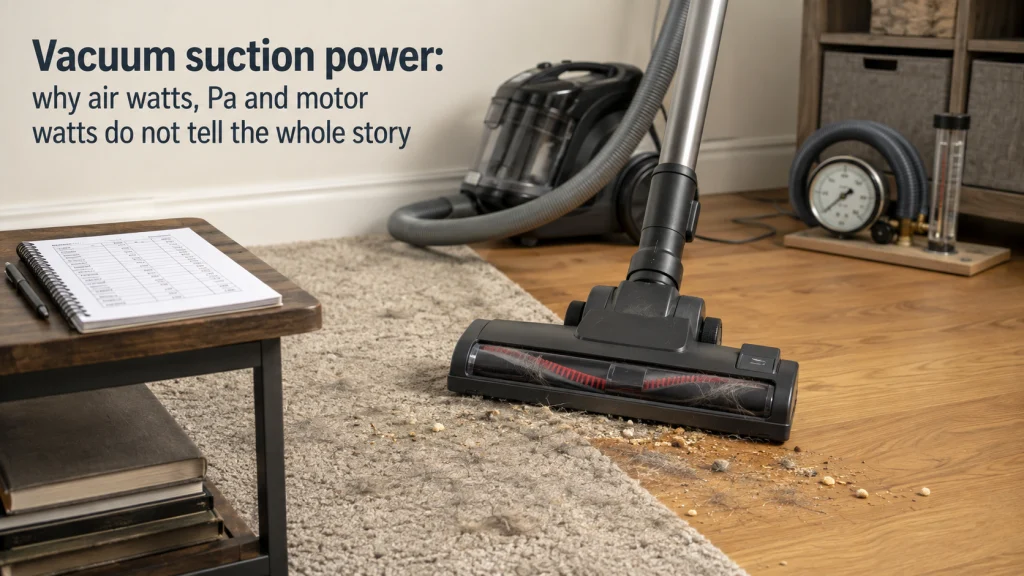
Vacuum suction power can look wonderfully simple on a shopping page: one machine shows motor watts, another shows air watts, and a robot advertises a large Pa figure. The trouble is that those numbers do not measure the same quantity, so lining them up from smallest to largest creates a false comparison. A higher number can be meaningful inside the right measurement system and test condition, but it does not automatically beat a lower number expressed in a different unit. The useful question is not which number is biggest, but what that number tells you about the air system and what it leaves unmeasured.
This matters because the floor does not care how tidy the specification card looks. Debris pickup depends on pressure, airflow, the air path, the nozzle opening, brushroll action, floor contact, surface type, and how the vacuum manages all of those factors together. Independent testing often reports suction and airflow separately from actual bare-floor, carpet, or pet-hair pickup, which is a healthier evidence structure than treating one published rating as the verdict. Once you separate the measurements, the shopping page becomes less impressive but much more useful.

This bagless canister vacuum is designed for carpets and hard floors. Its integrated crevice tool and dusting brush provide different cleaning interfaces for above-floor work. Automatic cord rewind and a reusable dust cup add practical system features that a single suction specification does not describe.
Check On AmazonIf you click this link and buy, we earn a commission at no additional cost to you.
Separate electrical input from suction and airflow
Motor watts tell you about electrical power input, not the amount of debris a vacuum will remove from a floor. A motor can draw more power while the complete machine loses useful performance through an inefficient air path, restrictive filtration, leakage, or a floorhead that does not work well on the surface in front of it. That is why vacuum cleaner suction power should not be inferred directly from the electrical wattage printed on the label. Wattage is still a real specification, but it answers a different question.
The practical mistake is to assume that a higher-watt motor must create stronger cleaning at the nozzle. In a household comparison, motor input belongs lower in the evidence stack than measured pressure, measured airflow, and pickup results under a stated surface and test condition. It can help explain how a machine is designed to use power, especially when comparing closely related models, but it is not a universal cleaning score. If two vacuums use different floorheads or different airflow paths, their watt figures alone do not settle which one is better suited to your floors.
| Measurement | What it describes | What it does not prove by itself |
|---|---|---|
| Motor watts | Electrical input power | Pickup performance at the floorhead |
| Pa or kPa | Pressure difference | Airflow volume or complete floor pickup |
| Water lift | Sealed suction pressure expressed as a lifted water column | How much air moves through an open nozzle |
| CFM | Air volume moved per unit of time | Pressure available under restriction |
| Air watts | A combined air-power metric using pressure and airflow | Floorhead interaction or identical cross-brand test conditions |
The decoder works best as a labeling tool, not a ranking chart. First identify which physical quantity is being reported, then check whether the comparison uses the same measurement point, operating mode, attachment, and test method. If those conditions are missing, treat the figure as incomplete rather than trying to force it into a universal leaderboard. That simple habit prevents most of the confusion created by mixed vacuum suction measurements.

The P4400 plugs between a wall outlet and an appliance to measure electrical use. Its display can show kilowatt-hours along with voltage, frequency, current, and power factor. The unit is rated for standard 115-volt service with a maximum 15-amp load, making it useful for separating electrical input from vacuum suction claims.
Check On AmazonIf you click this link and buy, we earn a commission at no additional cost to you.
What pressure and water-lift measurements actually show
Pressure measurements describe how strongly the vacuum can create a pressure difference, often with Pa, kPa, or water lift. Water lift is commonly discussed as sealed suction because the test reflects how high the suction can support a column of water under a restricted condition. Pa expresses pressure in the SI system, so it is another way to describe pressure rather than airflow volume. These figures can tell you something real about the vacuum’s ability to maintain pull against resistance, but they are not a complete cleaning score.
The limitation becomes obvious when you picture an almost sealed nozzle. Pressure can rise while airflow falls because very little air is actually moving through the opening, and household debris removal normally needs moving air as well as pressure. A strong pressure figure may help a design pull against carpet resistance or a narrow tool, but the exact result still depends on the rest of the system. Compare pressure numbers only when the units and test conditions are comparable, and resist any claim that one Pa threshold defines good suction for every vacuum type.
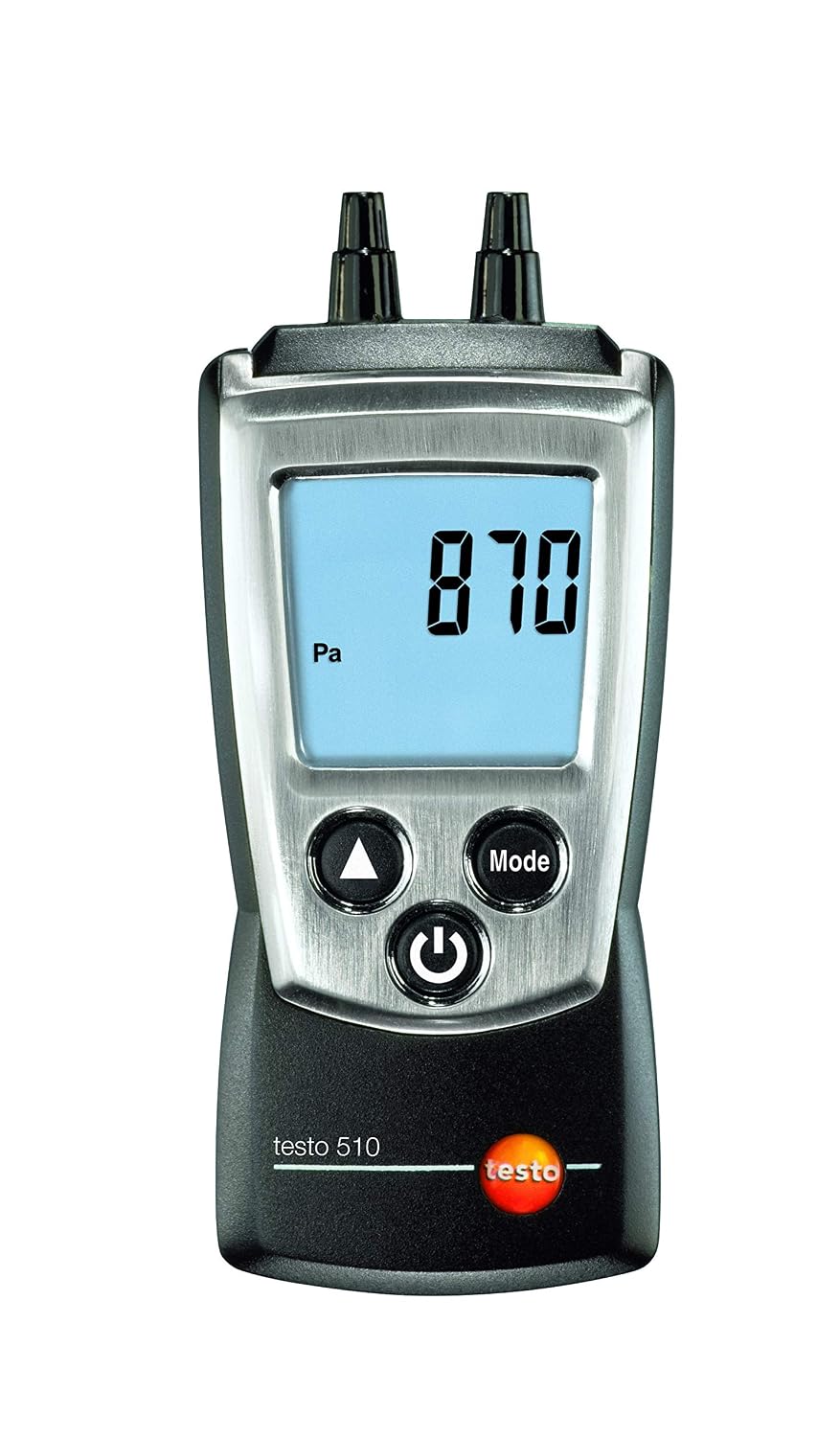
The testo 510 measures differential pressure from 0 to 40 inches of water column and offers ten selectable measurement units. It can also measure duct velocity when paired with an optional Pitot tube. That makes it a direct illustration of why a water-column pressure reading is a different quantity from airflow.
Check On AmazonIf you click this link and buy, we earn a commission at no additional cost to you.
Airflow and CFM describe the moving part of the system
Airflow answers a different question: how much air is moving through the vacuum over time. In US specifications and testing, that volume is often expressed in cubic feet per minute, or CFM. Moving air matters because debris has to be carried from the floorhead into the machine after it is loosened from the surface. A vacuum can therefore have impressive pressure but still be limited if its usable airflow at the relevant attachment is poor.
Airflow is also sensitive to where and how it is measured. A hose measurement, a floorhead measurement, and a value taken near the motor are not automatically interchangeable because filters, bends, seals, and attachments can change the air path. This is why a CFM number without a measurement location and test condition should be treated cautiously. For buyers, the strongest use of airflow data is as one part of a matched comparison, not as a standalone promise that every floor surface will clean the same way.

The BT-100 is a handheld anemometer for measuring air velocity in applications such as HVAC ducts and ventilation. It supports multiple velocity units, including feet per minute, so moving air can be checked directly instead of inferred from pressure. Its portable meter format makes it useful for illustrating why airflow is a separate measurement from suction pressure.
Check On AmazonIf you click this link and buy, we earn a commission at no additional cost to you.
What an air-watt rating can and cannot tell you
Air watts try to combine pressure and airflow into one air-power figure, which makes the metric more informative than motor input alone. That combination is useful because a vacuum needs both pressure difference and moving air to do practical work through its cleaning path. Even so, an air-watt number is not a shortcut around test conditions, measurement location, operating mode, or attachment choice. For example, a figure measured at an open hose in maximum mode is not directly equivalent to one measured through a floorhead in a normal cleaning mode, even if both are reported as air watts. The metric becomes most useful when two figures were produced with comparable procedures and refer to comparable configurations.
The shopping problem starts when a single air-watt figure is treated as if it contains floorhead design, brushroll behavior, seal quality, carpet interaction, and debris pickup inside it. It does not. A strong air-power figure can support the case that the air system is capable, but a poorly matched floorhead can still waste that capability on the surface you need to clean. Use air watts as a meaningful system metric, then ask for the performance evidence that shows how that system behaves on real test debris and surfaces.

The Dyson Gen5detect is rated at 280 air watts and provides three power modes. Its listing also specifies up to 70 minutes of runtime and automatic power adaptation based on debris and floor type. Those operating details show why an air-watt figure is useful system information but still does not replace floorhead, mode, and surface context.
Check On AmazonIf you click this link and buy, we earn a commission at no additional cost to you.
Do not rank robot Pa against stick-vacuum air watts
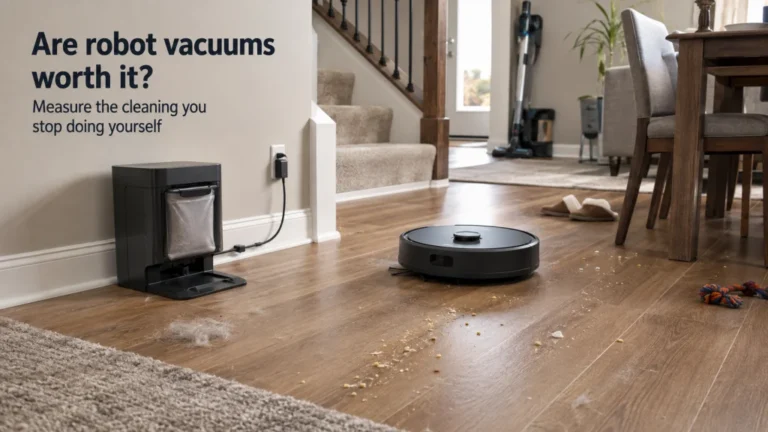
Robot vacuums commonly advertise Pa, while cordless stick vacuums may advertise air watts, and that makes cross-type shopping especially tempting. A Pa figure is a pressure measurement, while air watts incorporate pressure and airflow, so the scales cannot be ranked directly as if they were two versions of the same score. The machines also use very different nozzle geometry, air paths, brush systems, operating modes, and cleaning patterns. Converting one headline number into the other without the required airflow and test information does not solve those differences.
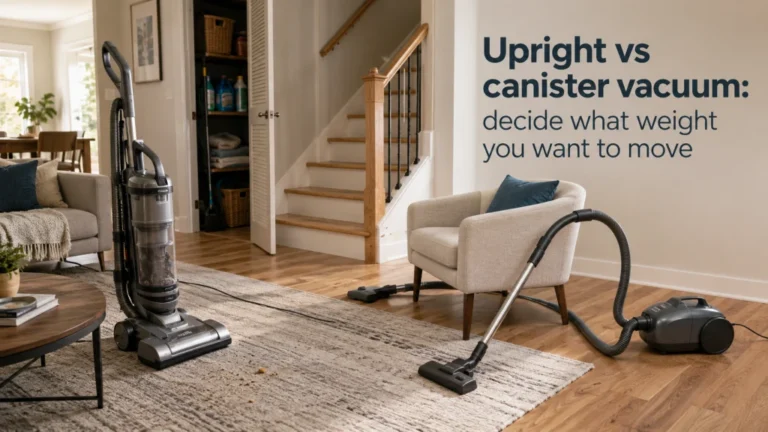
Class context is the safer comparison. Judge a robot against other robots using comparable pickup tests, navigation behavior, brush design, edge cleaning, and maintenance demands, then judge a stick vacuum against other stick vacuums under comparable modes and floorheads. Within home cleaning appliances, vacuum type should be settled before raw suction figures drive the decision. If you are deciding which vacuum format fits the household rather than comparing raw specs, start with the broader types of vacuum cleaners and narrow the field by surface, cleaning route, storage, and use pattern. Once the type is right, suction data becomes supporting evidence instead of a misleading shortcut.
| Shopping card says | Tempting conclusion | Better interpretation |
|---|---|---|
| Large Pa figure | This must beat a lower air-watt figure | Pa reports pressure, so the air-watt figure is not on the same scale |
| High motor wattage | This must have stronger floor suction | Electrical input does not show nozzle efficiency or pickup |
| High air watts | This must clean every carpet better | Floorhead seal, agitation, and surface interaction still matter |
The table is deliberately boring because that is the point: the headline number needs context before it can become useful. If the units describe different physical quantities, stop the numerical race and compare evidence that answers the same question. If the vacuum types are different, add class-specific needs before comparing performance. That produces a slower-looking decision process but a much faster path to a machine that actually fits the cleaning job.

The AV2501AE is a robot vacuum with LiDAR navigation and a self-empty base. It is built for carpet and hard-floor cleaning and supports Wi-Fi connected control. That robot-specific design gives readers a useful class example without treating its marketing specifications as directly comparable with a cordless stick vacuum.
Check On AmazonIf you click this link and buy, we earn a commission at no additional cost to you.
Nozzle seal, brushroll action, and floorhead design change real pickup
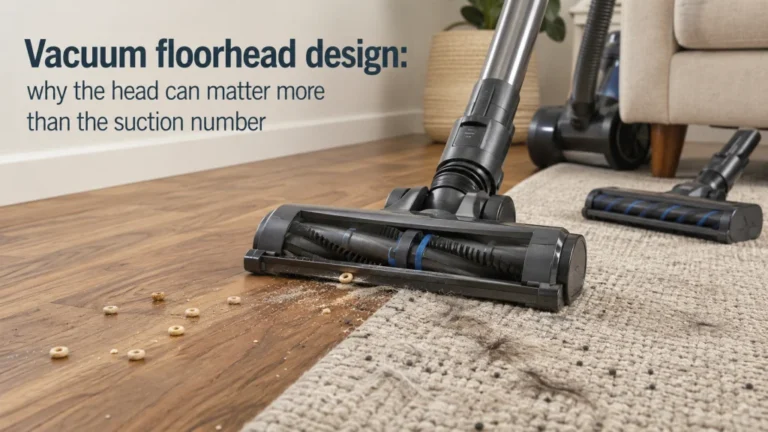
The floorhead is where the air system meets the floor, and that interface can change what the suction measurements mean in practice. A nozzle that seals very tightly may build strong pressure but become hard to push or behave poorly on some soft flooring, while a more open design can move more air but lose pressure at the contact point. Brushroll geometry and agitation also matter because embedded debris and hair often need mechanical help before airflow can carry them away. None of those behaviors appears in a motor-watt number.
Surface type makes the interaction even more important. Hard floors may reward controlled airflow and a floorhead that captures larger debris without pushing it forward, while carpet can demand a different balance of seal, agitation, and airflow through the pile. A first-time buyer can easily mistake stronger-feeling nozzle grip for universally better cleaning, even though excessive seal can be awkward and pickup results can vary by surface. That is why floorhead design belongs beside suction specifications, not underneath them as a minor accessory detail.
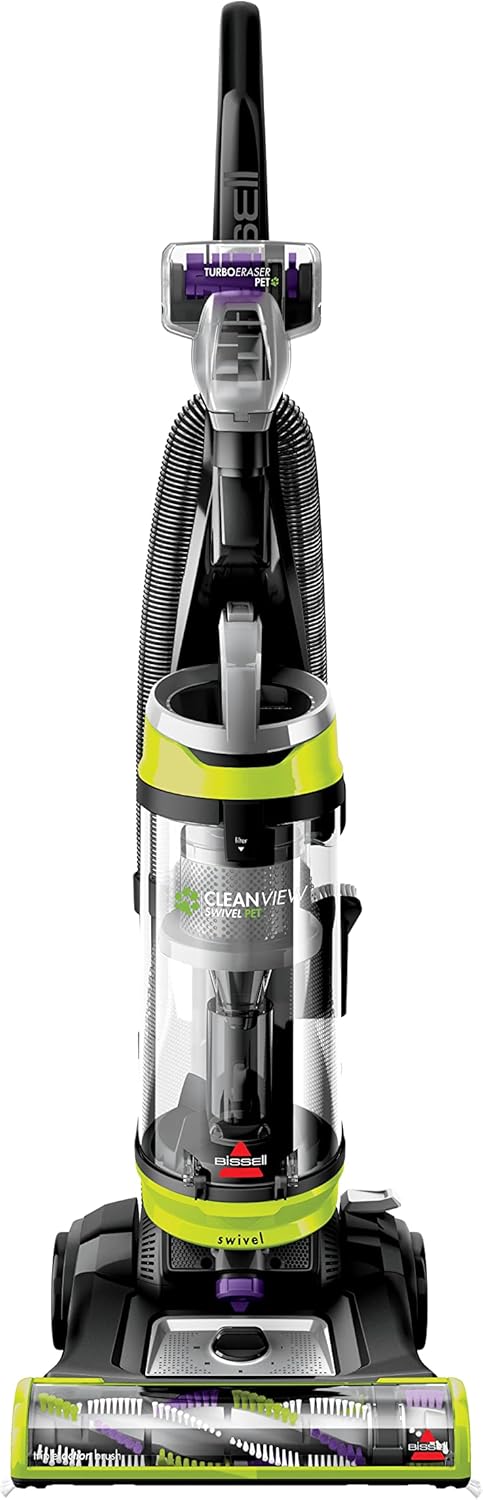
The CleanView Swivel Pet 2252 uses a Triple Action Brush Roll to loosen and lift embedded pet hair. Swivel steering helps position the floorhead around furniture, while Scatter-Free Technology is designed to reduce debris scatter on hard floors. Those floor-contact features make it a strong example of why pickup depends on more than suction specifications alone.
Check On AmazonIf you click this link and buy, we earn a commission at no additional cost to you.
Use independent pickup tests as the final check
Independent testing is most useful when it keeps suction, airflow, and debris pickup as separate observations instead of collapsing them into one marketing score. RTINGS, for example, reports maximum suction and hose airflow alongside bare-floor, carpet, and pet-hair pickup results, which lets a buyer see that air-system measurements and cleaning outcomes are related without being identical. That separation is exactly what a practical comparison needs. It also makes surface-specific weaknesses visible instead of hiding them behind one impressive specification.
Look for tests that identify the surface, debris type, attachment, power mode, and measurement location clearly enough to compare like with like. Cordless testing deserves extra attention because a maximum-mode suction result may not represent the mode used for most of a whole-home cleaning session. If the test method is vague, treat the result as directional rather than exact. For the final buying decision, verified pickup on the surfaces you own should outrank a larger but less comparable headline number.
- First, identify the vacuum type and the surfaces you actually need to clean.
- Next, decode whether the published number is electrical input, pressure, airflow, or air power.
- Then, check the measurement location, operating mode, and attachment if the source provides them.
- After that, compare floorhead design and brushroll behavior for your hard floors, rugs, or carpet.
- Finally, use independent pickup results under comparable conditions as the outcome check.
This evidence hierarchy keeps specifications useful without letting them dominate the decision. It also gives you a sensible stopping point when a brand publishes a large number but provides little context around how it was measured. You do not need to reverse-engineer the machine from a shopping card. You need enough consistent evidence to decide whether the complete vacuum cleans the surfaces and debris that matter in your home.

The AWS-100 has a 100-gram capacity with 0.01-gram readability for small mass measurements. Its weighing platform is stainless steel and the display is backlit for easier reading. For controlled pickup experiments, a compact scale like this can help weigh test debris consistently before and after a vacuum run.
Check On AmazonIf you click this link and buy, we earn a commission at no additional cost to you.
Avoid universal minimum suction numbers
Search results often encourage a single threshold for what counts as good suction, but a universal minimum is a poor buying rule across robots, cordless sticks, uprights, canisters, and handhelds. The measurement systems differ, the test points differ, and the cleaning heads do different work. Even within one product class, one number can change with mode, attachment, filter condition, and the degree of restriction in the air path. A threshold without those conditions is simpler than the real decision, but not more reliable.
A better question is whether the vacuum has enough usable performance for the job you are asking it to do. For a carpet-heavy home, independent carpet pickup and floorhead behavior deserve more weight than a generic Pa target; for mostly hard floors, debris capture and controlled airflow at the floorhead may matter more. For a lightweight secondary cleaner, convenience and realistic operating-mode performance may outweigh a peak figure that is available only briefly. The number becomes useful once the household task and product class are fixed, not before.

The Featherweight 2033 is a lightweight corded stick vacuum that also converts to a handheld cleaner. It includes a crevice tool for above-floor and tight-space cleaning. Its simple secondary-cleaner format is a useful example of why convenience and task fit can matter more than chasing a universal suction threshold.
Check On AmazonIf you click this link and buy, we earn a commission at no additional cost to you.
Feed the evidence hierarchy back into vacuum shopping
Once you understand the measurements, the buying process can become simpler rather than more technical. Start with the vacuum format, floor mix, debris, cleaning route, storage, weight tolerance, and maintenance burden, then use suction and airflow data to separate plausible candidates inside that context. If the real decision is between battery convenience and sustained plugged-in cleaning, the corded versus cordless vacuum comparison should come before a contest between peak suction figures. That sequence keeps the specification attached to the household job it is supposed to serve.
After the format is settled, give more weight to measured pickup and usability than to a single number that happens to be easy to advertise. A current shortlist should compare evidence that is actually comparable, including surface performance, floorhead behavior, filtration and maintenance where relevant, and the operating mode used during testing. If you want to move from specification decoding to current-model selection, the site’s best vacuum cleaners coverage is the appropriate next step because model recommendations require current performance and ownership evidence. The goal here is narrower: understand what each suction claim means before you let it influence the shortlist.

The Navigator NV352 combines an upright floorhead with a detachable Lift-Away pod for above-floor cleaning. Its brushroll shutoff supports switching between carpet and bare-floor cleaning, while swivel steering helps maneuver the floorhead. Those format and usability features fit a shopping process that considers surfaces and cleaning route before comparing headline suction numbers.
Check On AmazonIf you click this link and buy, we earn a commission at no additional cost to you.
Final Thoughts: specifications describe the air system, tests show whether the floor gets clean
Watts, Pa, water lift, CFM, and air watts can all be legitimate vacuum specifications, but they answer different questions. Motor watts describe electrical input, pressure figures describe pressure difference, airflow describes moving air, and air watts combine pressure with airflow under a defined method. None of them contains floorhead design, brushroll behavior, surface interaction, or debris pickup by itself. Treat the number as a clue about the air system, not as the final verdict on cleaning performance.
The safest shopping order is type and household fit first, measurement meaning second, floorhead design third, and comparable independent pickup testing last. That order makes it much harder for a large headline number to pull the decision away from the floors and debris you actually have. It also removes the need for a universal magic suction threshold, because the useful level depends on product class, surface, attachment, and test condition. A good specification helps explain why a vacuum may work; a good test shows whether it did.

The IX141 is a cordless stick vacuum with a removable handheld mode for above-floor cleaning. Its bristle brushroll is intended for both bare floors and carpets, and LED headlights help illuminate debris. The listed runtime is up to 40 minutes at the hand vacuum in standard mode, reinforcing why operating mode and floorhead context matter alongside suction claims.
Check On AmazonIf you click this link and buy, we earn a commission at no additional cost to you.
FAQs
💨 Is higher Pa always better for a vacuum?
No. Pa measures pressure, so a higher figure does not tell you airflow, floorhead behavior, or pickup by itself. Compare Pa only within a comparable product class and test condition, then check surface-specific pickup.
🧮 Can I convert Pa directly to air watts?
Not from Pa alone. Air watts require pressure and airflow information, so a pressure figure by itself is missing part of the calculation. Cross-brand comparisons also need compatible test methods and measurement points.
⚡ Does higher motor wattage mean stronger suction?
Not necessarily. Motor watts describe electrical input, while usable suction and airflow depend on the complete air path and cleaning head. Treat wattage as an input specification, not a direct pickup score.
📊 How many air watts is good for a vacuum?
There is no single air-watt threshold that works across every vacuum type and floor. Compare similar machines under similar test conditions, then confirm that independent pickup results match your hard-floor, rug, or carpet needs.
🧹 Why can a vacuum with lower suction specs clean better?
Floorhead seal, brushroll agitation, airflow management, and surface interaction can turn the available air power into better pickup. A larger pressure or air-power number does not measure those factors directly.
🪵 What should I compare for hard floors versus carpet?
Use pickup results on the actual surface type and check the floorhead design used in the test. Carpet also makes brushroll action and nozzle interaction especially important, while hard floors can expose problems with larger-debris capture and floorhead sealing.
References and Sources
- TechRadar suction measurement explainer: Supports the distinctions among motor watts, water lift, air watts, and Pa used in the measurement decoder.
- RTINGS vacuum suction testing: Shows separate suction, airflow, and surface-pickup measurements rather than treating one specification as the complete cleaning result.
- IEC 62885-2 vacuum performance standard: Confirms that household dry-vacuum performance is evaluated through defined measurement methods and comparative test conditions.