Cleaning a vacuum safely starts with the machine’s construction, not a universal wash-everything routine. Bagged and bagless vacuums have different collection paths, and filters, brush rolls, hoses, tools, and bins may each have different cleaning limits. The practical rule is to disconnect power, identify what the exact model lets the owner remove, and keep water away from any part the manual does not explicitly call washable. By the end, you should be able to clean the accessible airflow path without turning routine maintenance into an avoidable repair.
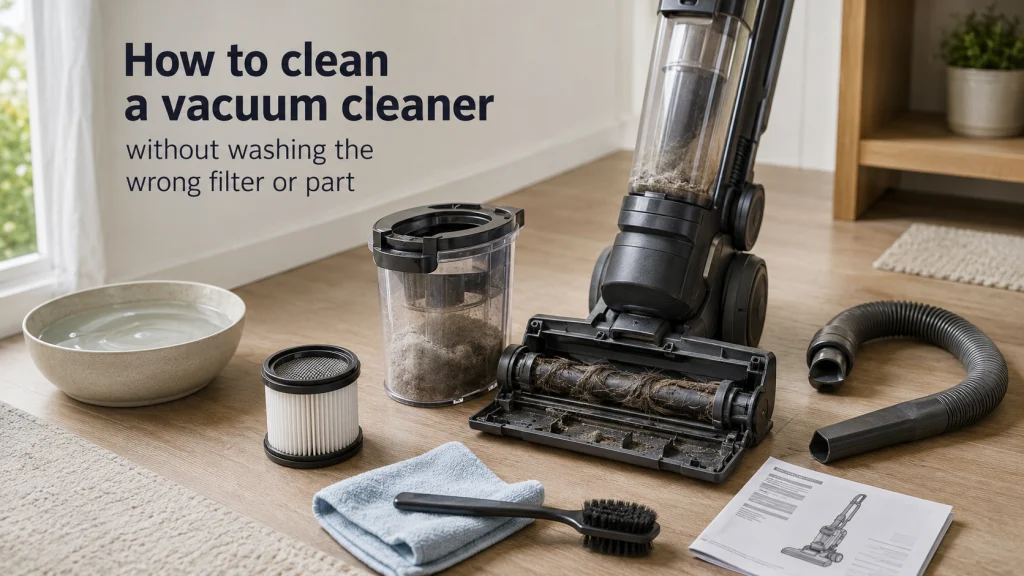
How to clean a vacuum cleaner without guessing what can get wet
The first mistake to avoid when learning how to clean a vacuum cleaner is assuming that a dusty filter belongs under the faucet. Some manufacturers tell owners to rinse particular filters, while other machines use filters that are replaced rather than washed. Even within one vacuum, a pre-motor filter and an exhaust filter may have different care instructions. That is why the exact model manual should be the first maintenance tool you reach for, before water, soap, compressed air, or a brush touches a filter.
This construction-first approach also keeps the job focused on owner maintenance instead of repair. You are cleaning the collection path, accessible filters, brush-roll area, hose, wand, floorhead, attachments, and exterior only where the manufacturer makes those parts owner-accessible. It does not include opening a motor housing, repairing a battery pack, bypassing a safety device, or digging into sealed electrical components. Within home cleaning appliances, maintenance needs can vary sharply by construction. If you are still deciding which construction fits your household, the overview of vacuum cleaner types and their ownership differences explains why the maintenance path changes with the machine.

This white 1-inch 3-ring binder has a 175-sheet capacity for 8.5 by 11-inch documents. Two interior pockets hold loose pages, and the clear overlay can be customized on the front, back, and spine. The round rings are designed to open and close easily for everyday document organization.
Check On AmazonIf you click this link and buy, we earn a commission at no additional cost to you.
Turn off, unplug, or remove the battery as the model allows
Routine vacuum cleaner maintenance starts with stopping the machine and separating it from its power source before you open a dust compartment, touch a brush-roll area, or remove a filter. A corded vacuum should be switched off and unplugged, while a cordless model may have a removable battery or a different shutdown procedure. Follow the exact owner’s manual when the battery is not designed for routine removal. The point is simple: no owner-cleaning task is important enough to justify working around a powered brush, energized wiring, or a machine that can start unexpectedly.
Gather only what the manual-supported task actually needs, because extra tools often encourage extra disassembly. A trash bag or bin, a soft cloth, and a small cleaning brush are enough for many routines, while a cutting tool may be appropriate only when the brush-roll design provides a safe place to remove wrapped hair. Before touching the machine, confirm the parts you intend to access are listed as owner-removable or owner-cleanable. A short pre-clean check keeps the job bounded and prevents a clogged hose from turning into an unnecessary teardown.
- Confirm the exact vacuum model and find its manual or manufacturer support page.
- Disconnect power in the way specified for that model.
- Identify the bin or bag, filters, brush-roll access, hose, wand, floorhead, and tools you can remove without opening sealed housings.
- Set aside water until you have confirmed which individual parts are washable.
That last check matters because “removable” and “washable” are not the same instruction. A filter can be designed for easy replacement without being designed for rinsing, and a powered attachment can detach from the vacuum while still containing electrical components. Treat each removed part according to its own construction rather than applying one cleaning method to everything on the counter. Once power is isolated and the owner-accessible parts are known, the collection system is the logical place to begin.

This set includes one large brush and one small brush with a built-in wiper blade. Both brushes use durable nylon bristles and soft non-slip grips. The smaller brush has a compact head for tight spaces, while its wiper blade removes built-up dirt from crevices.
Check On AmazonIf you click this link and buy, we earn a commission at no additional cost to you.
Identify the bagged or bagless collection path before cleaning
A bagged machine stores debris inside a replaceable bag, while a bagless machine usually routes debris into a removable bin or dust cup before air reaches one or more filters. That difference changes what you empty, what you wipe, and which surfaces may collect fine dust. It also changes the order of the job, because removing a bag carelessly can release debris that a sealed flap or holder was designed to contain. For a deeper comparison of those ownership trade-offs, see bagged versus bagless vacuum maintenance and handling.
Do not assume a bagless bin is automatically washable or that a bagged compartment should be scrubbed with a damp cloth. The bin material, seals, electrical contacts, sensors, and manufacturer instructions control whether water is allowed. Bagged models can also have pre-motor and exhaust filters that are replaced on their own schedules or indicators rather than washed. The useful question is not “which style is easier,” but “which owner-accessible components collect debris on this exact model, and what does the manual permit for each one?”
| Construction | Start with | Verify before cleaning | Common wrong assumption |
|---|---|---|---|
| Bagged | Remove and replace the bag as directed | Bag seating, compartment cleaning method, filter replacement rules | The bag can be emptied and reused |
| Bagless | Empty the bin or dust cup as directed | Whether the bin, seals, screens, or filters are washable | Every removable part can be rinsed |
The table is a routing tool, not a substitute for the manual. A Miele Classic C1 manual, for example, treats the FilterBag, pre-motor filter, and exhaust filter as replacement items and gives specific instructions for seating them, while Shark’s upright maintenance support tells owners to rinse filters on the covered machines. Those are both legitimate maintenance systems, but they are not interchangeable. Once you know which path your vacuum uses, emptying or replacing the collection system becomes much harder to get wrong.

Two boxes provide eight genuine Miele GN AirClean FilterBags, two Super Air Clean filters, and two pre-motor protection filters. The listing identifies compatibility with Miele Classic C1, Complete C3, and several S-series canister models. Each GN bag has a built-in hygiene shutter intended to help keep collected debris contained during removal.
Check On AmazonIf you click this link and buy, we earn a commission at no additional cost to you.
Empty the bin or replace the bag without overriding fill guidance
For a bagless vacuum, take the bin to a trash container and use the release mechanism the manufacturer provides rather than shaking the whole machine over the trash. Caked debris around the inlet, cyclone screen, or bin edge can be removed only with methods allowed for that model. If the bin is washable, it must be fully dry before it goes back near the airflow path or electrical contacts. If the manual calls for dry cleaning only, use that instruction even when a wet rinse seems faster.
For a bagged vacuum, the bag is normally a replaceable collection component rather than a container to be emptied and reused. Miele’s Classic C1 instructions, for example, direct the owner to remove the FilterBag by its grip, fit a new bag fully into the holder, and avoid forcing the dust-compartment lid if the bag is not installed correctly. That detail is useful beyond one brand because it shows why the bag holder and closing mechanism are part of the maintenance system, not packaging to work around. Reusing, overfilling, or poorly seating a bag can defeat the intended airflow and sealing path even when the rest of the vacuum looks clean.

This pack contains 120 unscented 13-gallon tall kitchen drawstring bags with 0.9-mil material. Each bag measures 24 inches wide by 27 3/8 inches tall. A red drawstring closes the bag for tying and carrying.
Check On AmazonIf you click this link and buy, we earn a commission at no additional cost to you.
Check the manual before washing any vacuum filter
Filters and brush rolls need different cleaning decisions, so handle them as separate jobs from the start. A filter is not washable merely because it looks like foam, felt, pleated paper, or a HEPA-style cartridge, and visual similarity is not reliable compatibility evidence. Shark’s current upright maintenance support tells owners of covered machines to rinse filters with cold water and dry them completely before reinstalling them. The Miele Classic C1 manual, by contrast, describes replacing its pre-motor and exhaust filters rather than washing them, which is exactly why a universal filter-washing rule is unsafe.
Look for explicit care language in the instructions: washable, rinse, replace, tap clean, dry clean, or another component-specific direction. Also check whether detergent, brushes, compressed air, heat, or other cleaning methods are prohibited, because a washable filter can still have method limits. If the instructions do not clearly authorize water for that specific filter, keep it dry and follow the replacement or dry-cleaning procedure instead. A filter that has been damaged, deformed, torn, or no longer seats correctly should not be treated as a cleaning problem when the manual calls for replacement.
| What the exact instructions say | Owner action | What not to assume |
|---|---|---|
| Washable or rinseable | Use only the permitted method and reinstall only when fully dry | That every filter in the same vacuum is washable |
| Tap, brush, or dry clean only | Remove loose debris with the permitted dry method | That water will clean it more thoroughly without harm |
| Replace | Fit the correct compatible replacement at the manual’s trigger or interval | That rinsing can extend the life of replace-only media |
| Instructions unclear | Stop and verify with the manufacturer for the exact model and filter | That filter material or appearance proves washability |
This decision card deliberately avoids a fixed drying time or universal cleaning interval. For a washable filter, the endpoint is fully dry according to its instructions, while service timing should follow the stated indicator, condition, or interval. That keeps water away from replace-only media and keeps damp parts out of the motor’s airflow. With the filters handled correctly, the brush-roll area is the next place where routine debris can create real resistance.

The SF-AA 30 is a replacement Active AirClean filter for select Miele bagged canister vacuums. The listing identifies compatibility with Classic C1, Complete C1, and Dynamic U1 models and describes filtration for dust and allergens with pet-odor control. Each box contains one Active AirClean filter.
Check On AmazonIf you click this link and buy, we earn a commission at no additional cost to you.
Clear hair and threads from owner-removable brush-roll areas
Hair, thread, string, and lint can wind tightly around a brush roll until the roller drags, the belt is stressed, or the powered floorhead has trouble turning freely. Start by confirming that the vacuum is disconnected from power and that the roller or cover is intended for owner access. Some floorheads provide a release latch, end cap, coin slot, or tool channel specifically for routine access. Others do not, and the absence of an owner-access procedure is a reason to stop rather than pry the housing apart.
If the brush roll is accessible, remove wrapped material without cutting into bristles, belts, seals, electrical leads, or the roller itself. Work from visible tangles and use the documented removal method when the roll can be lifted out. Miele’s Classic C1 instructions include a removable floor-brush roller on certain configurations and tell the owner to remove threads and hair, while Shark’s support page likewise treats brush-roll debris removal as routine maintenance. These examples support the same owner-level principle even though the hardware differs: use the access the manufacturer designed, not a more aggressive shortcut.

This manual comb-rake tool is designed to remove pet and human hair from vacuum brush rolls and hairbrushes. Its zinc-alloy teeth are made to cut through wrapped hair and tangles. The listing states that the design works with Dyson, Roomba, and other vacuum brands.
Check On AmazonIf you click this link and buy, we earn a commission at no additional cost to you.
Check hose, wand, and floorhead air paths without damaging them
A vacuum can have a clean bin, new bag, and properly serviced filter yet still pick up poorly if debris has narrowed the hose, wand, floorhead neck, or another owner-accessible air passage. Disconnect the removable sections the manual allows and look through each path from both ends. A flashlight can help you locate a visible wad of hair, paper, fabric, or larger debris without pushing it deeper. If a blockage is not visible or cannot be reached with the model-approved method, do not force a rigid object through a flexible hose or powered nozzle just because a generic cleaning article suggests it.
The risk is not only puncturing a hose. Some floorheads and wands carry wiring, contacts, sensors, or internal shapes that can be damaged by improvised rods, sharp hooks, or excessive force. Shark’s upright support recommends checking the hose, wand, pod, dust cup, handle, and nozzle for blockages, which is a good example of following the full airflow path rather than blaming one component. The safe removal and clearing sequence still depends on the machine, especially when electrical connections are built into the path.

The GearLight S1000 is a zoomable LED flashlight with five modes. This listing is the one-flashlight pack and includes batteries. Its aluminum body is water-resistant, and the listing states that it can withstand a 10-foot drop.
Check On AmazonIf you click this link and buy, we earn a commission at no additional cost to you.
Clean attachments according to their material and electrical construction
A plain plastic crevice tool is not the same cleaning job as a powered mini brush, even if both snap onto the same wand. Dry dust can usually be tapped, brushed, or wiped from nonpowered tools using the permitted cleaning method. A powered tool may contain a motor, contacts, wiring, bearings, or a removable brush that changes what can safely get wet. Before rinsing any attachment, verify that its care instructions explicitly permit washing that tool or removable component.
Brush attachments also deserve a quick check for wrapped hair because clogged bristles can reduce their usefulness long before the main vacuum shows a problem. Upholstery tools can trap lint around edges and channels, while crevice tools can pack debris near narrow openings. If an attachment has a detachable insert, roller, or pad, treat the detachable piece according to its own care instructions rather than assuming the whole tool shares the same cleaning method. The article on vacuum cleaner attachments and what each tool is designed to do can help identify which parts are simple airflow tools and which add moving or powered components.

The OXO Electronics Cleaning Brush uses soft bristles to brush away dust. A slim silicone wiper reaches debris in tight spaces, and the wiper is protected by a cap when stored. The bristles retract into the handle for compact storage.
Check On AmazonIf you click this link and buy, we earn a commission at no additional cost to you.
Wipe the body without submerging electrical components
The exterior usually needs less cleaning than the airflow path, but dust around handles, vents, latches, and cord areas can still make the machine unpleasant to use. With the vacuum disconnected from power, use the approved surface-cleaning method, commonly a dry or lightly damp cloth for plastic housings. Miele’s Classic C1 instructions specifically permit a damp cloth or a cleaner suitable for plastics on the vacuum and plastic accessories, while warning against harsher products that can damage the surface. That is a better boundary than spraying cleaner directly onto the machine and hoping it stays out of openings.
Do not submerge the vacuum body, powered head, charger, battery, plug, or electrical connections. Keep moisture from running into vents, switches, seams, charging ports, or contact points, and do not reinstall any removed washable component until it is fully dry. While the machine is unplugged, visually inspect the cord and plug if it has them, but do not open the housing to repair damage. A clean exterior is worthwhile, yet it should never come at the cost of introducing liquid into a part that was designed to stay dry.
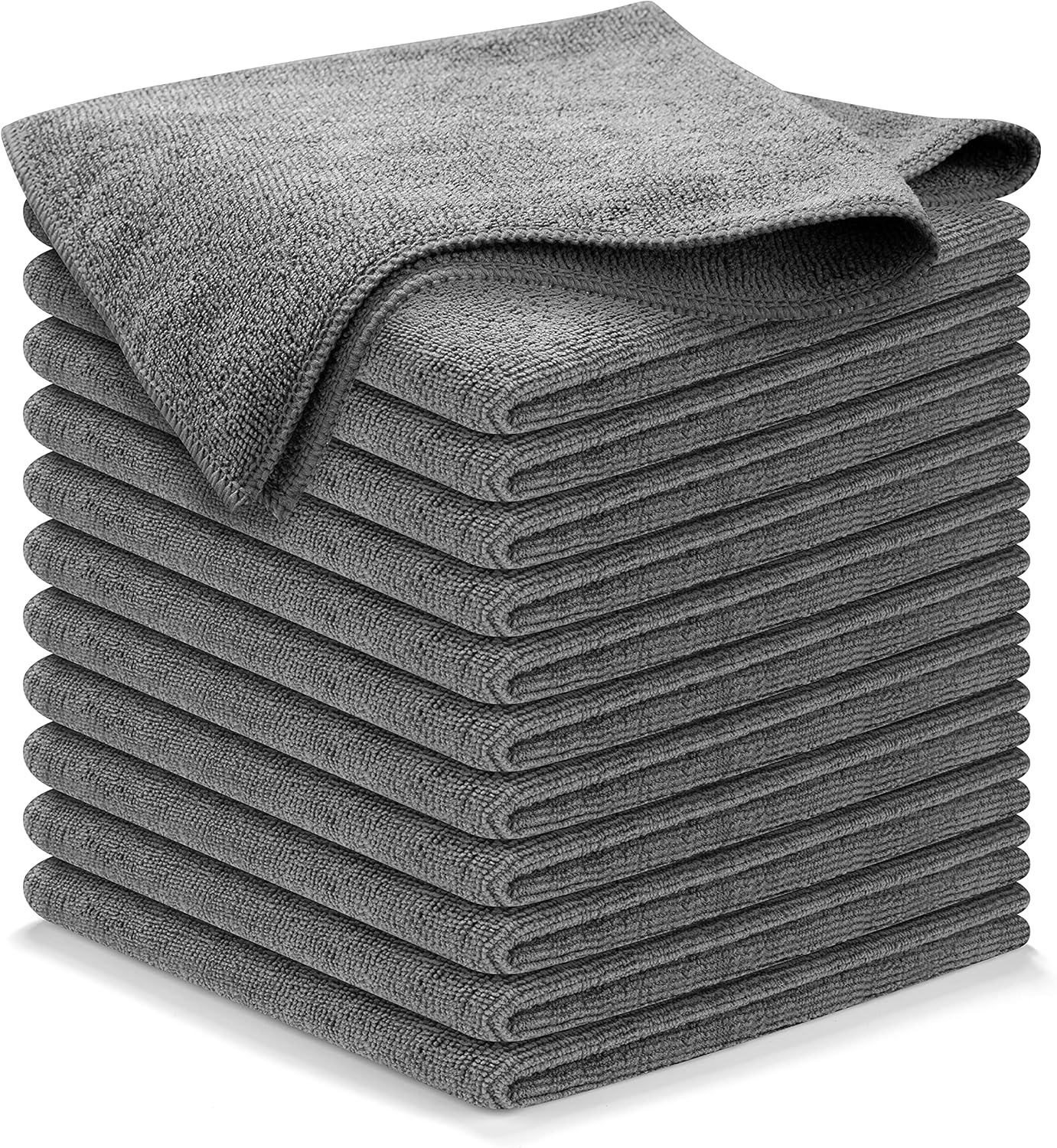
This pack contains 12 gray microfiber cloths measuring 12.5 by 12.5 inches each. The microfiber weave is designed to absorb liquid, moisture, grime, and dirt. The listing rates the cloths for 1,200 washes.
Check On AmazonIf you click this link and buy, we earn a commission at no additional cost to you.
Use damage, abnormal heat or noise, and inaccessible blockages as stop conditions
Cleaning is an owner task only while the problem stays in owner-accessible parts and the machine behaves normally. A damaged cord or plug, battery fault, burning odor, smoke, sparks, abnormal heat, exposed wiring, liquid in an electrical area, or uncontrolled operation is not a signal to clean more aggressively. Likewise, a hard mechanical lock or a blockage behind a sealed housing should not be treated as permission to open the motor section. Stop using the vacuum and move to the documented support or service path.
Unusual noise after a brush-roll cleanup also deserves attention because a roller, belt, bearing, or powered head may not have been reseated correctly or may already be damaged. If the machine shuts itself down, use its troubleshooting instructions to determine the next owner-level checks rather than repeatedly restarting it. Shark, for example, directs owners of covered upright models to turn the machine off, disconnect power, and inspect accessible airflow paths when low suction or brush-roll problems occur. That is troubleshooting at the maintenance boundary, not a license to open sealed electrical or motor components.
Stop using the vacuum: damaged cords or plugs, battery faults, sparks, smoke, burning odor, abnormal heat, exposed wiring, liquid in electrical areas, uncontrolled operation, hard mechanical lock, or an inaccessible internal blockage should move the next step to manufacturer support or qualified service.
A support stop is not a failed cleaning session. It is evidence that the problem has moved beyond what routine maintenance can safely resolve. Keep the model number, the symptom, and the maintenance steps already completed available when you contact support, because those details make model-specific troubleshooting more useful. For everything that remains routine, the final maintenance question is how often to repeat each task without inventing a universal calendar.

This four-pack contains wide-ruled composition notebooks with 100 sheets each. Each notebook measures 9.75 by 7.5 inches and comes in an assorted marble-cover color. The ruled pages provide a simple place to record model numbers, symptoms, and completed maintenance steps.
Check On AmazonIf you click this link and buy, we earn a commission at no additional cost to you.
Avoid universal maintenance calendars and follow model indicators
A single schedule for every vacuum sounds convenient, but it ignores how different machines tell owners that attention is needed. A bagged model may use a bag-fill indicator and separate replacement instructions for pre-motor and exhaust filters, while a bagless machine may ask for more frequent bin emptying and washable-filter care. Pet hair, fine dust, large debris, floor type, and cleaning frequency can also change how quickly accessible parts load up. The reliable routine is to combine documented intervals or indicators with what you can observe in normal use.
Check sooner when pickup drops, a brush roll becomes visibly wrapped, the bin reaches its marked limit, a bag indicator says it is ready, or the manual calls for attention to a filter. Do not wait for a problem when the instructions give an explicit maintenance trigger, but do not invent a more aggressive wash or replacement cycle just because another brand uses one. This is especially important with filters, where unnecessary washing can be as damaging as neglect. Good maintenance is not maximum intervention; it is the right intervention for the collection path and component in front of you.
Keep a simple note of which filters are washable, which are replace-only, and what indicator belongs to each one. If routine cleaning feels unusually burdensome, that ownership cost is worth considering when replacement eventually becomes necessary. The comparison of current vacuum cleaner options for different household needs can then be read with maintenance burden in mind rather than feature count alone. Until then, keep the accessible airflow path clear instead of repeatedly deep-cleaning parts that were never meant to be washed.

The pack contains 72 white removable labels measuring 1 by 3 inches. The adhesive is designed to stick firmly to smooth surfaces while peeling away cleanly when needed. The labels are made for handwriting and are not printer compatible.
Check On AmazonIf you click this link and buy, we earn a commission at no additional cost to you.
Final Thoughts: clean the airflow path you are allowed to access
The safest way to clean a vacuum is to treat its care instructions as a map of accessible parts rather than treating the whole machine as washable equipment. Disconnect power, service the bag or bin, identify each filter’s actual care rule, clear the brush-roll area, inspect accessible air paths, and clean tools according to their construction. Water belongs only on parts explicitly identified as washable, and those parts should be fully dry before reassembly. That sequence handles the maintenance work most households can reasonably do without drifting into internal repair.
When performance still feels wrong after that work, use the remaining symptom as information instead of escalating the teardown. A persistent clog behind a sealed section, damaged electrical parts, abnormal heat or noise, or a failed powered component belongs with support or qualified service. This boundary protects the machine and keeps routine cleaning from becoming the cause of the next problem. The goal is not to make every part look freshly scrubbed; it is to keep the intended airflow path clean, correctly assembled, and maintained within the machine’s stated care limits.
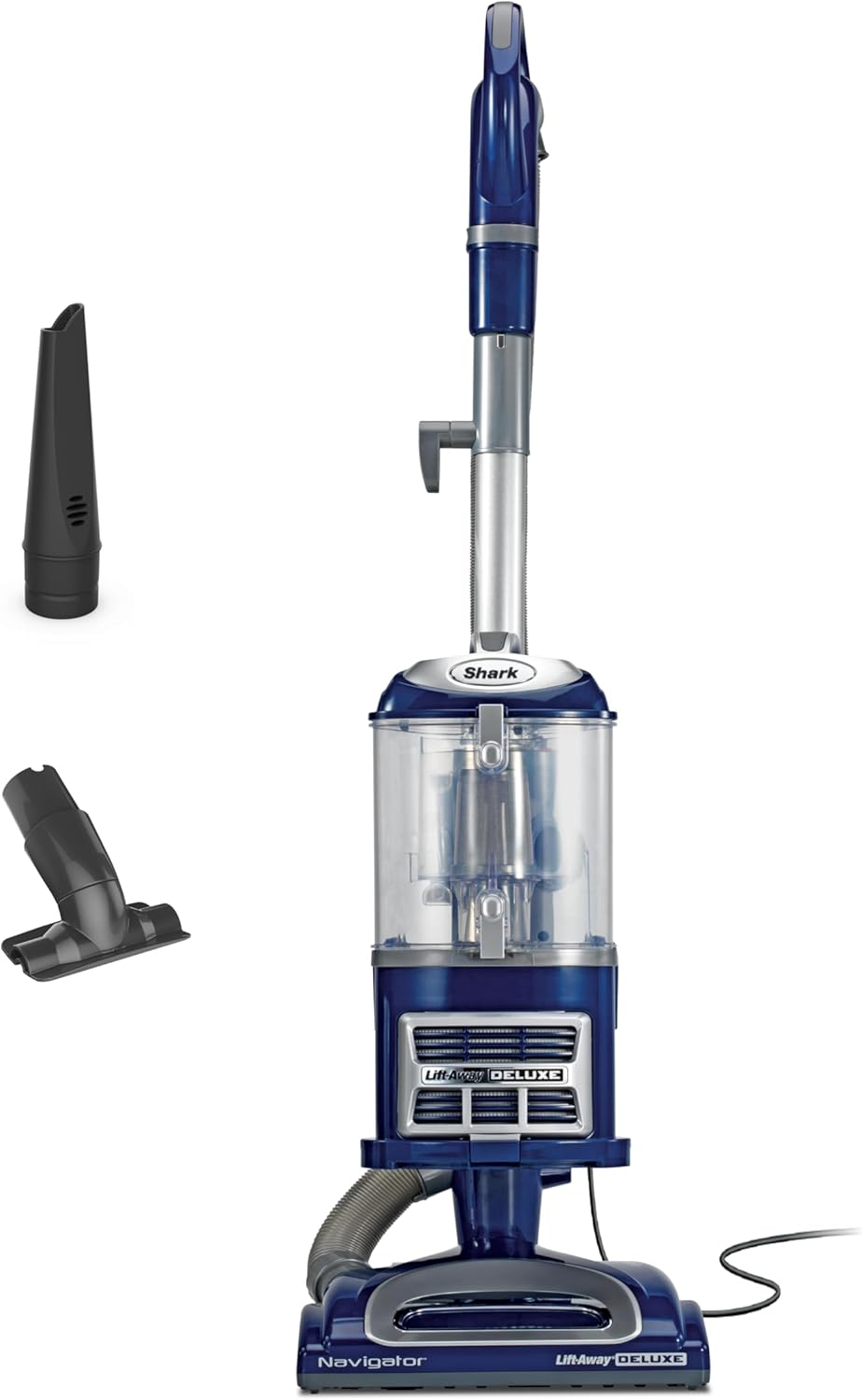
The Shark Navigator NV360 is a blue Lift-Away upright vacuum with HEPA filtration and a 0.9-quart dust cup. It has swivel steering and brushroll shutoff for switching between carpet and hard-floor cleaning. The listing includes upholstery and crevice tools.
Check On AmazonIf you click this link and buy, we earn a commission at no additional cost to you.
FAQs
💧 Can I wash my vacuum cleaner filter?
Only if the instructions identify that specific filter as washable. If the manual says replace, tap clean, dry clean, or gives no washing instruction, do not put the filter in water.
🧹 What should I clean first when a vacuum loses suction?
Start with the owner-accessible airflow path: bag or bin, filters, hose, wand, floorhead, and visible blockages. Keep the machine powered off and disconnected while you check those parts.
🧵 How do I remove hair from a vacuum brush roll?
Use the brush-roll access method shown for your model, then remove wrapped hair without cutting belts, wiring, bristles, or the roller surface. If the roll is not owner-removable, do not pry the floorhead open.
📦 Can I empty and reuse a vacuum bag?
Do not assume a disposable vacuum bag can be reused. Follow the exact bag-replacement instructions and fit the correct compatible bag so the holder, seal, and airflow path work as designed.
⏱️ How often should I clean my vacuum?
Use the stated indicators, intervals, and component-specific instructions rather than a universal calendar. Visible hair, a full bin, a bag indicator, reduced pickup, or a manufacturer maintenance signal can justify an earlier check.
⚠️ When should I stop cleaning and contact support?
Stop for damaged cords or plugs, battery faults, sparks, smoke, burning odor, abnormal heat, exposed wiring, liquid in electrical areas, uncontrolled operation, or an inaccessible internal blockage. Do not open sealed motor or electrical housings for routine maintenance.
References and Sources
- Shark upright vacuum maintenance support: Supports model-aware filter rinsing, brush-roll cleaning, and accessible blockage checks for covered Shark uprights.
- Miele Classic C1 operating instructions: Verifies bag replacement, replace-only filter handling, owner-accessible roller cleaning, unplugging before maintenance, and exterior cleaning limits.
- Martha Stewart vacuum cleaning overview: Provides general owner-maintenance context for bins, filters, brush rolls, attachments, and exterior cleaning while emphasizing manufacturer instructions.