Vacuum cleaner attachments matter when they change where the machine can reach or how safely and effectively it can clean a particular surface. A basic crevice tool, dusting brush, upholstery tool, extension wand, and the right powered or air-driven brush can cover very different jobs, so a larger accessory count is not automatically a better bundle. The useful question is whether each tool matches a repeated household job and fits the exact vacuum connection. By the end, you should be able to sort your attachments into keep, skip, replace, or verify-before-buying groups.
The accessory drawer is really a map of missed jobs
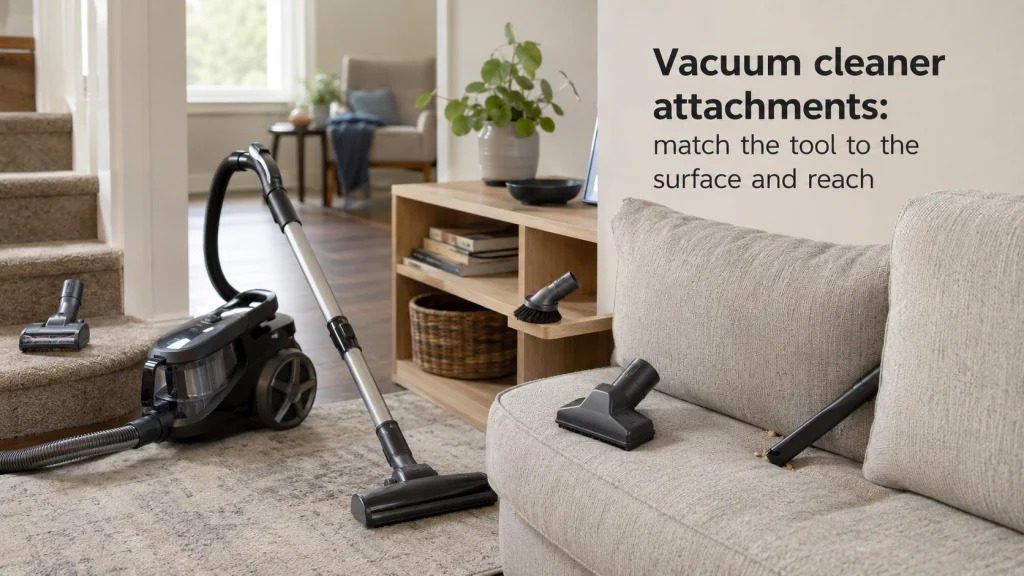
Vacuum cleaner attachments can look like bonus plastic until one narrow gap, fabric stair, shelf, or car seat makes the main floorhead the wrong tool. That is why an accessory drawer full of pieces you never use is less valuable than three or four tools that solve jobs your vacuum repeatedly encounters. A crevice nozzle extends into spaces a wide head cannot enter, while a dusting brush changes the contact surface so the vacuum can work around more delicate objects. A mini brush can add agitation to upholstery or stairs, but only when its drive system and connection actually match the machine.
The practical way to judge a bundle is to start with your home rather than the accessory count printed on the box. List the jobs that recur: sofa seams, baseboard edges, carpeted stairs, blinds, ceiling corners, car upholstery, low furniture, or pet hair on fabric. Then ask whether the included tools add reach, gentler contact, a more useful opening shape, or powered agitation for those specific jobs. If two attachments solve the same occasional task, the second one may be clutter rather than added capability.
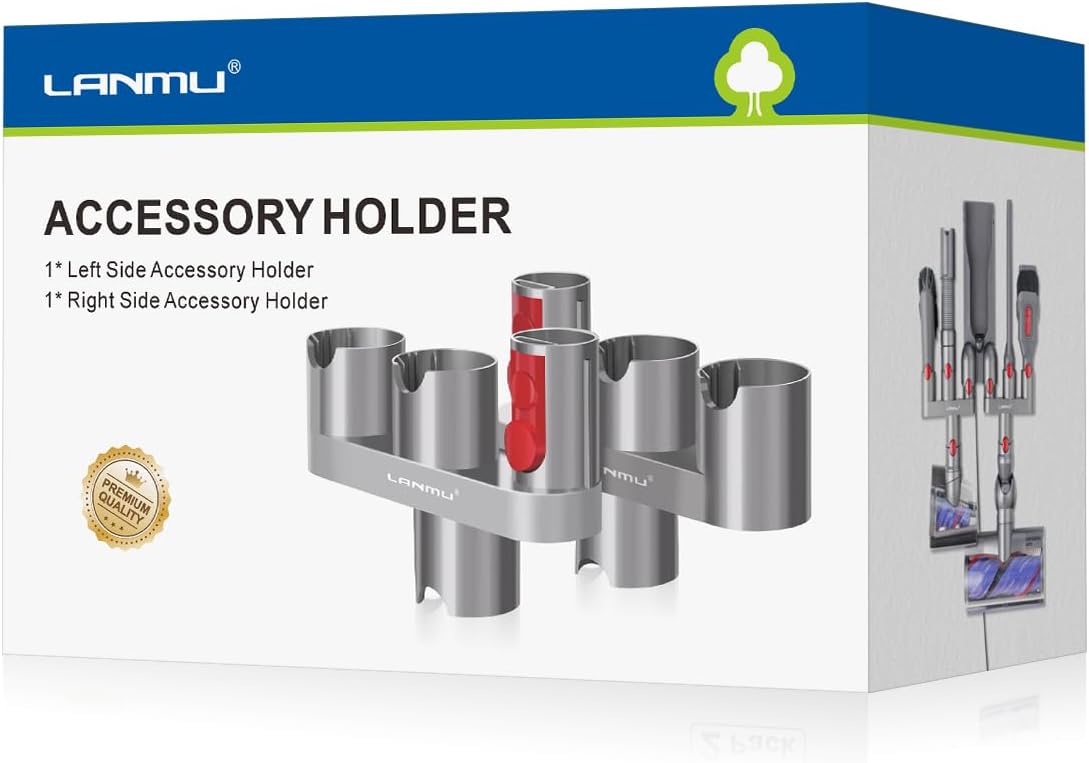
This drill-free holder organizes compatible Dyson accessories at the vacuum docking area instead of adding another cleaning head. It is listed for Dyson V15, V11, V10, V8, V7, Outsize, and Gen5 systems and provides attachment storage. It is a storage accessory only, so it does not change airflow or make an incompatible cleaning tool fit.
Check On AmazonIf you click this link and buy, we earn a commission at no additional cost to you.
Separate passive tools from powered and air-driven tools
The first useful split is not between large and small attachments. It is between passive tools, which simply shape or extend the vacuum’s airflow, and tools with a rotating brush that needs either airflow or an electrical connection to turn. A crevice tool, upholstery nozzle, basic dusting brush, extension tube, or flexible hose usually belongs on the passive side. A turbo brush uses moving air to spin its roller, while a motorized tool uses electrical power supplied through a compatible vacuum, wand, hose, or connector.
That difference matters because passive fit is often simpler to verify, while powered fit can involve several requirements at once. A tool can appear to latch onto a wand and still lack the electrical contacts or internal pathway needed to operate a motorized brush. Air-driven turbo tools avoid that electrical requirement, but their performance still depends on airflow, brush design, surface resistance, and the vacuum they are attached to. Treat “fits on the end” and “works as intended” as two separate questions.
| Attachment type | What makes it work | Main verification point | Typical household role |
|---|---|---|---|
| Passive nozzle or brush | Vacuum airflow | Physical diameter, shape, latch, and seal | Edges, dusting, upholstery, narrow spaces |
| Air-driven turbo tool | Vacuum airflow spins a turbine or roller | Physical fit plus enough usable airflow for the tool | Fabric, stairs, hair, and lint |
| Motorized tool | Electrical power from the compatible vacuum system | Physical fit, latch, contacts, wiring path, and model support | Agitation on upholstery, stairs, or other supported surfaces |
A bundle with six passive pieces is therefore not automatically more capable than a bundle with four carefully chosen tools. What matters is whether the attachment adds a cleaning function that the main head cannot perform comfortably or safely. Within home cleaning appliances, attachment systems can change what a vacuum is practical to use beyond the main floorhead. If you are comparing types of vacuum cleaners, look at the accessory system as part of the machine rather than as a free extra. The connection design, reach, storage, and available powered tools can change what the vacuum is practical to use on away from the floor.

This seven-piece 1.25-inch accessory set combines passive cleaning tools with two metal wands for common above-floor jobs. The kit includes a floor brush, crevice tool, dusting tool, upholstery tool, and two chrome steel wands. Because the tools rely on vacuum airflow rather than an electrical motor, the documented 1.25-inch connection is the key fit point to verify.
Check On AmazonIf you click this link and buy, we earn a commission at no additional cost to you.
Use a crevice tool when width is the problem
A crevice tool earns its place when the main floorhead or upholstery nozzle is simply too wide to reach the dirt. Its long, narrow opening is useful along room edges, between seat cushions, beside appliances, around trim, inside car storage areas, and in other gaps where a broad nozzle cannot make useful contact. The tool does not create more suction from the vacuum; it changes the shape and location of the airflow. That distinction helps explain why it can feel more effective in a gap even though the vacuum motor has not changed.
Length and shape matter almost as much as the name. A short rigid nozzle may reach a sofa seam but still fail behind a radiator cover or deep between a car seat and console, while a longer or flexible design may solve that reach problem without adding another wand. Check whether the opening is likely to swallow the debris you actually encounter, because very narrow tips can clog on larger crumbs or clumps of hair. If your recurring problem is a wide fabric area rather than a narrow gap, an upholstery or brush tool will usually cover ground with less repetition.
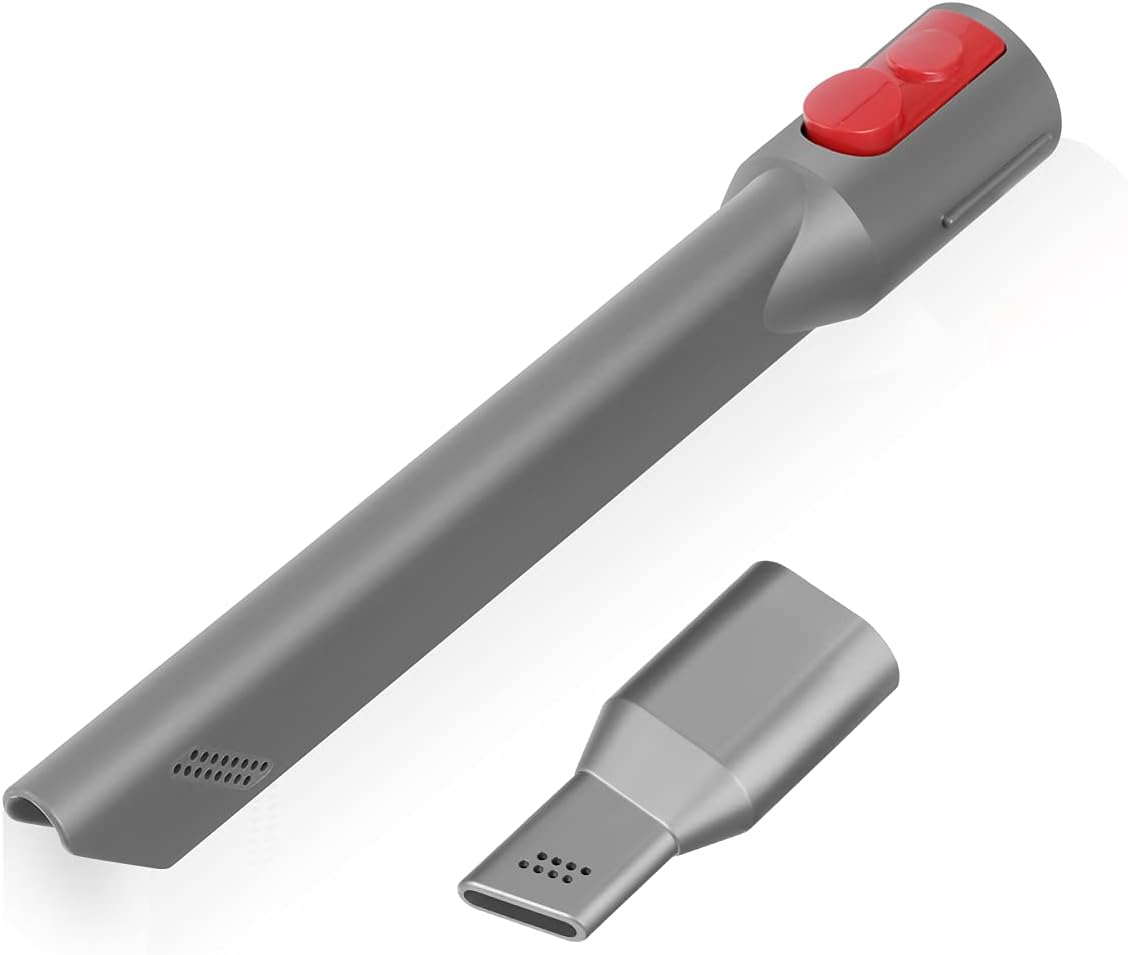
This narrow crevice attachment is designed for hard-to-reach spaces where a wider floorhead cannot fit. The listing specifies compatibility with Dyson V15, V12, V11, V10, V9, V8, V7, Gen5, and Outsize vacuum systems. Its value is the narrow opening and reach, so it suits gaps and edges rather than broad fabric cleaning.
Check On AmazonIf you click this link and buy, we earn a commission at no additional cost to you.
Use a dusting brush when surface contact matters
A dusting brush is useful because its bristles change how the nozzle meets the surface. Instead of pressing a hard plastic opening against blinds, shelving, trim, vents, lamps, or other above-floor areas, the bristles can loosen light dust while keeping the nozzle edge away from direct scraping contact. That makes the attachment different from a crevice tool even when both can reach the same corner. The brush is about gentler contact and light agitation, not simply reaching farther.
Still, “dusting brush” is not a universal permission label for every delicate surface. Bristle stiffness, trapped grit, suction setting, finish type, and the surface manufacturer’s care instructions can all change whether vacuuming is appropriate. Inspect the brush before using it on something easily marked, especially if it has already been used near floors or gritty debris. When the brush is clean and the surface allows vacuuming, it can make above-floor cleaning more controlled than trying to balance a bare hose end near an object.

This 1.25-inch dusting brush uses soft fill to add gentle bristle contact around above-floor surfaces. Its brush face is suited to light dust on shelving, trim, vents, and other areas where a bare plastic nozzle can be awkward. Compatibility still depends on a matching 1.25-inch connection and a secure seal on the vacuum.
Check On AmazonIf you click this link and buy, we earn a commission at no additional cost to you.
Use an upholstery tool for broad fabric contact
An upholstery tool trades the crevice nozzle’s narrow reach for a wider opening that can sit more evenly on fabric. That makes it useful on sofas, cushions, padded chairs, some mattresses, fabric headboards, and vehicle seats when the care instructions permit vacuuming. Many designs are suction-only, so the tool depends on airflow and repeated passes rather than a spinning brush. The wider face also means you can clean a seat panel or cushion without tracing it with a narrow nozzle strip by strip.
The important comparison is not “upholstery tool versus no tool,” but whether the fabric needs broad suction-only contact or more agitation. Light dust, crumbs, and loose debris may not justify a powered attachment, while embedded hair or lint can take more work with a passive nozzle. On loosely woven, delicate, fringed, or easily pulled fabric, aggressive agitation can be the wrong choice even if a powered tool is available. Start with the fabric’s care guidance, then use the least aggressive compatible attachment that does the job.
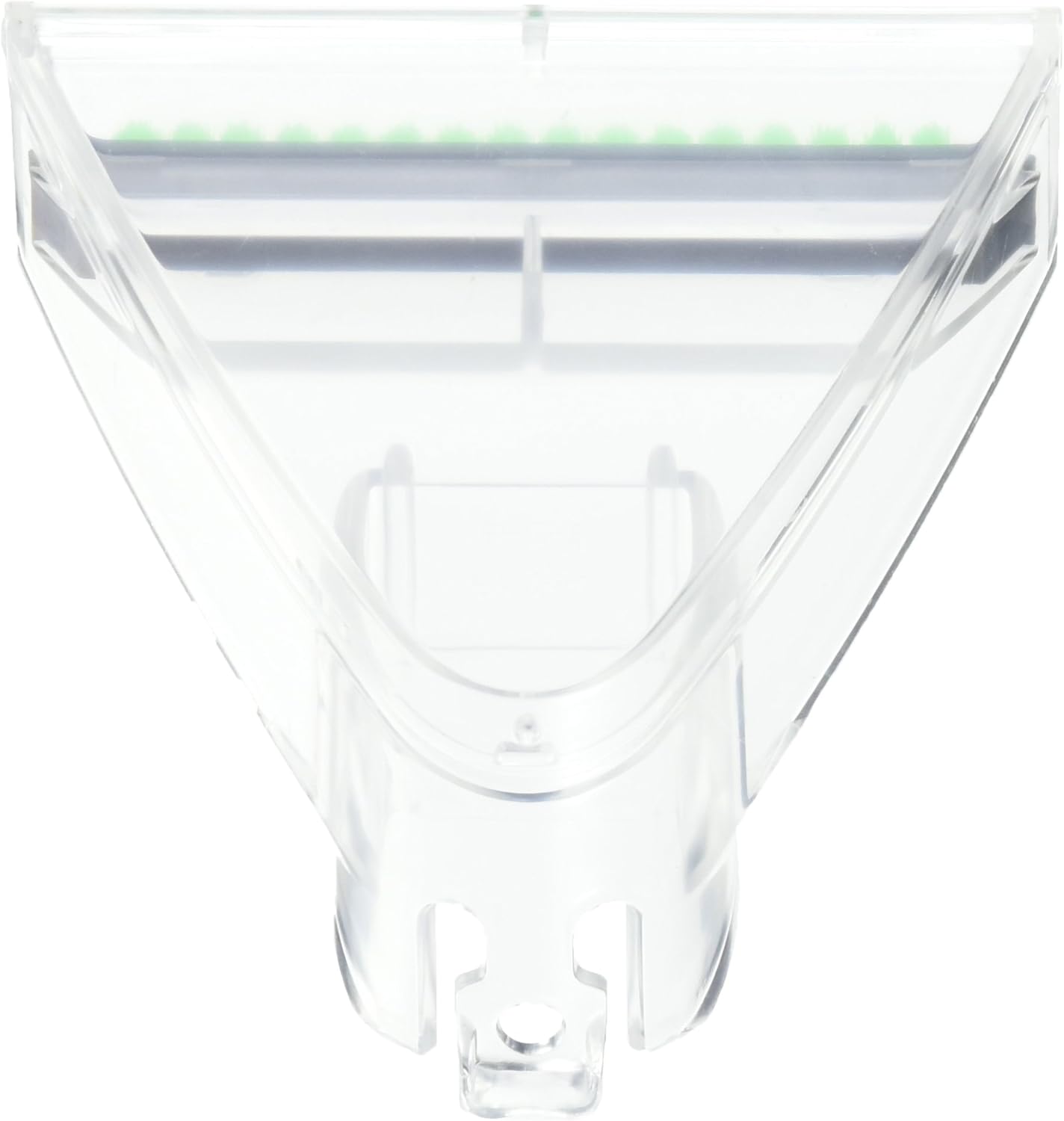
This Hoover upholstery nozzle is an OEM replacement part with part number 304593001 and a tab-and-bristle-strip design. Its 1.25-inch hose connection gives a broad contact area for compatible Hoover fabric-cleaning setups. Verify the exact Hoover model before buying, because the listing describes support for multiple models rather than every Hoover vacuum.
Check On AmazonIf you click this link and buy, we earn a commission at no additional cost to you.
Use an extension wand or hose when reach is the real limitation
An extension wand or hose does not change the cleaning surface as much as it changes where you can place another attachment. That can matter for ceiling corners, tops of doors, high shelves, deep areas under furniture, stair runs, or a vehicle interior where moving the main vacuum body is awkward. A longer reach can also reduce how often you need to lift a canister, carry an upright onto stairs, or crouch beside furniture. In that sense, reach is a usability feature rather than a cleaning-mode feature.
Extra reach also creates trade-offs that are easy to ignore when shopping. A long rigid wand needs storage space, a flexible hose can pull or twist, and an extended setup may feel less controlled if a heavy tool sits at the far end. The more useful buying check is whether the extension preserves the function of the attachment you intend to use with it. For a powered head, that means following the manufacturer’s supported accessory path rather than treating every extension as interchangeable.

This 16-foot hose extends working reach and includes adapters for compatible home vacuums, shop vacuums, and power-tool dust ports. The hose uses a 1.25-inch format to move a compatible suction tool farther from the vacuum body. It is an airflow hose rather than a powered electrical extension, so motorized attachment support should be verified separately.
Check On AmazonIf you click this link and buy, we earn a commission at no additional cost to you.
Use mini turbo or motorized tools when fabric needs agitation
A mini turbo or motorized brush can be useful on carpeted stairs, upholstery, pet beds, vehicle fabric, and other small soft surfaces where a full-size floorhead is cumbersome. The rotating brush adds agitation that can help lift hair, lint, and debris from fibers instead of relying on suction alone. That is why these compact heads often matter more to households with repeated fabric-hair cleanup than to households that mainly need hard-floor edge cleaning. The benefit comes from the brush action on the right surface, not from a “pet” label printed on the accessory.
The drive method changes the buying decision. An air-driven turbo tool can spin from airflow, but dense fabric, high resistance, hair wrap, or reduced airflow can affect how freely the roller turns. A motorized mini head can deliver more consistent brush action within the vacuum system it was designed for, so its value depends on both the repeated job and documented model support. If pet hair is one of your main buying problems, use the attachment question alongside the broader criteria in best vacuums for pet hair rather than treating a bundled mini tool as proof that the whole vacuum is the better fit.

The STB 101 is an air-driven mini turbobrush that uses vacuum airflow to spin its roller instead of a separate electrical connection. Miele specifies it for hair and lint on upholstery and carpet and lists compatibility with its canister vacuum cleaners. It is not the right choice for Miele cordless stick vacuums, so the vacuum family must be checked before purchase.
Check On AmazonIf you click this link and buy, we earn a commission at no additional cost to you.
Treat the main floorhead as part of the vacuum system, not a generic extra
The main floorhead can look like just another attachment because it disconnects from many vacuums, but its role is different. It is the primary interface between the machine and the floor, and its brushroll, airflow path, height, wheels, seals, controls, and sometimes electrical connection are designed around a larger cleaning load. Swapping it casually for a third-party head can change pickup behavior, steering, resistance, brush action, or the ability to use powered features. A head that physically attaches is not automatically equivalent to the one the vacuum was designed to use.
This is especially important when a floorhead carries power, sensing, lighting, height control, or other model-specific functions through the wand. Even suction-only heads can depend on a particular tube diameter, latch design, neck angle, or airflow relationship. If the goal is to replace a worn or missing main head, verify the exact compatible part or documented alternative rather than shopping by appearance. Attachment flexibility is useful, but the floorhead deserves a higher compatibility standard because it handles most of the machine’s routine floor cleaning.

This passive floor brush uses a 1.25-inch opening and a 12-inch cleaning width for documented compatible vacuum systems. Its soft natural fill is intended for hard-floor cleaning without a powered brushroll or electrical contacts. Because a floorhead handles routine floor work, confirm the vacuum connection and intended surface rather than treating the 1.25-inch size as universal proof of fit.
Check On AmazonIf you click this link and buy, we earn a commission at no additional cost to you.
Verify diameter, latch, seal, and electrical compatibility before buying
Third-party attachment shopping often goes wrong because one visible measurement is treated as the whole compatibility test. Round suction-only tools may sometimes share common nominal diameters, but connector depth, taper, locking tabs, oval or keyed shapes, seals, and model-specific cuffs can still differ. Powered attachments add another layer because electrical contacts and the power path through the hose or wand must also match. Manufacturer compatibility lists are therefore more useful than a photo that “looks right.”
A documented diameter can be a useful starting point for simple passive tools, especially when both the vacuum and attachment specify the same connection system. It is not enough evidence for a motorized tool, a powered wand, or a head that relies on a proprietary latch and electrical interface. Adapters can solve some physical-fit problems, but they do not automatically create electrical compatibility or preserve the intended seal and airflow. If an accessory listing does not identify your exact model or a verified interface standard, treat compatibility as unconfirmed.
- Confirm the exact vacuum model, not just the brand or product family.
- Check the attachment connection shape and nominal diameter where the manufacturer provides it.
- Check whether the tool twists on, friction-fits, or uses a locking tab or release button.
- For powered tools, verify electrical contacts and manufacturer support for that exact connection path.
- Check whether an extension hose, wand, or adapter is approved for powered or only non-powered accessories.
- Confirm the intended surface so physical compatibility does not become a wrong-use problem.
This checklist is deliberately stricter for motorized tools than for a basic crevice nozzle. A passive nozzle that seals securely and matches a documented connector is a much simpler compatibility case than a head that expects power and communication through the wand. When the evidence stops at visual similarity, the safe buying conclusion is that fit has not been proved. That can save more money than buying a large “universal” kit and discovering that the most useful piece is the one that does not connect properly.

This stainless-steel digital caliper measures up to 6 inches and switches among inch, fraction, and millimeter readouts. It can measure the outside diameter of a vacuum tube or accessory neck when a connector dimension needs checking. A diameter measurement does not confirm latch shape, seal, electrical contacts, or model support, so those compatibility points still require separate verification.
Check On AmazonIf you click this link and buy, we earn a commission at no additional cost to you.
Build a keep, skip, or replace set from repeated household jobs
The most useful attachment set is the one that matches work you actually repeat. A household with hard floors, a low sofa, and no carpeted stairs may get more value from a crevice tool, dusting brush, and reach extension than from several rotating fabric tools. A home with carpeted stairs, upholstered seating, and shedding pets may care much more about a compact brush tool and easy hose reach. The same accessory bundle can therefore be generous for one household and mostly storage clutter for another.
Use a simple keep, skip, or replace decision for every tool you own or are considering. Keep it if it solves a recurring job better than your other attachments, skip it if the job rarely occurs or another tool handles it well, and replace it if the right role exists but the current tool is awkward, damaged, or incompatible. This prevents accessory shopping from turning into a collection exercise. It also makes bundle comparison easier because you can value the useful tools and ignore the rest.
| Repeated job | Attachment role to look for | Why it changes the job | Common reason to skip |
|---|---|---|---|
| Edges, sofa seams, narrow gaps | Crevice tool | Puts airflow into spaces a wide head cannot enter | Your existing nozzle already reaches every recurring gap |
| Shelves, blinds, trim, delicate above-floor dust | Dusting brush | Adds softer contact and light bristle agitation | The surface should not be vacuumed or the brush is too stiff |
| Sofas, cushions, car seats | Upholstery tool | Covers fabric with a wider suction opening | You rarely clean fabric surfaces |
| Ceiling corners, stairs, deep under furniture | Extension wand or hose | Moves the useful attachment farther from the vacuum body | The added reach is awkward to store or control |
| Embedded hair or lint on supported fabric | Mini turbo or motorized brush | Adds rotating agitation | Your surfaces do not need agitation or the tool is incompatible |
| Routine floor cleaning | Main compatible floorhead | Provides the primary floor interface | A generic replacement is not verified for the machine |
The table is not a shopping list because several households can remove entire rows without losing anything useful. The point is to match the tool to a repeated job and then decide whether that job occurs often enough to justify storage and switching time. If an attachment stays buried because another tool always does the work, that is evidence about your real needs. A smaller accessory set that you actually use is a stronger fit than a larger bundle that looks impressive only at purchase time.
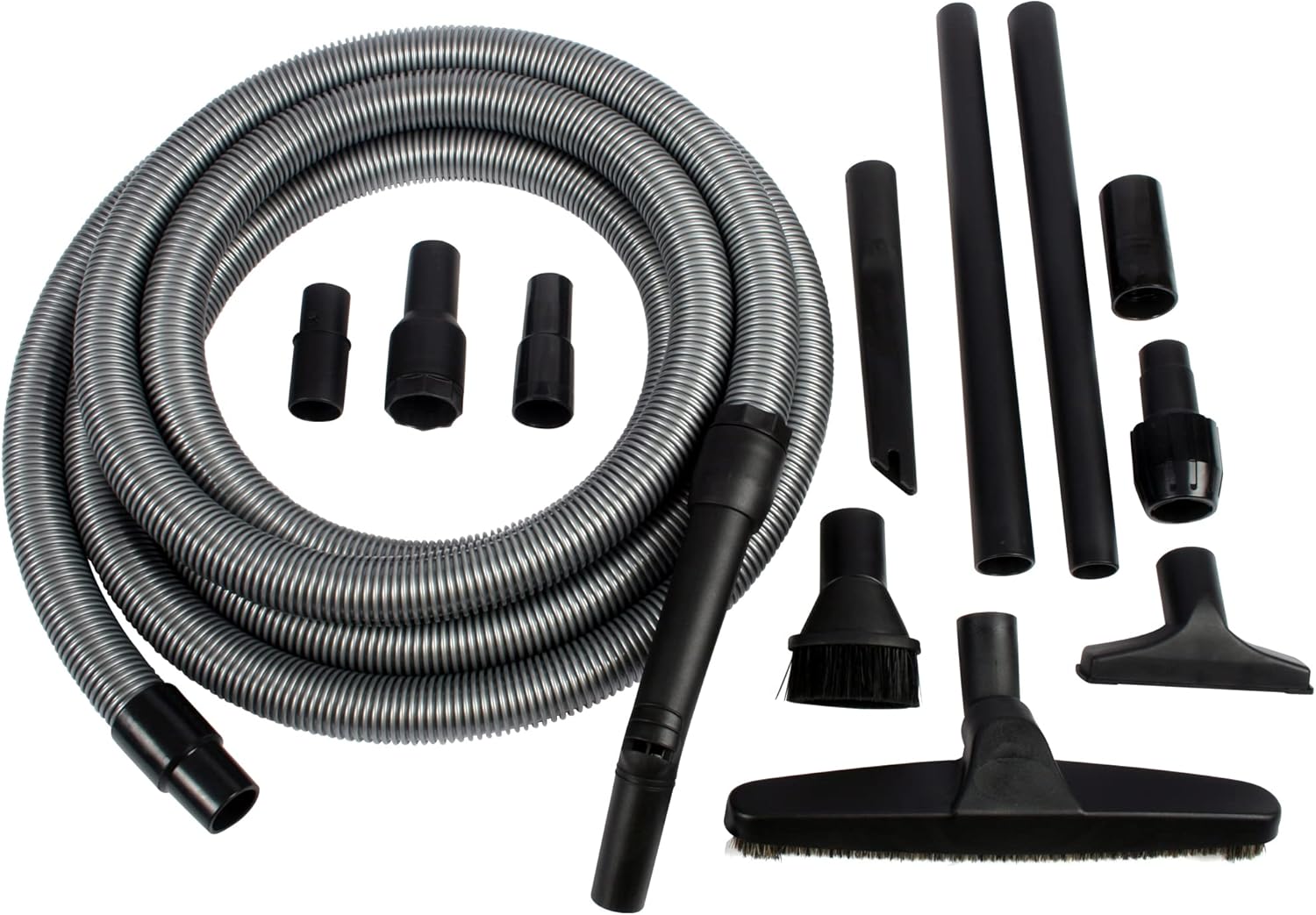
This eight-piece kit combines a 20-foot extension hose with tools for dusting, crevices, upholstery, and floors. The mix directly covers several repeated household jobs while the long hose changes reach without moving the vacuum body as often. Its compression adapter is designed for compatible upright and canister setups, so the exact vacuum connection still needs to be checked before use.
Check On AmazonIf you click this link and buy, we earn a commission at no additional cost to you.
Keep attachment cleaning separate from attachment selection
Choosing the right tool is only one ownership decision. Brushes collect hair and grit, narrow nozzles can clog, rollers can wrap with fibers, and connection points can accumulate debris that makes tools harder to attach or seal correctly. Those are maintenance issues rather than reasons to redesign the accessory set every time performance drops. Before replacing a tool that used to work well, check the cleaning and maintenance steps allowed by the exact vacuum and attachment instructions.
Do not assume that every plastic nozzle, bristled brush, turbo tool, or powered head can be washed or opened the same way. Some attachments contain bearings, turbines, wiring, electrical contacts, or materials that should be cleaned only by the method specified for that part. For routine owner-level care, follow the vacuum’s instructions and use how to clean a vacuum cleaner for the broader maintenance path. Stop at cleaning and accessible owner-service steps rather than opening a motorized attachment or electrical connection that the manual reserves for service.

This handheld comb-rake is designed to lift pet and human hair from accessible vacuum brush rolls and hairbrushes. Its manual teeth target wrapped fibers without requiring the powered head to be opened apart for routine cleaning. Use it only on accessible areas allowed by the vacuum or attachment instructions, especially around rollers, bearings, wiring, and electrical contacts.
Check On AmazonIf you click this link and buy, we earn a commission at no additional cost to you.
Final thoughts: buy reach and surface capability, not a bigger accessory count
A useful attachment earns storage space by changing what the vacuum can realistically clean. The crevice tool solves width, the dusting brush changes surface contact, the upholstery nozzle spreads suction across fabric, an extension changes reach, and a compatible rotating brush adds agitation where it is actually needed. Those are distinct capabilities, which is why counting accessories is a weak way to compare bundles. Start with repeated household jobs and give value only to tools that solve them.
Compatibility is the second half of that decision. Simple passive tools may be easy to match when the connection is documented, while motorized heads need much stronger proof because mechanical and electrical interfaces both matter. If an accessory does not solve a recurring job or its fit cannot be verified, skipping it is often the better ownership choice. A compact, compatible set that reaches the right places will usually do more useful work than a drawer full of attachments chosen by quantity.

This compact 1.25-inch kit pairs a round brush, crevice tool, and gulper nozzle instead of maximizing accessory count. Those three shapes cover different jobs such as dusting, narrow gaps, upholstery, blinds, and vehicle interiors. The set is useful only when the 1.25-inch connection matches the vacuum, so interface fit should be confirmed before treating the bundle as compatible.
Check On AmazonIf you click this link and buy, we earn a commission at no additional cost to you.
FAQs
🧹 What are vacuum attachments for?
They change the vacuum’s reach, contact shape, or surface action so it can handle jobs the main floorhead does poorly. The useful attachment depends on the surface, access problem, and exact vacuum connection.
📏 Are vacuum attachments universal?
No. Some passive tools share common connection sizes, but diameter alone does not prove fit because latches, tapers, seals, and connector shapes can differ. Powered tools also need the correct electrical interface.
🛋️ Which attachment should I use on a couch?
A suction-only upholstery tool is a practical starting point for many vacuum-safe fabrics. Embedded hair may justify a compatible turbo or motorized tool, but check the upholstery care instructions before using aggressive brush action.
🐾 Is a pet tool different from an upholstery tool?
Sometimes. “Pet tool” is a marketing label that may describe a rotating mini brush, a specialized passive tool, or another accessory, so identify the actual mechanism instead of relying on the name. Choose it only if that mechanism matches your repeated cleanup job.
🪜 What vacuum attachment works best for stairs?
It depends on the stair surface and the vacuum’s reach. A compact upholstery tool can work on fabric stairs, while a compatible mini turbo or motorized brush can add agitation when hair or lint is embedded.
🔌 Can I use a motorized attachment through any extension wand or hose?
No. The extension must support the required electrical path as well as the mechanical connection. Verify the exact vacuum, wand or hose, and tool combination with manufacturer documentation.
References and sources
- Which? vacuum attachment guidance: Supports the common roles of crevice, dusting, extension, and mini rotating tools.
- Dyson detail cleaning tool support: Shows model-specific compatibility and an extension hose intended for non-powered attachments.
- Philips MiniTurbo brush compatibility: Provides an example of a turbo brush with a specified connection size and documented compatible use.
- Shark parts and accessories: Shows model-series compatibility language for wands and motorized accessories.