The best vacuum cleaners are easier to compare after you separate cleaning performance from household fit. Current testing can show pickup, filtration behavior, portability, runtime, handling, and other measurable strengths, but those results still need to be filtered through your floor mix, stairs, storage, disposal preference, and cleaning routine. A carpet-heavy home may need a very different machine from a mostly-hard-floor home with tight furniture, while a light cordless design can become a poor fit if charging interrupts the way you clean. The practical goal is to choose the right vacuum profile first, then verify the current model, price, availability, and maintenance details inside that profile.
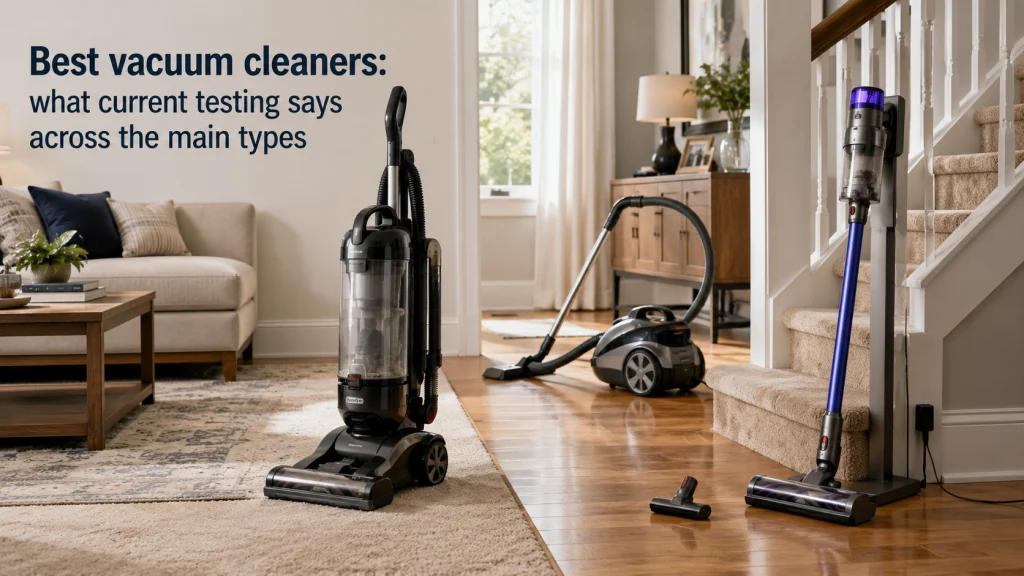
Put the household route before the winner
Put the same highly rated vacuum into three homes and the ranking can fall apart quickly. In a home with a long staircase, carrying weight and usable hose reach may matter more than a small advantage in floor pickup. In a carpet-heavy home, the floorhead and brush action can become the deciding factor instead. In a home with no convenient charging location, a cordless design can create more friction than the cleaner score suggests.
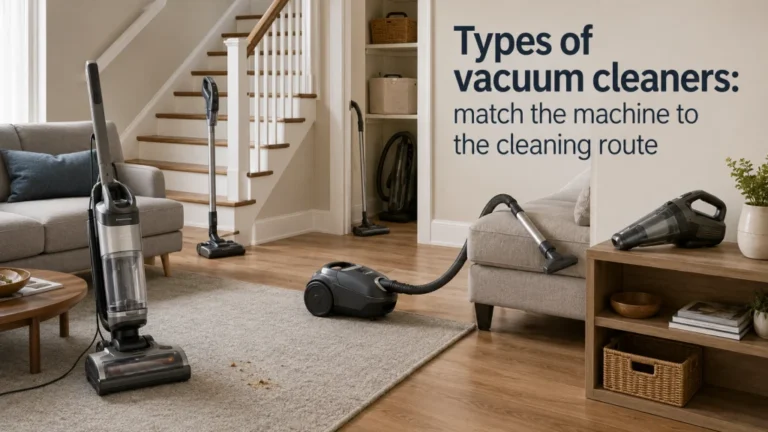
That is why a best vacuum cleaner should not be chosen from one badge, one suction claim, or one overall score. Start by deciding what kind of machine can physically and practically complete your normal route through the home. If you are still sorting out the basic formats, the types of vacuum cleaners overview explains how the main architectures change handling, storage, reach, and floor use. Once that route is clear, current testing becomes much more useful because you are comparing machines that can actually fit the same job.
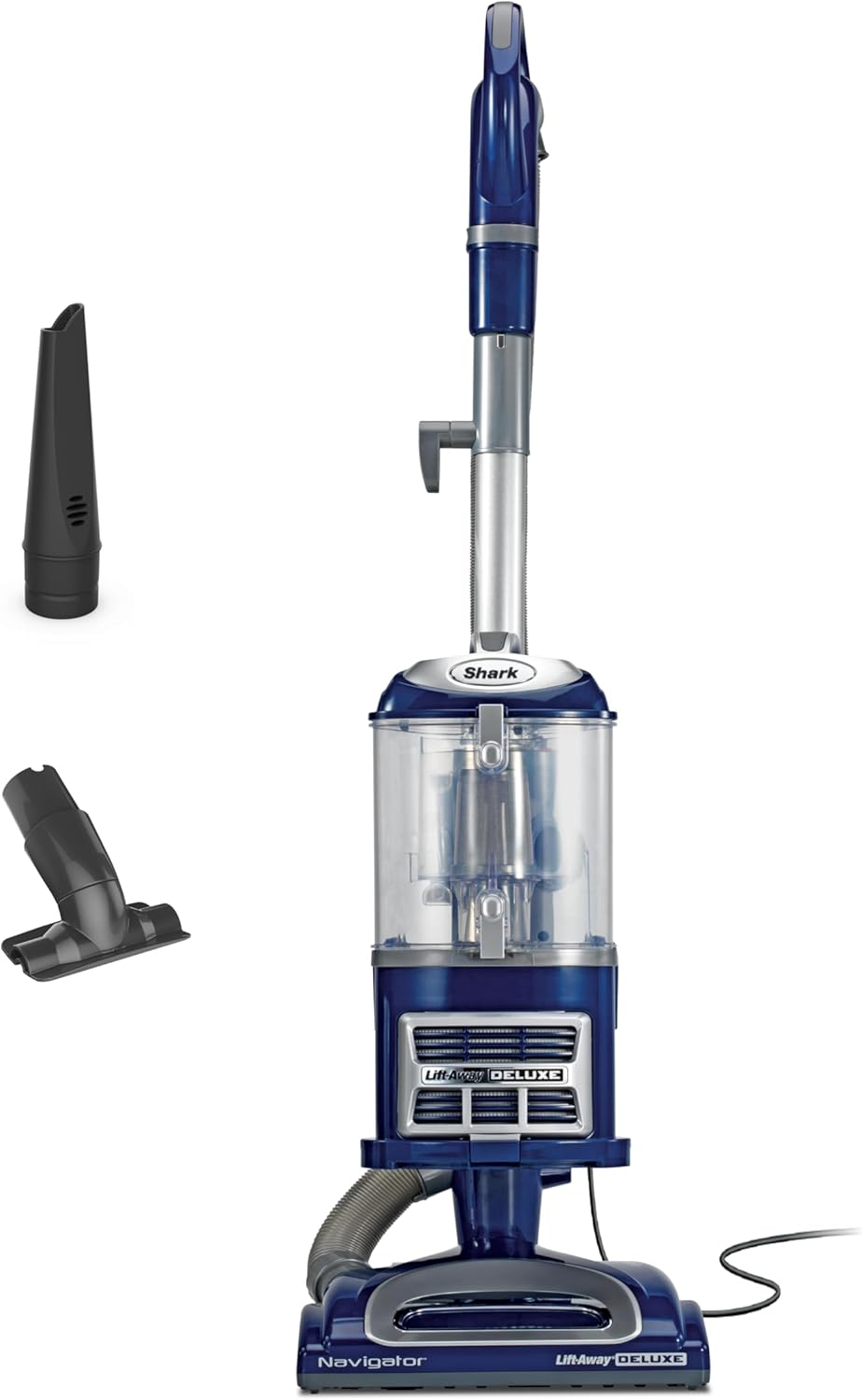
Lift-Away design lets the pod detach for stairs and above-floor cleaning. The corded upright uses a HEPA filter and swivel steering for carpet and hard-floor routes. It includes an upholstery tool and crevice tool for furniture, edges, and tight spaces.
Check On AmazonIf you click this link and buy, we earn a commission at no additional cost to you.
What current vacuum testing can and cannot tell you
Independent testing is most useful when the test condition is visible rather than hidden behind one verdict. RTINGS evaluates factors including debris pickup, air quality during use and emptying, portability, and form factor, while Tom’s Guide adds home-use observations on ergonomics, noise, battery behavior, emptying, and storage. Those evidence anchors describe different parts of ownership instead of pretending that suction alone defines the machine. They also show why a strong performer can still carry a meaningful household drawback.
The limitation is that different publishers use different methods, scoring systems, surfaces, debris, and test environments. A score from one test should not be mathematically merged with a score from another source as though the protocols were identical. The safer approach is to use each source for the condition it actually measured, then translate that finding into your own floor mix, cleaning route, and maintenance tolerance. This page does not claim site testing, and any current model still needs its own manufacturer specifications and instructions checked before purchase.

This compact upright weighs 10 pounds and is designed for small-space storage and handling. Its quick-release extension wand supports above-floor cleaning. Scatter-Free Technology helps control debris on hard floors while the upright format handles routine floor cleaning.
Check On AmazonIf you click this link and buy, we earn a commission at no additional cost to you.
Carry the architecture, power, disposal, filtration, and floorhead decisions forward
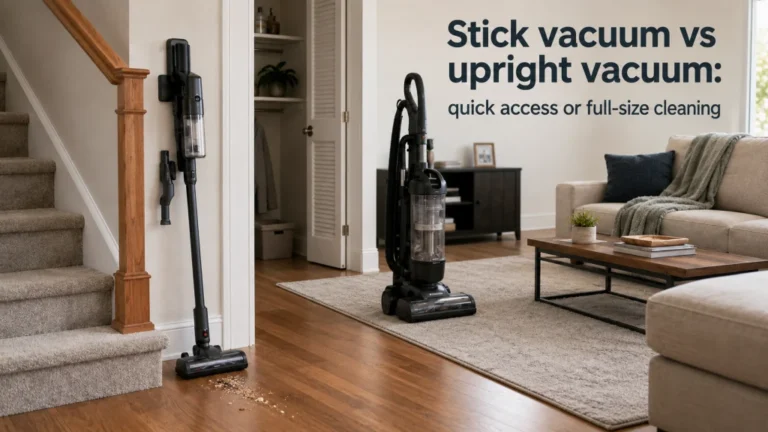
Within home cleaning appliances, treat the major design choices as filters, not minor features. The upright vs canister vacuum decision changes pushing weight, stair reach, furniture access, and storage shape. The stick vacuum vs upright vacuum decision adds battery limits, carrying weight, bin size, and quick-clean convenience. Neither format is automatically superior once the cleaning route is considered.
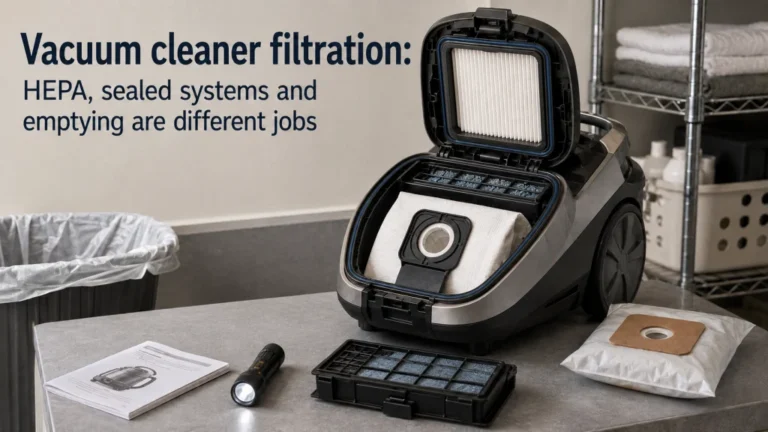
Disposal and floor contact deserve the same attention. The bagged vs bagless vacuum choice affects debris handling and recurring bags or bin maintenance, while vacuum cleaner filtration should be judged by the complete containment path rather than a filter label. The vacuum floorhead design controls how the machine handles carpet, hard flooring, edges, hair, and larger debris. Before comparing top vacuum cleaners, write down the constraints that cannot be negotiated.
- Primary flooring and any difficult rugs or thick carpet.
- Number of stairs and whether the whole machine must be carried.
- Cord preference, charging location, and realistic cleaning-session length.
- Bag or bin preference, including how you want to handle collected dust and debris.
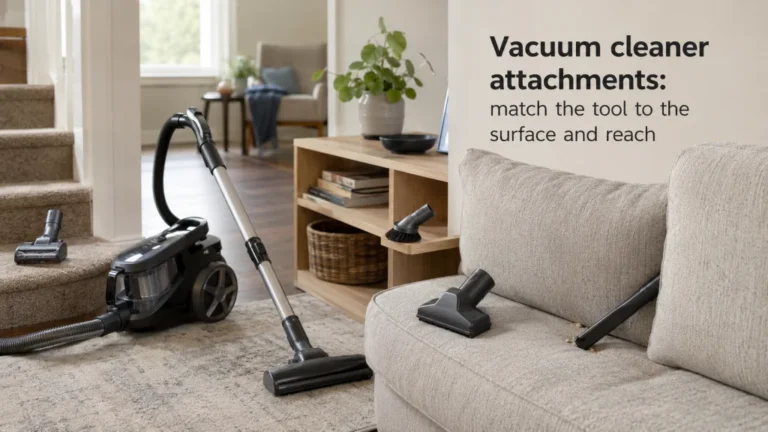
- Need for above-floor reach, upholstery tools, edge cleaning, or tight-space access.
- Storage footprint, maintenance tolerance, and recurring consumables.
If two candidate types survive this list, that is normal. The next step is not to invent a universal winner but to compare the profiles that remain against the work your home actually creates. A machine that gives up a little convenience but completes the full route reliably may be the better fit. A smaller or simpler machine can also be enough when the workload is modest and storage is tight.

The corded NV356E uses Lift-Away functionality for stairs and above-floor cleaning. Brushroll shutoff switches the floorhead between deep carpet work and gentler bare-floor use. It includes a Pet Power Brush, dusting brush, and 8-inch crevice tool for mixed household routes.
Check On AmazonIf you click this link and buy, we earn a commission at no additional cost to you.
Use bounded profiles instead of one universal ranking
Broad lists often mix uprights, canisters, sticks, and handhelds as though every buyer is solving the same problem. A useful ranking keeps them inside household profiles because architecture changes both strengths and friction. Current testing repeatedly exposes trade-offs in pickup, runtime, portability, emptying, and maneuverability. Narrow the shopping lane before comparing current models.
The selector below identifies the machine family that deserves attention. Profiles can overlap, especially in mixed-floor homes. Use the one that describes your hardest recurring job rather than the easiest room. A profile that solves an occasional task but makes whole-home cleaning worse should not control the purchase.
| Profile | Start here when | Primary strength to verify | Main friction to accept or reject |
|---|---|---|---|
| Upright, carpet-heavy | Most of the workload is carpet and you prefer a one-piece machine | Carpet pickup, brush action, floorhead adjustment, sustained power | Weight, stairs, tight spaces, cord handling |
| Canister, reach and mixed floors | You need flexible reach, stairs, edges, furniture access, or substantial hard flooring | Floorhead suitability, hose reach, maneuverability, tool performance | Pulling the canister, storing two-part equipment, carrying between levels |
| Handheld, small-job | The job is upholstery, stairs, cars, crumbs, or spot cleaning rather than the full floor plan | Tool fit, usable runtime, debris capacity, reach | Small bin, limited floor coverage, charging |
| Bagged, cleaner disposal | You value contained emptying and predictable debris handling | Bag seal, filtration path, bag availability, floor performance | Recurring bag cost and keeping replacements on hand |
| Carpet-focused | Embedded debris, hair, or dense carpet is the hard part of the home | Carpet pickup, agitation, height or suction control, hair handling | Push effort, bulk, brush maintenance, hard-floor compromise |
| Hardwood-focused | Most cleaning is sealed hard flooring with rugs as a secondary task | Bare-floor pickup, debris control, suitable floorhead, edge reach | Reduced deep-carpet ability if the head lacks powered agitation |
Notice that the rows describe jobs, not prestige levels. An upright can be the right answer for one household and a poor answer for another without either judgment contradicting the testing. The same is true for bagged versus bagless and corded versus cordless designs. The best vacuums are the ones whose measured strengths line up with the work you repeat most often.
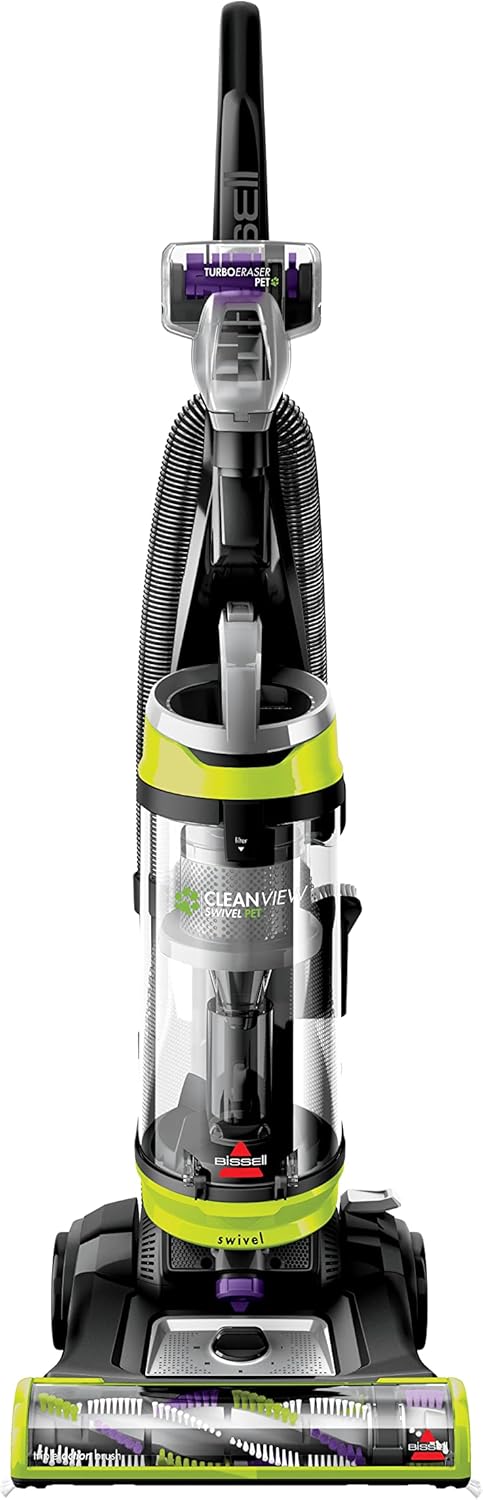
Swivel steering helps this corded upright maneuver around furniture and obstacles. Its Triple Action Brush Roll targets embedded pet hair, while Scatter-Free Technology is designed to reduce debris scatter on hard floors. Edge-to-edge cleaning and specialized pet tools extend the machine beyond open carpet.
Check On AmazonIf you click this link and buy, we earn a commission at no additional cost to you.
Read each profile by household fit, not by badge
Once the lane is chosen, compare the machine against the hardest part of the route. This stops you rewarding strengths that do not matter at home. A large carpet score means less in a mostly-hard-floor apartment, while easy carrying cannot rescue inadequate runtime. The details below show what should control each lane.
These are not permanent rules for every model. Individual machines can depart from the format pattern, so current tests and exact specifications still matter. Use the profile as the first filter, then verify surface performance, floorhead, weight, power source, disposal, and storage. That keeps the recommendation conditional rather than turning a type label into a guarantee.
Upright and full-size carpet-heavy profile
Start here when carpet dominates and you want one main machine with the head and body together. Corded uprights avoid battery interruptions and can perform strongly on carpet, but they can be bulky around furniture and tiring on stairs. Judge push effort and floorhead behavior on your carpet, not advertised motor power. Skip this profile when carrying between levels is a bigger recurring burden than deep carpet cleaning.
Canister, reach, and mixed-floor profile
Canisters make sense when the home needs reach under furniture, along edges, on stairs, or across substantial hard flooring. The wand and floorhead can be easier to position than a full upright body, while the motor unit follows behind. The canister still has to be pulled, stored, and sometimes carried between levels. Skip this profile if managing a hose and separate body would keep the machine in the closet.
Handheld and small-job profile
A handheld is useful when the job is small, frequent, and localized. Upholstery, stair edges, cars, crumbs, and spot pickup can justify a light machine that is ready quickly. Small bins and limited runtime become problems when asked to cover an entire floor plan. Skip this profile as the only vacuum when whole-home floor cleaning is the main job.
Bagged and cleaner-disposal profile
Bagged designs deserve attention when debris disposal matters as much as pickup. Current RTINGS testing distinguishes air quality during emptying and reports an advantage for sealed bag handling over open bin dumping, while noting the recurring cost of replacement bags. The trade-off is straightforward: consumables buy more contained debris handling during disposal. Skip this profile if buying and storing the correct bags would lead you to delay replacements or use incompatible substitutes.
Carpet-focused profile
Carpet performance is not proven by suction marketing because the floorhead must handle fibers, embedded debris, and hair. Look for testing on carpet like yours, then check adjustment or control for rugs, thicker pile, and hard-floor transitions. A powerful machine that is unpleasant to push can still be a poor fit. Skip a carpet-first design when most of the home is hard flooring and the specialized head becomes unnecessary bulk.
Hardwood-focused profile
Hard-floor homes benefit from a head that can collect fine dust and larger crumbs without scattering them or forcing repeated passes. Maneuverability, edge pickup, and transitions onto area rugs can matter more than maximum carpet agitation. A straight-suction or hard-floor-oriented setup can be effective when deep carpet is not part of the routine. Skip this profile if thick rugs or wall-to-wall carpet create a second major workload the chosen floorhead cannot handle well.

This cordless handheld vacuum is sized for localized home and car cleanup rather than whole-floor cleaning. Its rotating nozzle changes the approach angle for tight areas. A crevice tool and charging station support quick spot-cleaning and storage between uses.
Check On AmazonIf you click this link and buy, we earn a commission at no additional cost to you.
Current recommendations by household profile
A broad ranking needs actual current candidates, but the source label should stay attached to each recommendation. RTINGS currently favors the Dyson V15 Detect broadly, the Kenmore Intuition Bagged for upright buyers, and the SEBO Airbelt D4 for canister buyers, while Tom’s Guide puts the Dyson Gen5Detect at the top and highlights separate budget-cordless and carpet picks. Those choices do not form one universal order because the two publications use different test methods and scoring systems. The useful comparison is the measured or observed strength, the household it fits, and the friction that could make you skip it.
The shortlist stays within manual dry vacuum cleaning, so robot vacuums and wet-and-dry floor machines do not enter the same winner list. Treat each row as a candidate inside a household profile, not a command to buy the highest-positioned model. If two rows fit, compare floorheads, weight, storage, disposal, power source, maintenance, and package details. That check matters more than a small ranking difference.
| Current candidate | Source label | Best household fit | Why it stands out | Reason to skip |
|---|---|---|---|---|
| Dyson V15 Detect | RTINGS: best for most people | Mixed floors, stairs, quick cleaning, and households that want one versatile cordless | RTINGS reports strong pickup across bare floors and carpet, high pet-hair pickup, and easier carrying than full-size machines. | Battery life drops sharply at the highest power setting, and bagless emptying can release collected dust. |
| Dyson Gen5Detect | Tom’s Guide: best overall | Whole-home cordless use when long runtime and strong cross-surface cleaning matter more than low weight | Tom’s Guide found strong suction and useful lower-power battery life for whole-home cleaning. | It is heavy for long sessions or stairs and gets loud at its highest suction setting. |
| Ultenic U16 Flex Cordless | Tom’s Guide: best budget stick | Smaller homes, stairs, and buyers who want a light cordless without paying premium-cordless prices | Tom’s Guide praised its value, carpet performance, light handling, and lower-power runtime. | High-power runtime is much shorter, and it gives up premium conveniences such as automatic emptying. |
| Kenmore Intuition Bagged | RTINGS: upright recommendation | Carpet-heavy or mixed-floor homes that prefer corded power and more contained bag disposal | RTINGS found good pickup across surfaces and strong air-quality performance, with more contained bagged disposal. | It is relatively heavy and less agile on stairs, and RTINGS flags build-quality complaints as a meaningful ownership concern. |
| Shark Stratos AZ3002 | Tom’s Guide: best for carpet | Deep carpet, heavy debris, and homes where sustained corded cleaning matters more than low carrying weight | Tom’s Guide found powerful suction across surfaces, especially on thick carpet and pet hair. | The upright is heavy, less nimble than a cordless, and its size can be a poor match for frequent stair carrying. |
| SEBO Airbelt D4 | RTINGS: best canister | Large mixed-floor homes that need long corded reach, canister versatility, and sustained cleaning without charging | RTINGS highlights broad cleaning ability, long reach, strong pet-hair pickup, and floorhead versatility. | The canister is bulky and heavy enough to be awkward on stairs or in small apartments. |
Every recommendation still has a household it can disappoint. The V15 and Gen5Detect gain cordless convenience but keep runtime and weight in play, while the Kenmore, Shark, and SEBO remove charging at the cost of cords or bulk. The Ultenic lowers entry cost but asks for a sharper high-power runtime trade-off. A useful shortlist keeps that friction visible instead of turning a strong test result into an automatic purchase.

This bagged upright combines Lift-Up cleaning with a Hair Eliminator brushroll for carpet and hard-floor routes. The Pet Handi-Mate supports upholstery and pet-hair cleanup away from the main floorhead. Its bagged collection system fits households that prefer contained debris disposal.
Check On AmazonIf you click this link and buy, we earn a commission at no additional cost to you.
Give the reason to skip the same weight as the reason to buy
A broad ranking improves when every strong profile has an exit condition. The reason to buy tells you what work the design reduces, while the reason to skip tells you what burden it adds. That may be weight, charging, a small bin, cord management, replacement bags, brush cleaning, or an overly specialized floorhead. Friction that appears every cleaning session can outweigh a moderate performance advantage.
Use the following skip signals before you spend more for a feature or a higher-ranked machine. They are intentionally practical because ownership problems usually appear in the route between the closet, the floor, the stairs, the trash, and the charger. A premium feature earns its place only when it reduces work often enough to justify the space, maintenance, and cost it adds. If none of the premium features solve a recurring problem, a simpler design may be the smarter purchase.
Reason to skip: Skip a battery-first machine if your normal cleaning session routinely exceeds its useful runtime at the power setting you actually need, or if there is no convenient place to charge and store it.
Reason to skip: Skip a heavy full-size machine if stairs, lifting, or moving between floors will discourage regular use, even when carpet performance is strong.
Reason to skip: Skip a disposal system you dislike maintaining. A bagless bin that you postpone emptying or a bagged system whose replacements you do not want to buy can both become ownership friction.
These skip signals also help keep budget decisions grounded. Paying less for the wrong architecture does not create value, and paying more for features that do not change your routine does not create value either. Compare the cost after the household fit is established, not before. The correct lane often eliminates expensive options without sacrificing the performance that matters in your home.

This corded upright pairs an XL 2-liter dirt tank with an active extension wand for longer reach. The wand reaches up to 10 feet for above-floor areas. OnePass carpet cleaning and Scatter-Free hard-floor handling make it a practical full-size profile to compare against lighter machines.
Check On AmazonIf you click this link and buy, we earn a commission at no additional cost to you.
Route cordless-first households to the cordless comparison
Cordless vacuums deserve their own shopping route because battery behavior can control the entire ownership experience. A light stick can be easier to grab, carry, and use for quick cleaning, but maximum advertised runtime is not the same as the time you will get while using stronger power settings or motorized tools. Charging location also matters because a vacuum that is convenient on the floor can be inconvenient in storage. For a household already committed to this format, the best cordless vacuums comparison is the better place to evaluate current candidates.
Do not route yourself there merely because cordless sounds modern or tidy. First decide whether the machine must complete a full-house session, whether a replaceable battery matters, how often the bin needs emptying, and where the vacuum can live while charging. A corded machine can still be the simpler answer when long sessions, dense carpet, or uninterrupted cleaning matter more than quick deployment. The architecture should follow the route, not the other way around.

This cordless stick vacuum provides up to 40 minutes of runtime at the hand vac in standard mode. It converts to a removable handheld for stairs, furniture, and tight corners. The package includes a crevice tool and pet multi-tool, while LED headlights help reveal debris along the route.
Check On AmazonIf you click this link and buy, we earn a commission at no additional cost to you.
Route pet-hair-dominant households to the hair-specific comparison
Pet hair can distort a broad ranking because floorhead design, upholstery tools, collection capacity, and maintenance frequency become more important. A machine can handle ordinary debris well and still create extra work if hair wraps around the brush or the collection system fills too quickly. Carpeted stairs and upholstery add another layer because floor pickup alone does not prove the tools are practical there. If hair removal is the dominant recurring job, use the best vacuums for pet hair comparison for current candidates.
Keep the discussion performance-focused rather than turning filtration into a medical claim. Verify how the machine handles hair on the surfaces you own, how easily the brush can be maintained, and how much debris the collection system can realistically hold before performance or convenience suffers. A strong hair-focused design may be worth more maintenance in a heavy-shedding home, but that same trade-off can be unnecessary in a home where hair is only an occasional mess. The workload determines whether the specialization earns its place.

This pet-focused upright uses a detachable Lift-Off pod for hard-to-reach areas and above-floor cleaning. Its tangle-free brush roll is designed to reduce hair wrap during recurring pet cleanup. The sealed HEPA system and pet-oriented floor design make it relevant when hair is the dominant workload.
Check On AmazonIf you click this link and buy, we earn a commission at no additional cost to you.
Verify current price and availability last
Price is most useful after architecture and workload filters have removed the wrong types. Comparing sale prices too early can pull you toward a machine that is cheap for the wrong job or expensive because it includes features you will barely use. Once acceptable profiles are clear, compare price, included floorheads, filters, bags, batteries, charging hardware, and required accessories as one ownership package. A lower purchase price can be offset by missing tools or recurring consumables your routine needs.
Availability deserves the same final check because vacuum lineups change and tested models can be revised or discontinued. Confirm that the exact variant being sold matches the tested or documented version, especially when floorheads, filters, batteries, or included tools differ by package. Then check the manufacturer’s current instructions for maintenance, compatible consumables, and any model-specific operating limits before buying. That final verification is more useful than chasing a ranking that may have been built around a different variant or package.

This corded upright adds automatic cord rewind for faster storage after cleaning. A Triple Action Brush Roll, swivel steering, and multi-cyclonic suction support routine floor work. The TurboEraser upholstery tool and extension wand add above-floor reach when included tools matter to the ownership package.
Check On AmazonIf you click this link and buy, we earn a commission at no additional cost to you.
Final thoughts: let the household decide which test result matters
Current testing exposes differences in pickup, handling, filtration, runtime, storage, and maintenance. The mistake is giving those differences the same weight in every home. Start with flooring, stairs, reach, power source, disposal, floorhead needs, storage, and session length, then compare only machines that fit that route. A lower-ranked or simpler profile can still be more sensible than the headline winner.
The broad list is a filter and shortlist. The Dyson V15 Detect and Gen5Detect fit cordless households that accept their runtime or weight trade-offs; the Kenmore Intuition Bagged and Shark Stratos AZ3002 suit corded upright workloads; the SEBO Airbelt D4 fits the large-home canister route; and the Ultenic U16 Flex is the budget cordless candidate when its high-power runtime is acceptable. Use specialist comparisons when cordless convenience or pet hair dominates, then verify package contents, availability, and maintenance before purchase. That is how a list of best vacuum cleaners reaches a commercial decision without pretending one model fits every home.

This corded upright uses Lift-Away cleaning to separate the pod for stairs and above-floor areas. Brushroll shutoff supports transitions between carpet and bare floors, while swivel steering helps around furniture. A wide upholstery tool and 12-inch crevice tool cover common furniture and edge-cleaning tasks.
Check On AmazonIf you click this link and buy, we earn a commission at no additional cost to you.
FAQs
🔌 Is a corded or cordless vacuum better for a whole home?
Choose based on session length, flooring, carrying needs, outlets, and charging access. Corded designs avoid battery interruptions, while cordless designs can be easier to carry and quicker to deploy.
🧹 Is an upright or canister vacuum better for mixed floors?
Either can work if the exact floorhead suits both surfaces. Canisters often make reach and hard-floor work easier, while uprights can be a more direct fit when carpet dominates.
🗑️ Is bagged or bagless better if I want easier emptying?
Bagged systems can make debris disposal more contained, while bagless systems avoid replacement-bag purchases. Compare the exact seal, filter maintenance, bin design, and recurring supplies rather than choosing by label alone.
🪜 What matters most if I have stairs?
Check total carrying weight, where the machine can sit safely, hose or wand reach, and whether the floorhead or handheld setup works on the stair surface. A strong floor vacuum can still be a poor stair vacuum if the body is awkward to move.
🧶 Do I need a special vacuum for thick carpet?
You need a floorhead that can move and clean effectively on that carpet, not just a higher suction claim. Check carpet-specific test results and any height, brush, or suction controls required by the exact model and rug or carpet type.
📦 Should storage affect which vacuum I buy?
Yes, because the machine, hose, cord, charging hardware, tools, and spare consumables all need a practical home. Measure the storage path and usable space before assuming a compact-looking vacuum will fit your routine.
References and sources
- RTINGS vacuum testing: Supports the discussion of comparative pickup, air quality, portability, corded versus cordless use, bagged versus bagless disposal, and form-factor trade-offs.
- Tom’s Guide vacuum testing: Supports the discussion of home-use testing for debris pickup, battery behavior, ergonomics, noise, emptying, and storage.