An upright keeps most of the machine in the unit you push, while a canister leaves the motor and dirt container behind and puts a wand and floorhead in your hand. That weight distribution changes stairs, furniture access, storage, and how tiring a long cleaning route feels. Floor performance still depends on the exact floorhead, settings, and tested model, so neither format deserves an automatic win on carpet, hard floors, suction, or filtration. The useful decision is to match the machine’s handling pattern to your home, then compare measured performance among the models that fit.
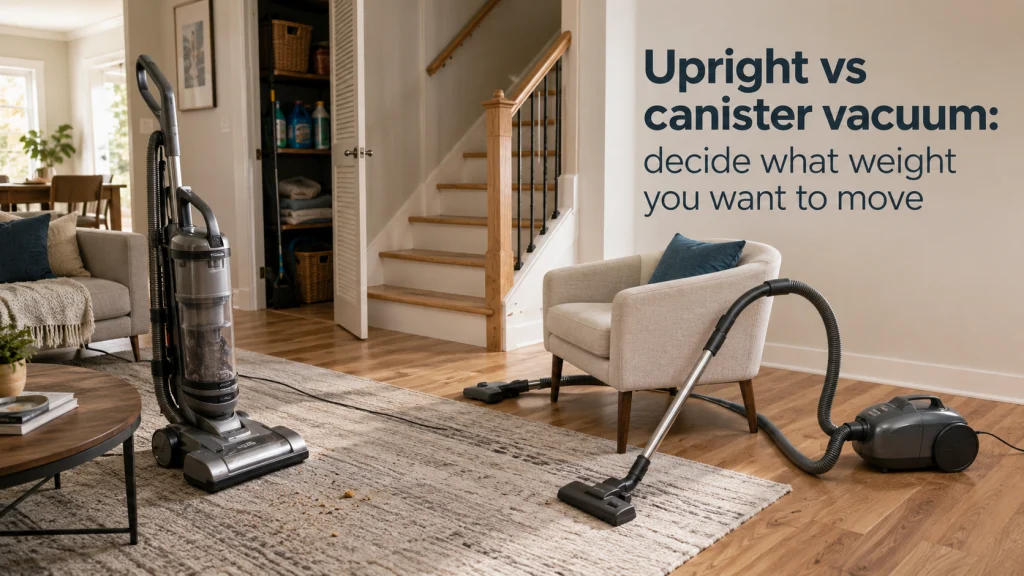
Start by deciding where you want the machine’s weight during cleaning
The central upright vs canister vacuum difference is not simply that one stands tall and the other rolls behind you. With an upright, you push and steer most of the machine’s mass across the floor, then lift that same unit when you change levels or carry it to storage. With a canister, the heavier body usually stays on the floor while your hand controls the hose, wand, and cleaning head. That split can make a major difference in a house with stairs, tight chair legs, low furniture, or several rooms that require frequent direction changes.
Choosing between these two formats therefore starts with the cleaning route, not a showroom claim about which one is more powerful. A broad, mostly carpeted single-level space may reward the simplicity of pushing one connected machine without managing a trailing hose. A home with stairs, mixed flooring, upholstery, and narrow spaces may make the lighter working end of a canister more useful, even if the canister body needs more attention as it follows. Before comparing features, picture one complete cleaning session and identify which weight you will push, pull, lift, carry, turn, and store.
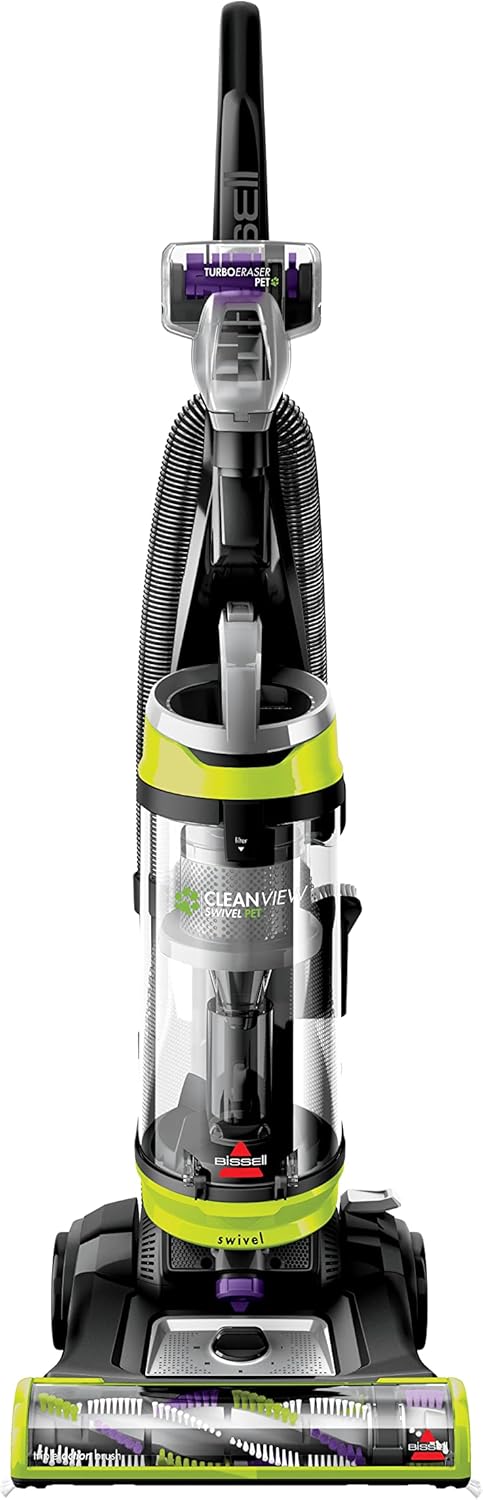
The CleanView Swivel Pet 2252 is an upright vacuum with swivel steering for maneuvering around furniture. Its Triple Action Brush Roll is designed for pet hair, and Scatter-Free Technology supports debris pickup on hard floors. The large-capacity dirt tank keeps the collection system integrated into the upright body.
Check On AmazonIf you click this link and buy, we earn a commission at no additional cost to you.
Understand the two full-size architectures before comparing features
An upright combines the floorhead, dirt collection system, motor assembly, handle, and much of the working hardware into one standing unit. Many uprights also include a hose or detachable wand for above-floor work, but the basic floor-cleaning motion still involves moving the main machine with you. A canister separates the main body from the wand and floorhead with a flexible hose, so the body can remain nearby while the cleaning head reaches forward, sideways, or under furniture. That difference changes movement and reach even when two machines have similar overall weight.
This comparison is limited to full-size upright and canister designs, because smaller formats change the workload in different ways. Within home cleaning appliances, these are two portable vacuum architectures rather than two different cleaning categories. If grab-and-go use, battery operation, or very low carry weight is more important than full-size architecture, the site’s comparison of a stick vacuum vs upright vacuum is the more useful next step. Readers who are still deciding among the broader types of vacuum cleaners should settle that larger format question before narrowing this comparison. Bag style, cord design, filtration level, and accessory packages can vary inside both architectures, so they should not be treated as defining differences.

The Classic C1 Pure Suction is a bagged canister vacuum with a separate body, hose, wand, and floorhead. It is designed for hard floors and low-pile carpet, providing a concrete example of the canister layout. Its portable canister format keeps the main body separate from the cleaning head.
Check On AmazonIf you click this link and buy, we earn a commission at no additional cost to you.
Compare the workflow on large carpeted rooms without giving the format an automatic win
Large open carpeted rooms often suit the upright movement pattern because the machine stays in one line with the cleaning head and can be pushed through repeated passes without a separate body trailing behind. That can feel simple when the job is mostly straight runs with few obstacles and little above-floor cleaning. It does not prove that every upright removes more debris from every carpet, because floorhead design, brush-roll behavior, height adjustment, airflow, and the exact carpet all affect pickup. The stable architectural advantage is the one-piece workflow, not a universal carpet-performance rule.
A canister can still be a strong carpet machine when its floorhead is designed for the carpet in question, but the user has to manage both the powered or passive head and the body following behind. In a large room with open paths, that may be a minor inconvenience; in a room packed with furniture, the body and hose may require more frequent repositioning. The first-time buyer mistake is assuming that the word “canister” means weak carpet cleaning or that the word “upright” guarantees deep pickup. Compare the exact floorhead and independent carpet results after deciding whether you prefer a single pushed unit or a separate body-and-wand workflow.

The Eureka PowerSpeed is an upright vacuum for carpet and hard floors with five height settings. Its upgraded cyclone system is designed to handle debris and dust, while the quick-release handle connects to a stretch hose for above-floor cleaning. A crevice tool, dusting brush, and upholstery tool store on the machine.
Check On AmazonIf you click this link and buy, we earn a commission at no additional cost to you.
Judge hard-floor cleaning by the floorhead and pickup evidence
Hard floors expose a different set of problems: debris can scatter, a poorly matched brush can behave badly on delicate surfaces, and furniture often creates more steering work than an open carpeted room. A canister’s wand can make it easier to change angles around table legs, work along edges, or reach farther under low furniture while the main body stays out of the immediate cleaning path. An upright can also clean hard floors well when its floorhead, brush control, steering, and settings suit the surface. The architecture tells you how the machine moves, but it does not prove how clean the floor will be after a pass.
When comparing hard-floor performance, look for tests that use a stated surface and a repeatable debris pickup method rather than relying on suction language alone. A machine with a powerful motor can still be frustrating if its head pushes larger debris forward, its brush behavior is wrong for the floor, or its geometry prevents access where you need it. Conversely, a modest-looking floorhead can work very well when the airflow path and contact with the surface are well matched. Treat bare-floor pickup as a model-level result, then use the upright or canister layout to decide whether that performance will be practical in your rooms.

The Eureka WhirlWind NEN110A is a bagless corded canister vacuum listed for carpets and hard floors. Its canister architecture keeps the main body separate from the cleaning head during use. The reusable dirt container avoids the need for replacement dust bags.
Check On AmazonIf you click this link and buy, we earn a commission at no additional cost to you.
Let stairs and above-floor reach expose the handling difference
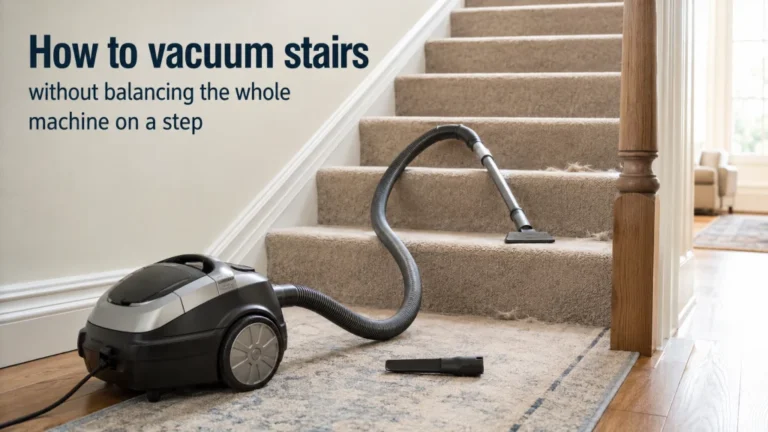
Stairs make weight location obvious because the machine can no longer roll across one continuous floor. With a traditional upright, you may need to lift or stabilize most of the unit while using the floorhead or hose, depending on the design and the length of its reach. With a canister, the body can sometimes remain at the top, bottom, or a secure landing while the hose and wand cover part of the staircase. That does not mean every canister works effortlessly on stairs, because hose length, body stability, tool size, and the need to reposition the canister still matter.
Above-floor cleaning creates a similar split around upholstery, baseboards, shelves, and other reachable surfaces. The canister layout begins with a hose and wand as its normal working interface, while an upright usually switches away from its primary floor-cleaning position to use a hose or accessory. The practical check is not the number of attachments included but whether the hose reaches the places you clean without pulling the machine over, stretching the hose tight, or forcing repeated moves. If stairs and above-floor work are a substantial share of the weekly route, test that reach on the exact dimensions of your home before treating either format as convenient.
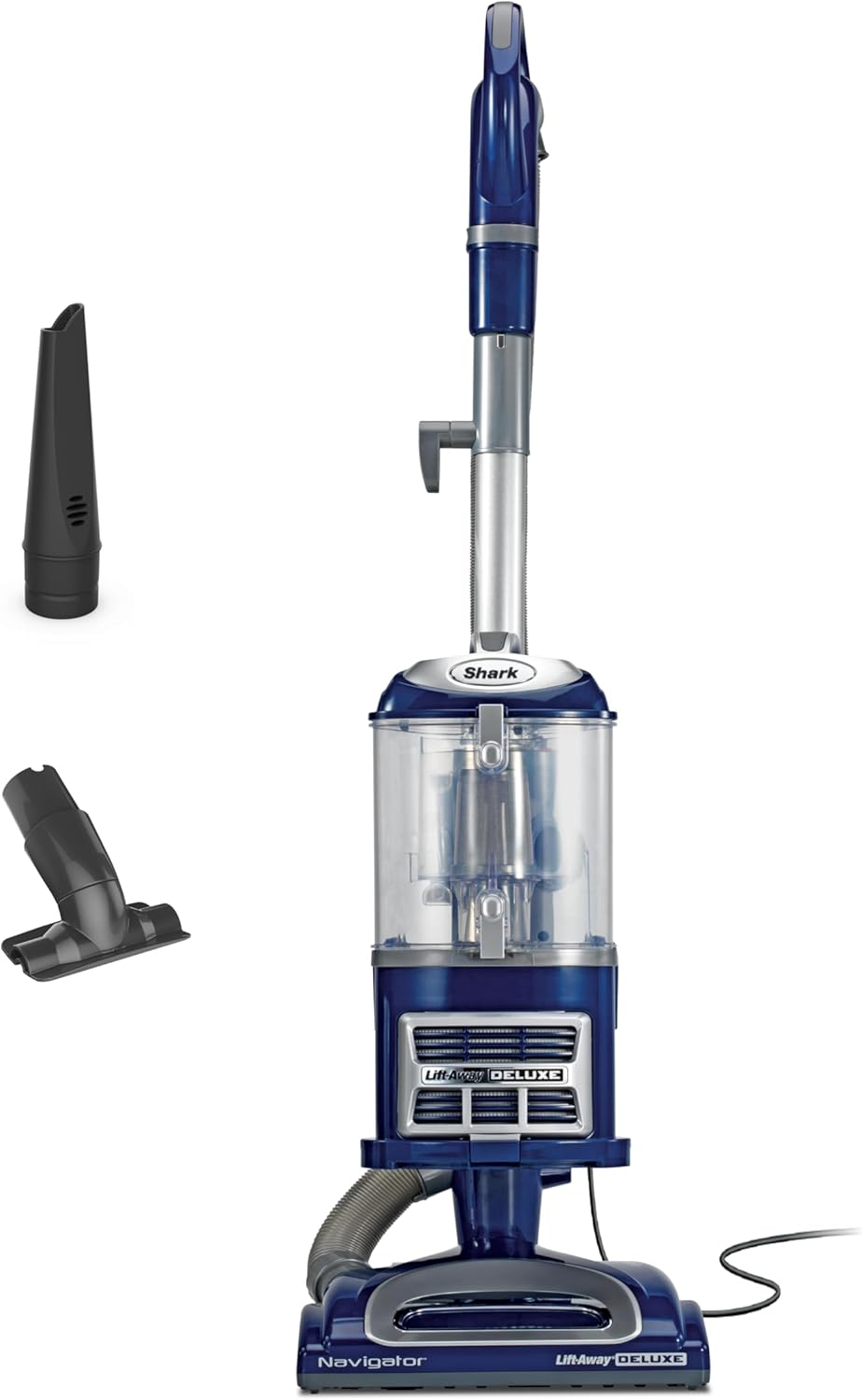
The Shark Navigator NV360 is an upright vacuum with a detachable Lift-Away pod for cleaning away from the main floorhead. It includes upholstery and crevice tools and uses swivel steering for maneuvering around obstacles. Brushroll shutoff supports switching between carpet and hard-floor cleaning.
Check On AmazonIf you click this link and buy, we earn a commission at no additional cost to you.
Compare pushing, pulling, hose drag, and carrying as separate jobs
Total machine weight can be misleading because the two formats ask you to move that weight differently. An upright may weigh less overall than a particular canister yet still put more of its mass into every push, turn, threshold transition, and trip up the stairs. A canister may be heavier as a complete system while leaving a much lighter wand in your hand during normal floor cleaning. The trade-off is that you now have a hose and a separate body that can catch on corners, bump furniture, or need a deliberate pull to follow you.
The table below is a better way to think about workload than a single weight number. Use it with the actual room layout, because an open ranch-style floor plan and a narrow multilevel home can make the same machine feel completely different. Pay particular attention to the tasks that repeat most often, not the awkward task you do twice a year. After the table, compare the exact model’s complete weight, working-end weight when available, hose reach, handle position, and carrying points instead of assuming one architecture is automatically lighter.
| Home condition | Upright workload | Canister workload | What to verify |
|---|---|---|---|
| Large open room | Push and steer one connected unit | Guide the floorhead while the body follows | Steering, floorhead effort, hose tracking |
| Tight furniture | Turn the main body or switch to a hose | Angle the wand while managing the trailing body | Head width, swivel range, hose flexibility |
| Stairs | Carry or stabilize much of the unit | Carry or park the body and work with the hose | Lift points, hose reach, body stability |
| Moving between floors | Carry one tall unit | Carry body plus hose, wand, and head as a system | Total weight, grip, cord and tool control |
Notice that neither column removes effort; it relocates it. An upright concentrates more of the movement into the machine you are steering, while a canister spreads the job across wand control, hose management, and repositioning the body. That distinction is especially useful if you already know what bothers you about your current vacuum, such as wrist effort, stair carrying, hose tugging, or turning around furniture. Choose the format that removes the friction you actually experience rather than replacing it with a different annoyance you have not considered.

The Eureka 3670M is a lightweight canister vacuum listed for carpets and hard floors. Its canister layout keeps the main body separate while the hose and cleaning head are guided across the room. The package includes five dust bags for the bagged collection system.
Check On AmazonIf you click this link and buy, we earn a commission at no additional cost to you.
Measure storage as a system, not just the body footprint
An upright often has an easy-to-understand storage shape because it stands as one tall unit and may keep its hose, cord, and tools attached to the body. That can work well in a narrow utility closet if the handle height and floor footprint fit the available space. A canister may have a shorter body, but the hose, wand, floorhead, cord, and accessories still need an organized place to live. A small canister body is not truly compact if the hose spills into the walkway or the wand has to be detached and stacked somewhere else after every use.
Setup time matters for the same reason, especially if you vacuum often. A machine that stores fully assembled and comes out ready to use may win in a home where quick starts are more valuable than flexible reach. Another household may happily connect a wand or change a floorhead because the same system then handles stairs, furniture, and mixed floors with less physical strain. Measure the closet opening, shelf depth, standing height, and the space needed for the complete stored system before deciding that either architecture is easier to own.

The CleanView Compact Turbo 3437F combines an upright form with a compact design. Its integrated quick-release wand transitions from floor cleaning to upholstery, curtains, and higher areas. Multi-surface cleaning features include Scatter-Free Technology for hard floors and an easy-empty bagless dirt tank.
Check On AmazonIf you click this link and buy, we earn a commission at no additional cost to you.
Keep bagged and bagless decisions separate from upright and canister design
Bagged versus bagless is a dirt-disposal and ownership-cost decision, not an upright-versus-canister rule. Both full-size architectures can be sold with bags or reusable dirt bins, and the consequences involve emptying, replacement supplies, filter care, mess control, and recurring cost. A bagged machine can reduce direct contact with collected debris at disposal, but it creates an ongoing need for correctly fitting replacement bags. A bagless machine avoids replacement bags, but its bin and filters may require more direct cleaning and careful emptying.
Do not let the architecture shortcut that separate choice. If disposal method is a major concern, compare the site’s bagged vs bagless vacuum decision after you know which machine format fits your cleaning route. Exact replacement bags, filters, seals, and maintenance instructions can be model-specific, so generic visual similarity is not enough to prove compatibility. Purchase price also tells only part of the ownership story when one option needs recurring consumables and another shifts more of the work into filter washing or bin cleaning.
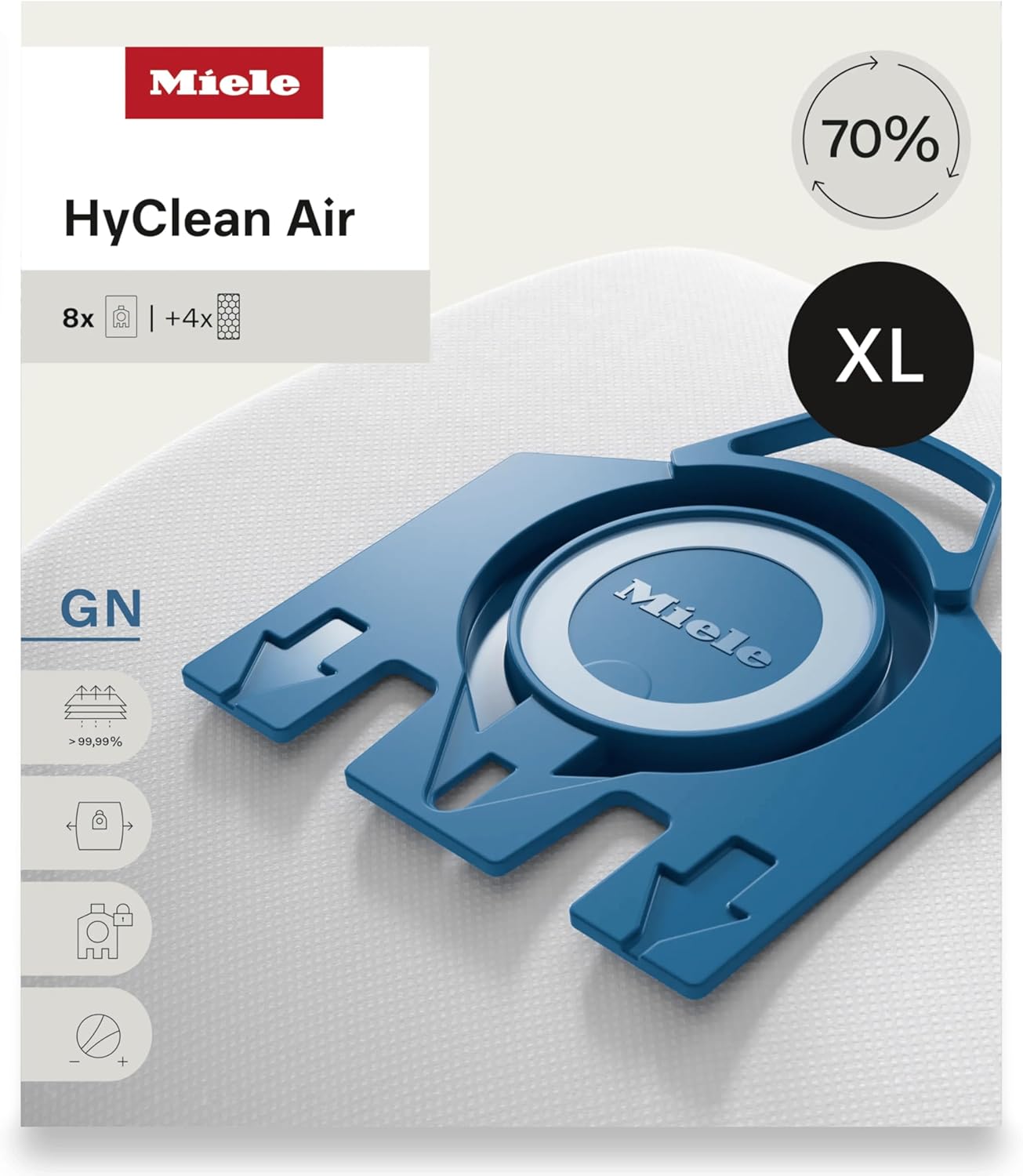
This Miele AirClean 3D Efficiency value pack contains eight Type GN dust bags and four filters. The set supplies both replacement bags and filters for Miele machines that use the Type GN bag format. The package combines bag and filter replacements in one boxed supply set.
Check On AmazonIf you click this link and buy, we earn a commission at no additional cost to you.
Use measured performance instead of class folklore
Independent vacuum testing is useful here because it separates architecture from actual results. Current laboratory score sets show meaningful variation among models inside both upright and canister groups, including differences in hard-floor pickup, carpet pickup, maneuverability, and particle control. That is exactly why claims such as “canisters always have stronger suction” or “uprights always clean carpet better” are too broad to guide a purchase. The format creates predictable handling differences, while cleaning performance still has to be established on the exact machine and floorhead.
Suction numbers deserve the same caution because a single airflow or suction figure does not describe how effectively a complete floorhead removes debris from a particular surface. Filtration is also a system property that depends on the filter, sealing, dirt collection design, and how the machine behaves during use and disposal, not whether its body stands upright or rolls behind you. When the evidence matters, compare tested pickup and particle-control results under stated conditions rather than relying on a class reputation. If a manufacturer or independent tester does not provide enough evidence for the claim you care about, treat that point as unknown instead of filling the gap with a rule of thumb.

The Shark Navigator NV352 is an upright vacuum with Lift-Away functionality, HEPA filtration, and swivel steering. Its brushroll shutoff supports carpet and hard-floor cleaning, while the 1.04-liter dust cup handles collected debris. The package includes a wide upholstery tool and a 12-inch crevice tool.
Check On AmazonIf you click this link and buy, we earn a commission at no additional cost to you.
Choose the format that removes the most repeated friction in your home
Reduce the final choice to the tasks you repeat every week. An upright is easier to justify when most cleaning happens across open floors, you prefer one connected machine, closet space favors a tall stored shape, and carrying the full unit between levels is limited. A canister is easier to justify when stairs, mixed rooms, frequent above-floor work, and a lighter wand matter more than managing a hose and trailing body. If both formats create more setup, carrying, or storage burden than the routine can support, neither is the right answer.
Use the following checks as a final screen before you shop within either format. They are intentionally about your house rather than a feature list, because the same specification can be valuable in one layout and irrelevant in another. If one side clearly removes more recurring work, you have enough information to narrow the field. If neither side does, a different vacuum format may solve the real problem better.
- Choose an upright when broad floor cleaning is the dominant job and one-piece movement feels simpler.
- Choose a canister when stairs, furniture reach, and a lighter working end dominate the cleaning route.
- Check the exact floorhead against your carpet and hard-floor mix before assuming surface performance.
- Measure the complete stored system, including hose, wand, cord, and tools.
- Compare what you must lift between floors, not only the listed total weight.
- Consider another format if quick cleanup or very low carry weight matters more than full-size capacity and reach.
The key is to avoid solving the wrong problem. A homeowner frustrated by dragging a canister body around chair legs may not be helped by buying a more expensive canister with better suction. Someone who dislikes carrying an upright up a staircase may not care that a newer upright has more floor settings. Match the architecture to the recurring friction first, then let performance data choose among the machines that remain.

The Kenmore BU3040 Intuition is a bagged upright vacuum listed at 12 pounds. It uses HEPA filtration and provides a 6-foot hose plus a 30-foot cord for extended reach. The package includes a 3-in-1 combination tool, dusting brush, Pet HandiMate, and four HEPA bags.
Check On AmazonIf you click this link and buy, we earn a commission at no additional cost to you.
Move from architecture to current models without restarting the decision
Once one format clearly suits the cleaning route, shopping becomes more disciplined because many otherwise attractive models can be ruled out immediately. Within uprights, compare the exact floorhead, steering, complete weight, hose reach, storage height, debris system, filtration evidence, and maintenance requirements that matter in your home. Within canisters, add hose flexibility, wand handling, how the body tracks behind you, carrying points, floorhead changes, and the stored shape of the complete system. A longer feature list is not automatically an upgrade if those features add weight, setup, or maintenance without reducing a recurring task.
This is also the point to use current model profiles and independent tests, because availability and individual performance can change. Keep the household conditions you identified earlier beside the model data so a strong test score does not distract you from a poor fit for stairs, storage, reach, or handling. Verify model-specific dimensions, included tools, replacement consumables, and maintenance instructions on the exact version you are considering rather than assuming they carry across a product family. At this stage, the remaining question is no longer which format sounds better, but which exact machine proves it can do the work without creating a new ownership problem.

The Shark Navigator NV356E is a Lift-Away upright vacuum for carpet and hard-floor cleaning. It combines swivel steering and brushroll shutoff with a 0.87-liter dust cup. The package includes a dusting brush and an 8-inch crevice tool for above-floor and narrow-space cleaning.
Check On AmazonIf you click this link and buy, we earn a commission at no additional cost to you.
Final thoughts: choose the architecture whose weight and reach fit the home
The useful closing question is simple: which machine asks you to move weight in the way your home can tolerate? An upright keeps the job concentrated in one integrated unit, while a canister separates the working end from the body and trades push weight for hose and body management. That distinction matters most where the route is awkward, such as stairs, tight furniture, or repeated room changes. Surface pickup, filtration, and noise still need to be judged on the exact machine rather than inferred from the body style.
Walk through your normal cleaning route and note where the machine must turn, lift, climb, reach, and return to storage. Compare only the models that fit those movements, then use measured surface performance and verified specifications to finish the choice. If neither full-size format fits the amount of carrying, setup, or storage you are willing to accept, choosing neither is a legitimate outcome. That keeps the purchase tied to the work the vacuum must do instead of a reputation attached to its shape.

The Eureka Airspeed NEU10AE4 is a compact bagless upright vacuum. Its quick-release handle supports above-floor cleaning without changing to a separate vacuum system. The upright design keeps the main dirt collection and motor body together while providing an accessory-based reach option.
Check On AmazonIf you click this link and buy, we earn a commission at no additional cost to you.
FAQs
🧹 Which is better, an upright or a canister vacuum?
Neither format is universally better. Choose by weight distribution, stairs, furniture access, storage, and the exact floorhead performance your surfaces require.
🪜 Is a canister vacuum easier to use on stairs?
It can be because the main body may stay nearby while you work with the hose and wand. Verify hose reach, body stability, tool size, and how often the canister itself must be moved.
🧶 Are upright vacuums always better for carpet?
No. Uprights often suit broad carpeted-room workflow, but actual carpet pickup depends on the exact floorhead, settings, carpet, and tested model.
🪵 Are canister vacuums always better for hard floors?
No. Their wand layout can be convenient around furniture and edges, but hard-floor pickup and debris control still depend on the exact cleaning head and machine.
💨 Do canister vacuums have stronger suction than uprights?
Do not assume that from the architecture. Compare measured performance on the exact models, because airflow, sealing, floorhead design, settings, and test conditions can change the result.
📦 Which vacuum type is easier to store?
Uprights often have a simpler tall footprint, while a canister also needs room for its hose, wand, head, and tools. Measure the complete stored system in your actual closet or utility space.
References and sources
- RTINGS upright vacuum testing: Supports the article’s use of model-level carpet, hard-floor, portability, and particle-control evidence rather than class-wide assumptions.
- RTINGS canister vacuum testing: Supports the article’s comparison of tested canister performance, weight, maneuverability, and filtration results across individual models.
- Good Housekeeping vacuum comparison: Supports the handling distinction between moving an integrated upright and working with a canister’s separate body, hose, and wand.