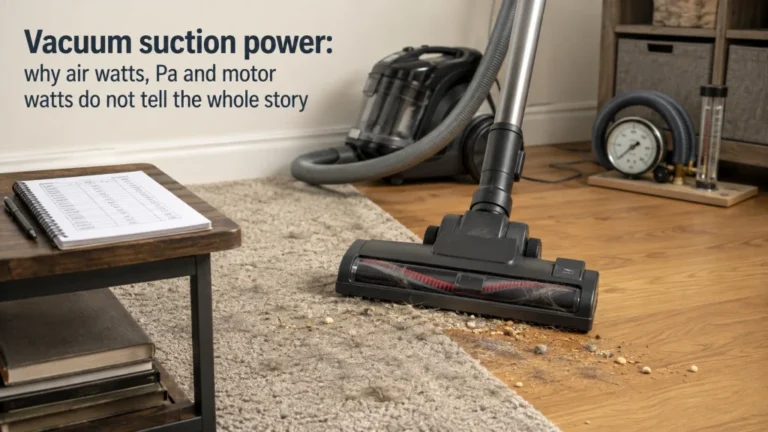
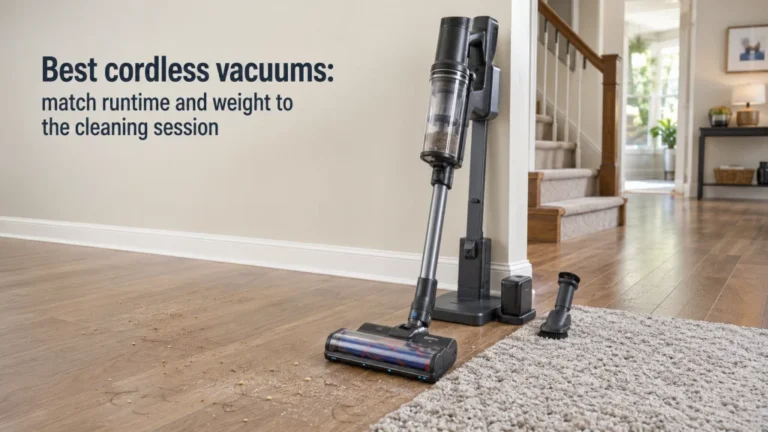
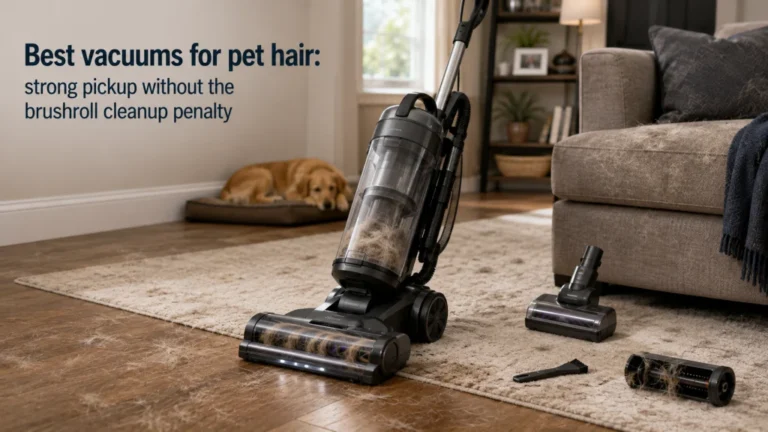
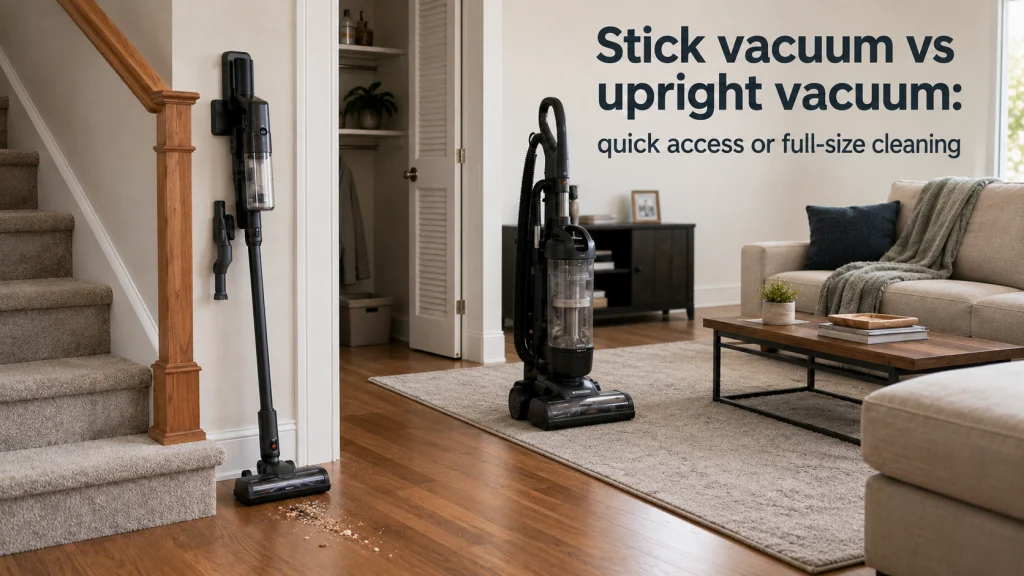
A stick vacuum can be the better primary machine when quick access, stairs, light carrying, and frequent small cleanups matter more than long uninterrupted sessions. An upright can make more sense when the household regularly cleans broad carpeted areas, wants more debris capacity, or prefers a floor-focused machine that can keep working without battery planning. Measured pickup should be judged by the exact model rather than by form factor alone. The practical choice comes down to how the vacuum fits the cleaning session, not which shape looks more powerful.
Start with the cleaning session you actually repeat
The useful way to frame a stick vacuum vs upright vacuum decision is to picture two different jobs. One is a visible trail of crumbs, tracked-in grit, or pet hair that you want gone before it spreads. The other is a whole-home floor session that includes several rooms, carpet, furniture edges, and enough debris to make interruptions noticeable. A vacuum that feels perfect for the first job can still be frustrating in the second.
That is why quick access deserves as much attention as raw cleaning ability. A slim machine stored close to the living area may get used more often because there is little setup between seeing a mess and cleaning it. A full-size upright may ask more of storage and carrying, yet the larger body can support longer floor sessions with fewer stops to empty the bin. The better choice is the one that removes the most friction from the cleaning you actually do, not the one that wins an abstract size comparison.
| Cleaning situation | What usually matters most | Form factor to examine first |
|---|---|---|
| Frequent visible-mess cleanup | Fast access, low carried weight, easy steering, simple storage | Stick |
| Long carpet-heavy floor session | Session capacity, floorhead behavior, uninterrupted operation, push effort | Upright |
| Mixed floors plus stairs and upholstery | Floor pickup, conversion, carried weight, attachment workflow | Compare exact models |
| Household willing to keep two machines | Clear division of jobs without redundant storage burden | Stick plus upright can be reasonable |
The table is a starting filter, not a verdict. A strong stick can handle substantial floor cleaning, and an agile upright can be easier to live with than its silhouette suggests. The next step is to separate the physical architecture from assumptions about performance.

This cordless stick vacuum offers up to 40 minutes of runtime and converts to a removable handheld. It has an XL dust cup and LED headlights for floor cleaning. The package includes a crevice tool and pet multi-tool for targeted cleaning.
Check On AmazonIf you click this link and buy, we earn a commission at no additional cost to you.
Understand what the two form factors change
Within home cleaning appliances, stick and upright vacuums solve the same broad floor-cleaning need with different handling patterns. A stick vacuum keeps the cleaning path narrow and the body relatively compact, with many current designs placing the motor and dust container near the handle. That layout can make the machine easy to grab, turn, carry, and convert for stairs or furniture. It can also place more of the machine’s mass in the hand instead of letting the floor carry it. Two vacuums with similar total weight can therefore feel very different during above-floor work.
An upright keeps a larger body connected to the floorhead during normal floor cleaning. Much of its mass is supported by the floor rather than carried continuously, which can help during long straight runs even though lifting the machine between floors may be harder. The larger housing can also make room for a larger bag or bin, a longer hose system, or more onboard storage, depending on the model. Those advantages matter only if the household uses them enough to justify the footprint.
Key point: Form factor tells you where the machine’s mass, dirt capacity, controls, hose, and storage burden are likely to sit. It does not prove which exact vacuum will pick up more debris on your carpet or hard floor.
That distinction is the heart of an upright vs stick vacuum comparison. If you treat shape as a performance score, you can eliminate a good fit before checking actual testing. If you treat shape as a workflow choice, the comparison becomes much more useful.

This upright uses a Lift-Off detachable pod and quick-release extension wand for above-floor work. Its sealed HEPA system is designed to capture dust allergens inside the vacuum, and its tangle-free brush roll handles hair and fur. The 39883 package includes a 2-in-1 dusting and crevice tool plus a TurboEraser pet tool.
Check On AmazonIf you click this link and buy, we earn a commission at no additional cost to you.
Compare measured floor pickup without assuming size equals power
Independent vacuum testing is useful here because current machines do not fit the old shortcut that a slim body automatically means weak pickup. Testing organizations evaluate debris pickup on bare floors and carpet, pet-hair removal, maneuverability, and other conditions that can reveal strong and weak models in both formats. The result is overlap rather than a clean dividing line. Some stick vacuums are capable enough to serve as a primary cleaner in the right home, while some uprights trade convenience or floor adaptability for other strengths.
For a household with hard flooring and low-pile rugs, the exact floorhead can matter more than the outline of the vacuum. Brush design, sealing, airflow, suction control, floor detection, and how the head handles larger debris all influence what reaches the bin. On carpet, agitation, height adjustment, suction control, and resistance at the floorhead can change both pickup and how hard the machine is to push. A specification sheet that lists motor power without showing cleaning results does not settle those questions.
When comparing test data, keep the test conditions attached to the result. A score on one carpet type does not guarantee the same behavior on a plush rug, and a strong hard-floor result does not prove the head will glide well over every threshold. Look for tests that state the surface and method, then compare the exact models you are considering under similar conditions. That prevents a form-factor preference from turning into an unsupported performance claim.
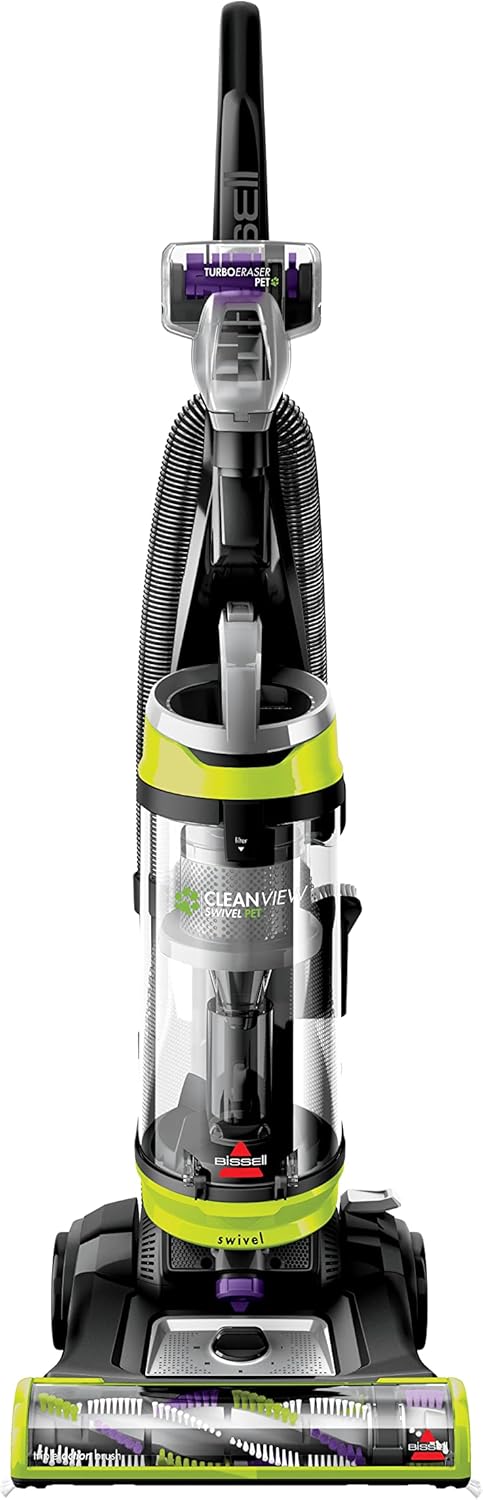
This upright combines swivel steering with a Triple Action brush roll and Scatter-Free Technology for carpet and hard-floor cleaning. Its edge-to-edge cleaning design targets debris along walls and corners. The large dirt tank empties from the bottom, and the package includes a Pet TurboEraser tool for stairs and upholstery.
Check On AmazonIf you click this link and buy, we earn a commission at no additional cost to you.
Keep battery and cord interruptions separate from vacuum shape
The phrase cordless stick vs upright vacuum sounds like one comparison, but it combines two decisions: form factor and power source. Many stick vacuums are cordless and many uprights are corded, yet neither relationship is absolute. A cord changes outlet planning and cord management. A battery changes charging, usable runtime, power-mode choices, and what happens when a cleaning session lasts longer than the available charge.
Published battery runtime should be treated as a condition, not as a promise about every cleaning session. Independent testing commonly shows that runtime varies with power mode, powered attachments, floor load, and the way the machine is configured. A household that cleans a small area frequently may rarely notice that limit. A household that expects one machine to cover several carpeted rooms in one pass needs to treat runtime as part of session capacity, just like bin size.
The same logic applies to a cord. A corded machine can keep operating as long as the household needs it, but outlet changes and cord handling can interrupt movement through a larger layout. If power source is becoming the deciding factor, use the separate comparison of corded and cordless vacuum ownership rather than making the stick body carry a decision that really belongs to the power system. That keeps the choice honest and prevents “cordless” from becoming a synonym for “stick.”
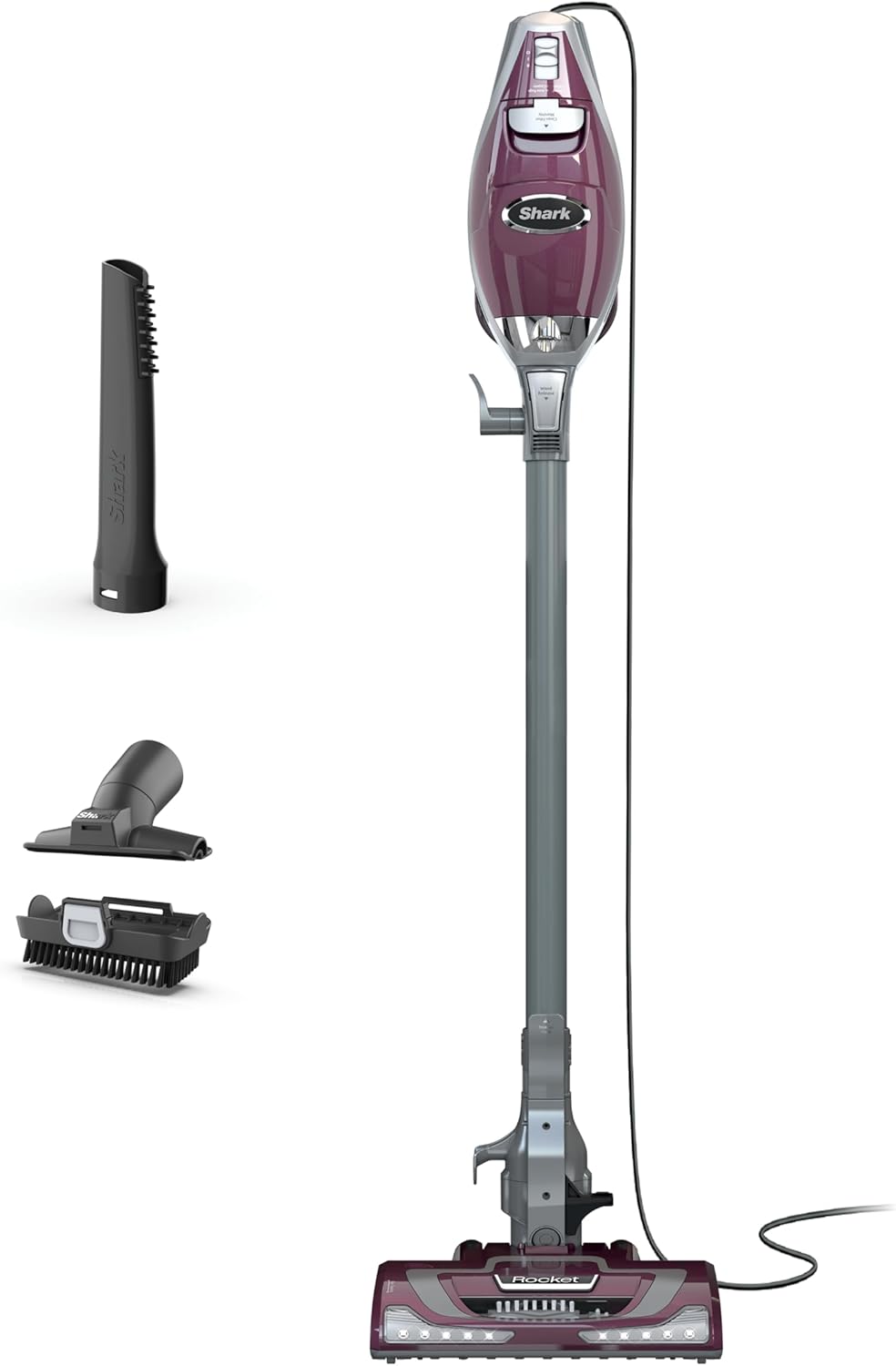
This corded stick vacuum converts to a handheld vacuum for above-floor cleaning. It has a 0.68-quart dust cup and LED headlights on the handheld and nozzle. The package includes a pet multi-tool and pet crevice tool.
Check On AmazonIf you click this link and buy, we earn a commission at no additional cost to you.
Judge carried weight, push effort, and stairs as different loads
Total weight matters, but it is not the only weight that matters. A stick may be much easier to carry from room to room while still putting noticeable mass in the hand because the motor and bin sit high on the wand. An upright may be heavier to lift, yet much of that weight rides on the floor during normal use. The useful question is where your body supports the machine during the tasks you repeat.
Stairs expose this difference quickly. A compact stick that converts to a handheld can reduce the awkwardness of balancing a full-size body on a step, especially when the attachment stays close to the hand. An upright with a long hose can let the main body remain on a landing for part of the staircase, but hose reach, tipping resistance, and attachment control vary by design. Neither approach is automatically easier until you picture the actual staircase and the route between floors.
Push effort adds another layer. A powerful floorhead that seals tightly to carpet can feel harder to move even if the vacuum’s listed weight looks reasonable, while adjustable suction or height control can improve the experience on some models. If carrying is the main concern, prioritize the weight you actually lift. If carpet sessions are the main concern, pay equal attention to floorhead resistance and steering rather than choosing by the shipping-scale number alone.

This corded stick vacuum weighs under 9 pounds and converts to a handheld for stairs, furniture, and other above-floor work. Fingertip controls switch between floor types, while swivel steering helps with direction changes. The hand vacuum can hang from the wand hook for storage, and the package includes upholstery, dusting, and crevice tools.
Check On AmazonIf you click this link and buy, we earn a commission at no additional cost to you.
Treat dust capacity as part of session capacity
A smaller dust container is not a problem when the job ends before the bin fills. It becomes a problem when the household repeatedly stops mid-clean to empty it, wipe debris from seals, or deal with hair packed around the inlet. This is why capacity should be considered together with floor area, pets, shedding, carpet load, and cleaning frequency. The same nominal bin size can feel generous in a small apartment and restrictive in a larger pet household.
Uprights often have more physical room for debris capacity, but the exact model still controls the answer. Bagged and bagless systems also create different ownership routines, so capacity should not be reduced to one volume number. A larger bag may allow long intervals between changes but creates a recurring consumable cost. A bagless bin avoids replacement bags but asks the owner to empty and clean the dust path according to the machine’s instructions.
- Estimate how much debris a normal whole-home session produces, not just how much is visible at the start.
- Check the exact bin or bag capacity instead of assuming every upright is large and every stick is tiny.
- Look at how easily the container empties without requiring awkward disassembly.
- Include filter cleaning, bag replacement, and other recurring maintenance in the ownership routine.
If the vacuum reaches its practical capacity before the floor session ends, the interruption is part of the machine’s real workload. That matters even when pickup performance is excellent. A primary vacuum needs enough cleaning capacity to match the household’s normal session, not merely enough suction to collect the first section of floor.

This upright pairs a large-capacity dirt tank with a 27-foot power cord that rewinds automatically at the press of a button. Its Triple Action brush roll is designed for embedded pet hair, and Scatter-Free Technology supports hard-floor pickup. Swivel steering and specialized pet tools add maneuverability and targeted cleaning while retaining a full-size upright format.
Check On AmazonIf you click this link and buy, we earn a commission at no additional cost to you.
Storage can decide whether the vacuum is actually quick to use
Quick cleanup only feels quick when the vacuum is stored where it can be reached without rearranging a closet. A stick vacuum’s narrow footprint can help, but charging location, wall-mount requirements, floor stands, and attachment storage can make the real footprint larger than the wand suggests. Some designs also cannot stand safely on their own. The storage plan needs to include the entire parked setup, not just the vacuum body.
An upright usually occupies more floor space, yet it may park in one piece and keep tools onboard. That can be simpler than a slim machine whose charger, spare battery, floorhead, and attachments end up scattered across separate shelves. In a home with a utility closet near the main cleaning area, the upright’s extra width may barely matter. In a small apartment where the vacuum has to live behind a door or in a narrow cabinet, a compact stick can change how often the machine is used.
This is a common first-time buyer mistake: measuring whether the vacuum fits, but not whether it is easy to retrieve. A machine that technically squeezes into storage can still be annoying if another appliance must be moved first. Before choosing stick or upright vacuum, check the parked footprint, charging or outlet access, attachment location, and the path from storage to the floors that get cleaned most often.
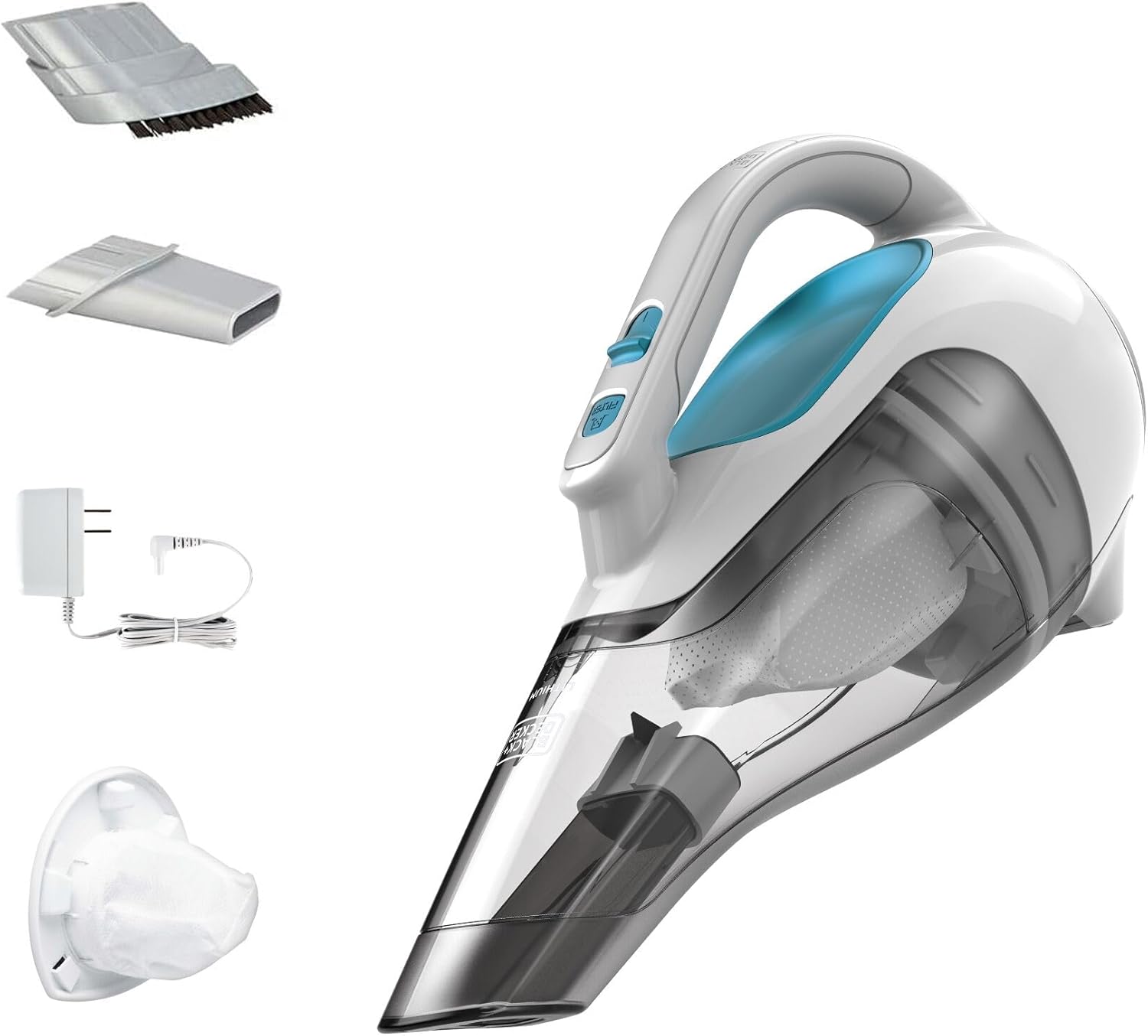
This cordless handheld uses a wall-mount charging base so the vacuum can stay accessible without occupying upright floor space. Its translucent high-capacity dirt bowl lets you see when it needs emptying, and the bowl and filter are washable. A wide mouth handles larger debris while the crevice tool reaches narrow spaces.
Check On AmazonIf you click this link and buy, we earn a commission at no additional cost to you.
Above-floor cleaning depends on conversion, reach, and tool handling
Sticks often make above-floor cleaning look effortless because many convert by removing the wand or floorhead. That can be useful for upholstery, stairs, baseboards, shelves, and vehicle interiors, but the motor and bin may remain in the hand. A lightweight total machine can still feel tiring if most of the mass stays at the wrist during a long attachment job. Handle weight and balance deserve their own check.
Uprights commonly use a hose and wand for above-floor work, which keeps the main body on the floor but introduces hose drag and reach limits. Convertible upright designs can reduce some of that burden by letting part of the body detach from the floorhead. The trade-off is model specific, so do not assume that every upright is clumsy above the floor or that every stick is comfortable in handheld mode. The attachment connection and the way the machine carries its mass matter more than the marketing label.
Also verify what tools are included with the exact package. A crevice tool, upholstery tool, motorized mini brush, extension wand, or soft brush can change the jobs the vacuum handles well, and package contents can differ between versions or retailers. Compatibility should be confirmed by model or interface rather than visual similarity. If an attachment is central to the purchase, it is part of the decision, not a bonus item to check after checkout.

This upright uses a Lift-Away pod to move from floor cleaning to stairs, furniture, and other above-floor areas. It has a 0.87-liter dust cup, brushroll shutoff, swivel steering, and HEPA filtration. The NV356E package includes a crevice tool, dusting brush, and pet power brush for multiple cleaning tasks.
Check On AmazonIf you click this link and buy, we earn a commission at no additional cost to you.
Choose a primary vacuum role before choosing a second machine
A two-vacuum setup can be useful, but it should solve two distinct jobs rather than duplicate them. One common arrangement is a quick-access stick for visible debris and stairs, paired with a higher-capacity floor machine for longer carpet sessions. Another household may find that one capable stick already covers the full routine and that a second vacuum would mostly consume storage. The decision should start with an unresolved job, not with the assumption that more equipment is better.
A stick makes the strongest case as the primary vacuum when frequent access, multi-level carrying, compact storage, and mixed light-to-moderate floor sessions dominate the routine. An upright makes the strongest case when long floor runs, carpet work, larger debris capacity, and continuous operation matter more than carrying convenience. A two-machine setup makes sense only when the second machine removes a recurring limitation that the primary one does not handle efficiently. If that limitation appears only occasionally, accepting a slightly longer cleanup may be more sensible than storing another full vacuum.
- Start: Can one vacuum complete your normal floors, stairs, and above-floor work without a recurring interruption that bothers you?
- Yes: Keep one machine. Choose stick-primary if access, carrying, and compact storage dominate; choose upright-primary if long floor sessions, carpet work, and debris capacity dominate.
- No: Identify the specific job the primary machine handles poorly.
- The stick is easy to use but repeatedly hits runtime, bin, or carpet-effort limits: Keep the stick for quick work and consider an upright as the secondary floor machine.
- The upright handles floors well but is rarely worth retrieving for stairs or small messes: Keep the upright for main floor sessions and consider a compact stick as the secondary quick-access machine.
- Both machines would cover the same surfaces in the same way: Do not add a second vacuum yet. Recheck whether the real problem is storage, power source, an attachment, or the exact model rather than form factor.
The tree should end with a defined role, not simply with permission to own two vacuums. Stick-primary, upright-primary, and a complementary two-machine setup are all valid outcomes when they match different recurring jobs. If the second machine cannot be assigned a job that the first one handles poorly, it is probably redundant. That keeps the purchase tied to household friction instead of turning extra equipment into the default answer.
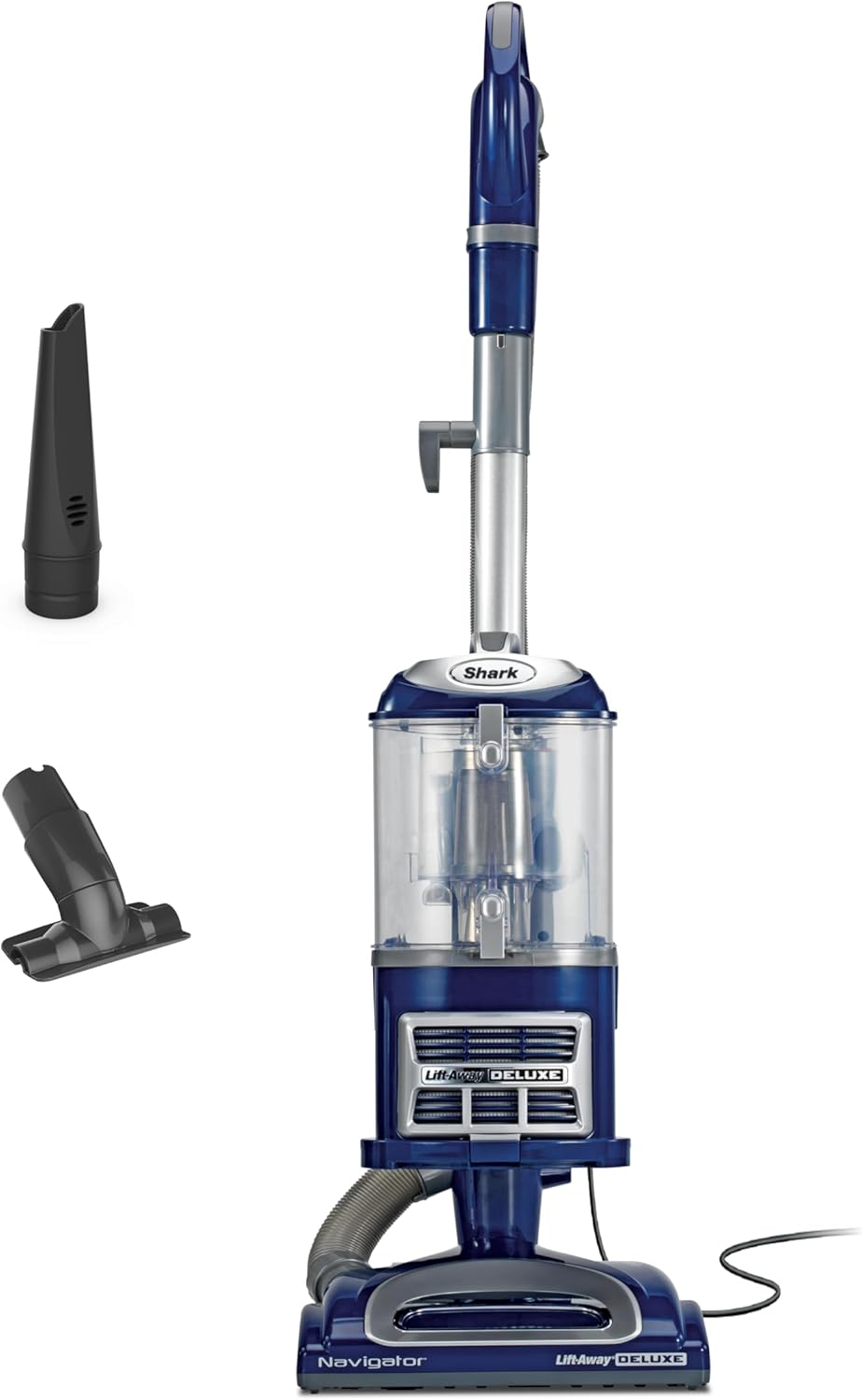
This full-size upright combines a detachable Lift-Away pod with a 0.9-quart dust cup for longer floor sessions. Brushroll shutoff lets the machine move between carpet and bare floors, while swivel steering helps around furniture. The NV360 package includes an upholstery tool and crevice tool, giving the upright a main-floor role with above-floor flexibility.
Check On AmazonIf you click this link and buy, we earn a commission at no additional cost to you.
Move power-source questions to the power-source decision
By this point, the form-factor decision should already be mostly settled. Do not reopen it merely because the preferred machine is available with a different power system than expected. Instead, take the chosen architecture into the separate comparison of corded versus cordless vacuum trade-offs and decide how much interruption you will accept from charging, runtime, outlet changes, or cable handling. That keeps a power-source preference from erasing an architecture that otherwise fits the home’s floors, carrying needs, and storage.
If the stick-versus-upright choice still feels unresolved after the weight, capacity, storage, and floor sections above, the problem may be broader than power source. Revisit vacuum cleaner types and household fit to check whether a canister, handheld, or another architecture better matches the job. Return to the corded-versus-cordless comparison only after the physical format makes sense. The goal here is to route the remaining uncertainty rather than repeat the battery and cord trade-offs already covered earlier.

This corded bagged upright is designed for carpets and hard floors. It weighs about 9 pounds and uses automatic height adjustment with a high-speed brush roll. Its power source is corded electric, so it does not use a rechargeable battery for operation.
Check On AmazonIf you click this link and buy, we earn a commission at no additional cost to you.
Use your chosen architecture to narrow current shopping
After the household role is clear, current-model shopping becomes much easier because you know what evidence needs to be checked. A stick-first shopper should compare measured floor pickup, carried weight, battery behavior if cordless, usable bin capacity, charging setup, attachment handling, and storage. An upright-first shopper should compare carpet behavior, floorhead adjustability, push effort, cord or battery system, debris capacity, hose reach, and the physical effort of moving the machine between floors. Those fields are more useful than a long feature count.
If your outcome is cordless-stick-first, the site’s current cordless vacuum comparison is the appropriate place to move from architecture to specific shopping evidence. If upright-first is already settled, move to the upright profile inside the current best vacuum cleaner comparison rather than reopening the architecture question. If you still do not know whether an upright or canister better suits the floor plan, compare upright and canister vacuum handling before narrowing models. This keeps current-model shopping downstream from the architecture decision instead of letting a product list make that decision for you.
Whichever route you take, keep the same evidence standard. Verify the exact model’s dimensions, capacity, included tools, floorhead controls, filtration maintenance, consumables, warranty terms, and power requirements when they affect your decision. A model name or product family can change across variants, and small package differences can matter when a specific attachment or charging accessory is essential. Once those fields are verified, compare only the machines that still fit the household role you defined earlier.

This upright has a 2-liter dirt tank and an active extension wand that reaches up to 10 feet. It uses OnePass Technology with a brush design for carpet cleaning. Scatter-Free Technology is designed to capture debris on hard floors with less scatter.
Check On AmazonIf you click this link and buy, we earn a commission at no additional cost to you.
Final thoughts: choose around cleaning-session behavior, not vacuum size
The most useful answer is not that one form factor is universally stronger or easier. It is that the two designs place weight, capacity, storage, power management, and above-floor work in different parts of the cleaning routine. A stick is compelling when access and carrying friction dominate. An upright is compelling when longer floor sessions, carpet work, and session capacity dominate.
Start with the job you repeat, then verify measured pickup on the surfaces you own. Check how the exact machine handles stairs, storage, emptying, attachments, and either charging or cord management before treating feature count as value. If one vacuum covers the routine cleanly, stop there. If a second machine has a distinct job that repeatedly saves effort, then a two-machine setup has a practical reason to exist.

This compact upright weighs 10 pounds and includes a quick-release extension wand for above-floor work. Scatter-Free Technology is designed to capture debris on hard floors with less scatter. The 3437F is marketed as a compact upright for apartments and dorms.
Check On AmazonIf you click this link and buy, we earn a commission at no additional cost to you.
FAQs
🧹 Can a stick vacuum replace an upright vacuum?
Yes, for some homes. Check measured pickup, the surfaces you clean, usable bin capacity, carrying comfort, and whether a cordless model can complete your normal session without becoming an interruption.
🪜 Which vacuum is easier to use on stairs?
A light stick or handheld conversion is often easier to carry, while some uprights can leave the main body on a landing and use a hose. Compare actual carried weight, hose reach, balance, and the shape of your stairs.
🔋 Does cordless automatically mean a stick vacuum?
No. Cordless describes the power source, while stick describes the form factor. Treat battery versus cord and stick versus upright as separate decisions.
🧺 Is a larger dustbin always better?
Only if the extra capacity reduces interruptions in your normal cleaning routine. A larger container can also add size and weight, so compare usable capacity with how much debris your household actually collects per session.
🏠 Do I need both a stick and an upright vacuum?
Not unless each machine has a distinct recurring job. If one vacuum already handles your floors, stairs, storage, and session length comfortably, a second machine may add more storage burden than useful capability.
References and Sources
- Vacuum Wars stick versus upright comparison: Supports the form-factor trade-offs around maneuverability, capacity, battery limits, and the possibility of using two machines for different jobs.
- RTINGS stick vacuum testing: Supports the point that stick models should be judged by measured floor performance, portability, weight, and runtime rather than by form factor alone.
- RTINGS upright vacuum testing: Supports the discussion of carpet performance, portability, maneuverability, and model-to-model differences within upright vacuums.
- Good Housekeeping stick vacuum testing: Supports the ownership checks around battery runtime, weight, powered attachments, dust-cup handling, and storage.