A robot vacuum is strongest when the household wants repeated floor coverage with less active effort, while a regular vacuum is stronger when cleaning has to be aimed at a specific place or surface. The choice is not simply automation versus suction, because current robot performance can be much closer to manual vacuums on some floor-cleaning tasks than older comparisons suggest. Stairs, upholstery, cars, visible spills, clutter, storage, and maintenance often decide whether one system can cover the whole job. By the end, you should be able to choose a robot, a manually operated vacuum, or a two-machine setup without paying for duplicated capability you will not use.
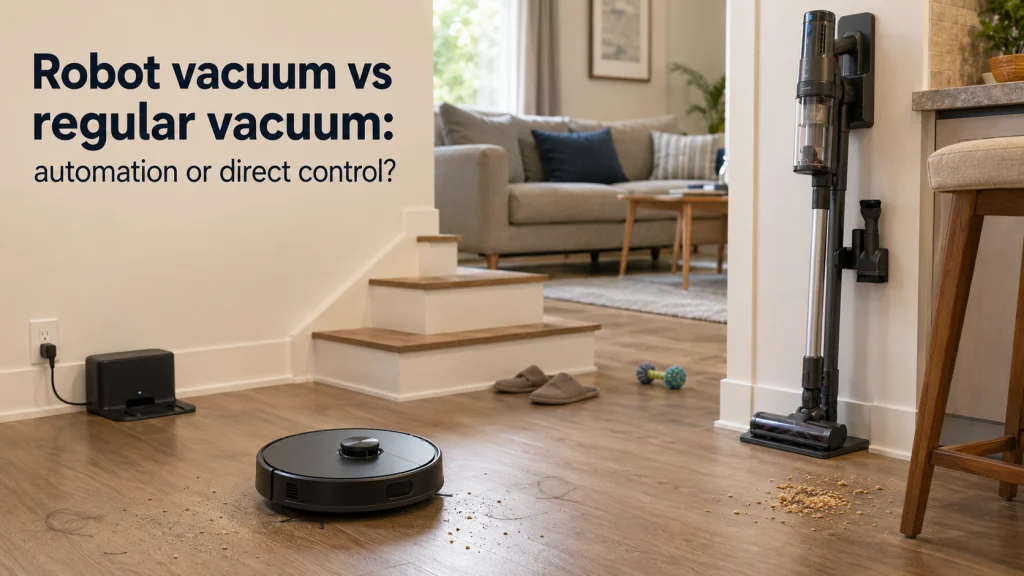
Automation and direct control solve different cleaning moments
The robot vacuum vs regular vacuum decision becomes clearer when you stop treating both machines as interchangeable floor cleaners. A robot owns repeat coverage: it can leave the dock, follow a route, and clean accessible floors without a person steering every pass. A manual vacuum owns directed cleaning: you can grab it, point it at a visible mess, work an edge, or move immediately to another surface. That difference matters before suction claims or feature lists enter the comparison.
Picture a home that collects crumbs around the kitchen, dust across open floors, hair near furniture, and debris on stairs. The robot can reduce the buildup on the areas it can reach, especially when those floors are kept reasonably clear. The manual machine can respond the moment something needs attention and can follow the person beyond the robot’s floor path. The right system is therefore the one that owns the jobs you actually repeat, not the one with the longer specification sheet.
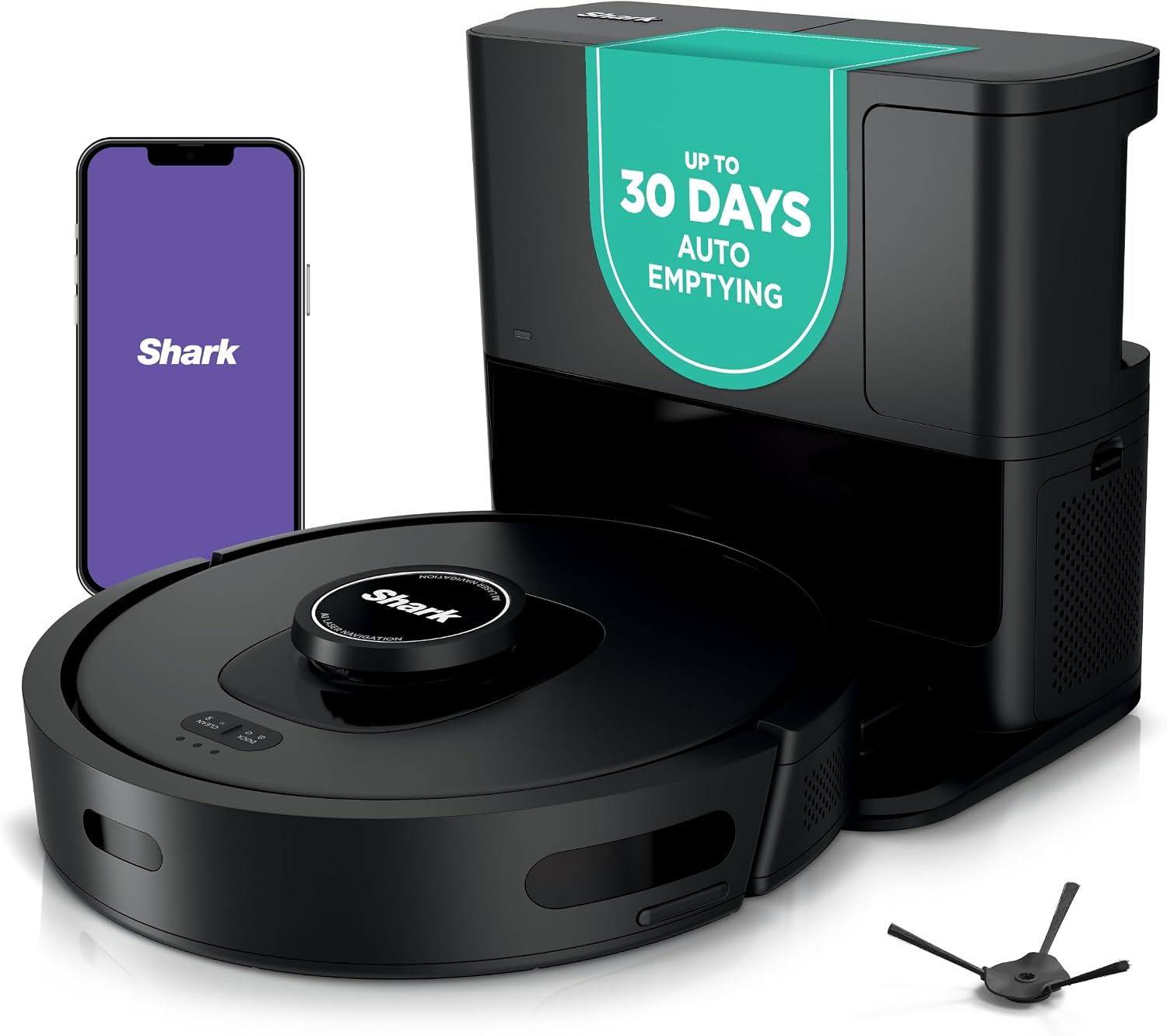
Matrix Clean Navigation uses multiple passes over mapped floor areas, while 360-degree LiDAR builds and updates the home map. The bagless self-empty base holds up to 30 days of debris and uses HEPA filtration. Wi-Fi controls support scheduled and on-demand cleaning, and the robot provides up to 120 minutes of runtime.
Check On AmazonIf you click this link and buy, we earn a commission at no additional cost to you.
What counts as a regular vacuum in this comparison
Here, a regular vacuum means a vacuum that a person actively operates, including upright, canister, stick, and handheld designs. Those machines do not all clean or handle the same way, so this comparison is about manual control as a system rather than declaring one manual format the winner. An upright may emphasize floor cleaning, a canister can offer flexible hose reach, and a stick can reduce retrieval friction. A handheld adds targeted portability but usually does not replace a full floor-cleaning machine by itself.
That boundary keeps the robot vacuum vs traditional vacuum question useful instead of turning it into four separate architecture debates. If the manual side wins for your household, the next step is to compare the types of vacuum cleaners according to floor type, stairs, storage, cord or battery preference, and attachment needs. The robot side has its own setup decisions around navigation, dock size, floor access, and maintenance. Keeping those choices separate prevents a broad system comparison from becoming a product catalog.

The Whirlwind NEN110A is a corded bagless canister vacuum with integrated airflow control for carpet, upholstery, and hard floors. It weighs 8.15 pounds and uses a 2.5-liter dust container with washable filters. A 2-in-1 crevice tool built into the hose handle switches between a crevice tool and dusting brush.
Check On AmazonIf you click this link and buy, we earn a commission at no additional cost to you.
Floor coverage matters more than a power label
A robot’s main advantage is not that it cleans one dirty patch faster than a person can. Its advantage is that it can cover reachable floor space repeatedly without requiring the household to start every cleaning pass by retrieving and steering a machine. That can change the average condition of the floor because light debris is removed before it has as much time to accumulate. A manual vacuum can match the same frequency only if someone is willing to do the work just as often.
This is why raw motor or suction labels are a poor first filter for the system decision. A stronger manual vacuum that stays stored until the floor looks bad may contribute less routine coverage than a competent robot that actually runs regularly. The reverse is also true when the robot cannot access important rooms, repeatedly gets interrupted, or misses the areas that become dirty fastest. Frequency only becomes an advantage when the home’s layout and routine allow the machine to complete useful coverage consistently.
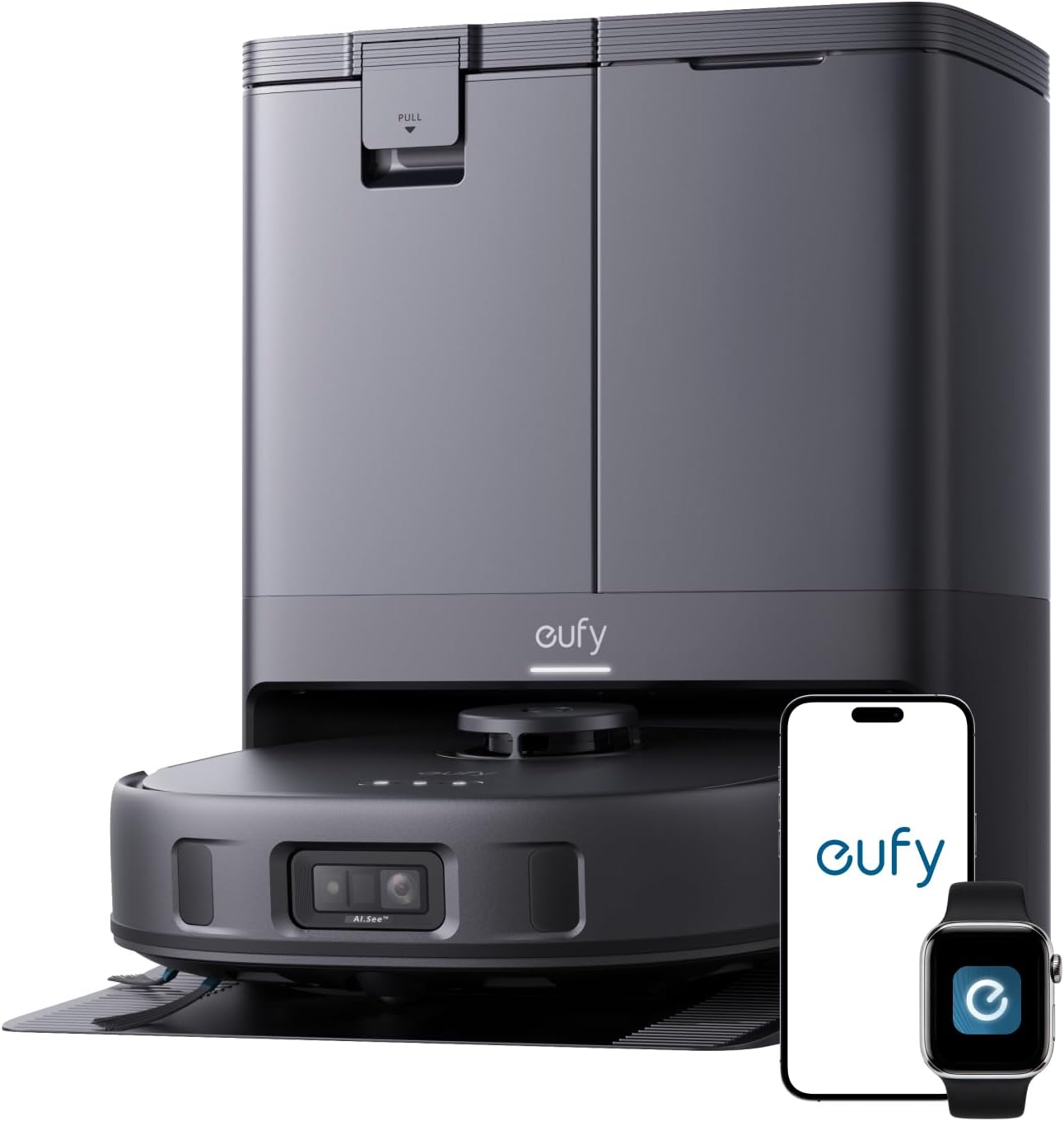
The X10 Pro Omni combines 8,000 Pa vacuum suction with dual mops that can auto-lift 12 mm. Its station self-cleans the mop pads, dries them with heated air, and uses a 2.5-liter dust bag for automated debris handling. The listing also specifies carpet detection and AI obstacle avoidance for navigating around household objects.
Check On AmazonIf you click this link and buy, we earn a commission at no additional cost to you.
Carpet and hard-floor performance are closer than the old rule suggests
The stale comparison says robots are weak floor sweepers and manual vacuums are automatically the deep-cleaning choice. Current independent testing makes that rule too broad. Vacuum Wars reports that its best robot result in a controlled deep-carpet test rose from 76 percent in older generations to 96 percent in its current testing, which is a large enough change to make model-level evidence necessary. RTINGS still treats carpet as a difficult surface because embedded debris and surface resistance can challenge both pickup and navigation, so a strong robot result should not be generalized to every model.
Hard floors can also expose differences that a suction number will not show, including edge pickup, debris scattering, navigation coverage, and how well the machine returns to missed areas. A manual vacuum gives the operator immediate feedback and the option to slow down, change direction, or make another pass where debris remains. A robot depends more heavily on its brush design, route logic, obstacle handling, and programmed behavior. For either system, compare evidence from the exact model and the surfaces in your home rather than assuming the product type settles performance by itself.
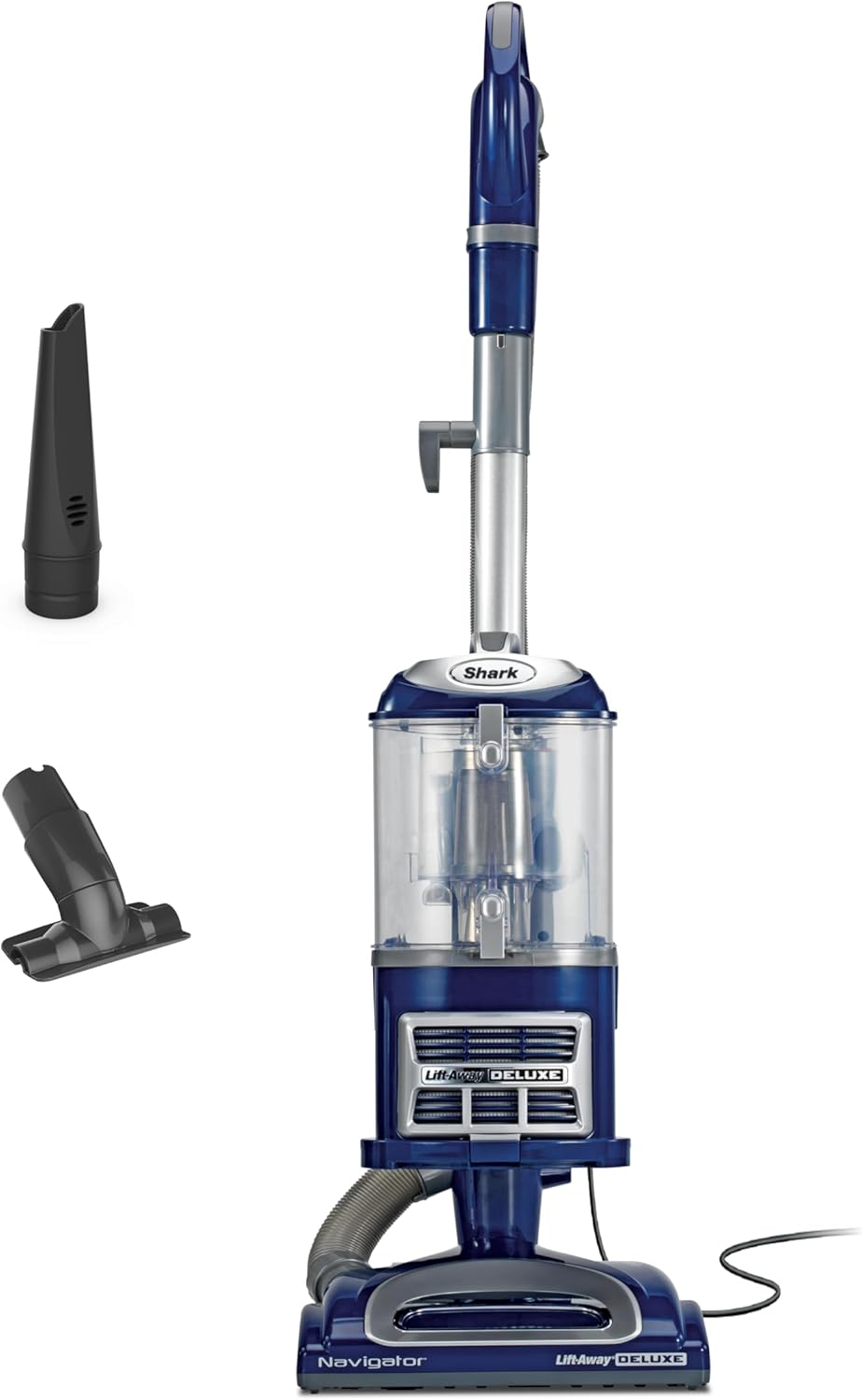
The NV360 combines upright floor cleaning with a detachable Lift-Away pod for above-floor jobs. Brushroll shutoff lets the cleaner switch between carpet and hard-floor cleaning, while swivel steering helps around furniture. It includes a 0.9-quart dust cup plus upholstery and crevice tools for targeted cleanup.
Check On AmazonIf you click this link and buy, we earn a commission at no additional cost to you.
Stairs, furniture, upholstery, edges, and cars still need direct reach
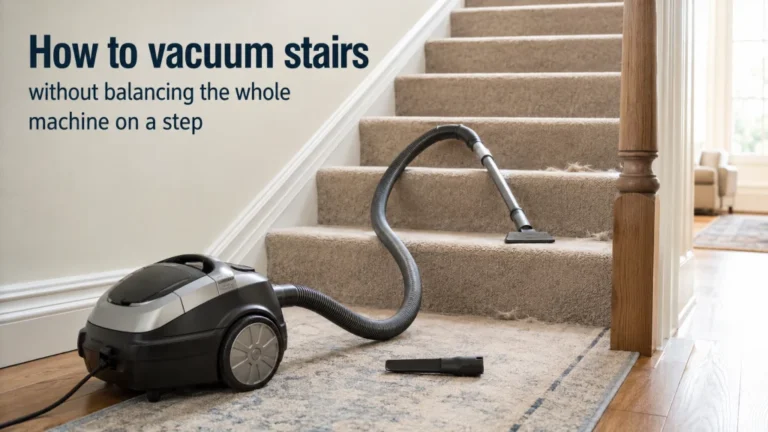
A robot lives on the floor, and that physical boundary matters more than many feature comparisons admit. It cannot pick itself up to vacuum a staircase, move onto a sofa cushion, clean a fabric chair with an upholstery tool, or follow you into a car. Even on the floor, tight edges and awkward furniture geometry can remain places where directed passes are useful. If those jobs are routine, the household still needs a way to clean beyond the robot’s path.
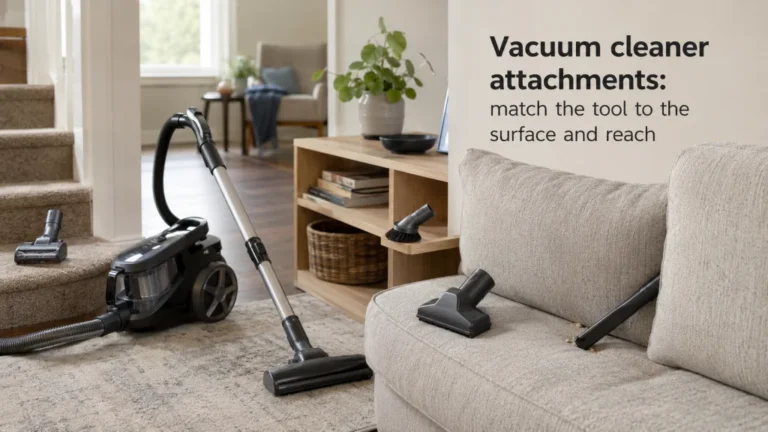
Manual vacuums earn their keep here because a person can change the tool, angle, height, and target instantly. A cordless stick can make that transition convenient, while a canister or upright with the right attachments may offer a different balance of reach and floor performance. The exact architecture matters after you decide how much of the home’s cleaning workload sits above the floor or on stairs. A robot can own floor maintenance without becoming the only cleaner the household needs.

The HV301 weighs under 9 pounds and converts from a stick vacuum to a handheld for stairs, furniture, and car interiors. It is designed for both carpet and hard floors and uses swivel steering for maneuvering around furniture. Crevice and upholstery tools extend its reach to tight spaces and fabric surfaces.
Check On AmazonIf you click this link and buy, we earn a commission at no additional cost to you.
Visible mess favors immediate control; routine dust favors scheduling
A visible pile of crumbs, tracked grit by the entry, or debris beside a chair is usually a directed-cleaning problem. A person can retrieve a manual vacuum, clean the small area, inspect the result, and stop as soon as the job is finished. Sending a robot through a room can be less direct, even when app controls allow room or zone cleaning. The advantage shifts toward the robot when the goal is not one obvious mess but repeated coverage of an entire accessible floor area.
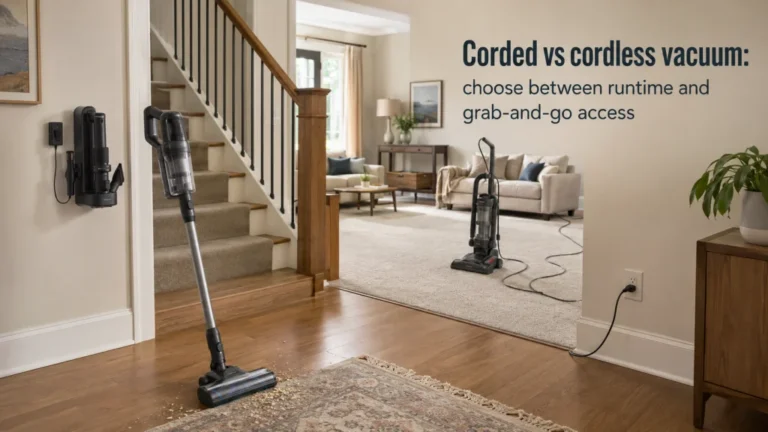
If your shortlist is really robot vacuum vs cordless vacuum, this distinction often matters more than which one looks more modern. Cordless designs reduce the cord-management penalty and can make spot cleaning especially easy, but they still require a person to retrieve, carry, steer, empty, and return the machine. A robot trades that direct response for automation and routine coverage. Households that generate both frequent floor debris and frequent targeted messes may find that the two systems divide work more cleanly than either one can absorb alone.

The cordless Dustbuster AdvancedClean is built for quick pickup around the home and in the car. Its rotating slim nozzle and pull-out crevice tool help reach narrow spaces around furniture, stairs, and seats. The package includes a charging station for storing and recharging the handheld.
Check On AmazonIf you click this link and buy, we earn a commission at no additional cost to you.
Clutter and setup create different kinds of friction
Robot ownership can shift part of the cleaning workload into floor preparation. Cords, lightweight fabric, toys, pet items, and small objects can interrupt a run or force the household to create no-go areas, even when obstacle avoidance is sophisticated. RTINGS uses common objects such as shoes and socks in controlled obstacle testing, which is a useful reminder that navigation quality should be judged against realistic floor clutter rather than marketing labels alone. A home that rarely has a clear path may spend enough time preparing or rescuing the robot that automation loses some of its value.
Manual vacuums have different friction: retrieval, carrying, plugging in or managing battery state, steering around furniture, and returning accessories to storage. Those tasks are more active, but they are also predictable and under the user’s control. The right comparison is therefore not “effort” versus “no effort,” because both systems create work in different places. Look at the setup you will tolerate repeatedly, then decide which kind of friction is less likely to make cleaning get postponed.

The small D-Line box is designed to contain a power strip and loose cable clutter in one enclosure. Its external dimensions are 12.75 by 5 by 4.5 inches, and it fits power strips up to 10.5 inches long. The ABS housing uses three rear entry and exit slots plus a click-lock lid for routing and containing cords.
Check On AmazonIf you click this link and buy, we earn a commission at no additional cost to you.
Maintenance moves around; it does not disappear
A robot may reduce active vacuuming, but it still has brushes, filters, sensors, wheels, a bin, and often a dock that need attention. More automated docks can reduce how often a person empties the onboard bin, yet they add their own bags, tanks, trays, or cleaning surfaces depending on the system. Hair can still collect around rotating parts, and sensors or contacts can still need cleaning for reliable operation. Always use the exact model instructions because maintenance steps and replaceable parts are not universal.
Manual vacuums concentrate maintenance in a simpler set of tasks: emptying a bin or changing a bag, cleaning or replacing filters, clearing the brushroll, and caring for attachments. The burden can feel smaller because there is no navigation system or dock, but frequent manual cleaning can also mean more frequent emptying and brush attention. Ownership cost should include replacement filters, bags, brushes, dock consumables, and other recurring parts that the exact design requires. A system that saves cleaning time but creates maintenance you consistently avoid is not genuinely low effort for your household.

This 24-pack includes 16 by 12-inch microfiber cloths for dry cleaning or use with liquid cleaners. The material is ultra-soft, non-abrasive, lint-free, and designed for streak-free wiping. The cloths are machine washable and can be reused hundreds of times.
Check On AmazonIf you click this link and buy, we earn a commission at no additional cost to you.
Storage can decide the purchase before cleaning performance does
Robot vacuums need a parking location that supports docking and gives the machine a practical path into the rooms it is expected to clean. A compact charging base can be easy to place, while a full-service dock can occupy meaningful floor and wall-adjacent space. That footprint is permanent rather than occasional because the robot needs to return to the same location. Measuring the intended spot before shopping is more useful than assuming any dock will tuck neatly into an unused corner.
Manual vacuums can create a different storage problem because the machine, wand, hose, floorhead, and attachments may not live in one compact footprint. Slim cordless designs can reduce that burden, but their charging location and accessory storage still need to fit the home. Uprights and canisters can require more closet or utility-space planning even though they do not reserve an open docking lane on the floor. If storage is tight, compare the full stored system rather than the cleaner body alone.

A 165-foot green-beam laser distance measure designed for fast indoor and jobsite measurements. The bright green laser improves visibility compared with standard red beams, while the color display keeps readings easy to check. It supports straightforward distance measuring in a compact handheld format and provides a longer working range than the Bosch GLM100-23 it replaces.
Check On AmazonIf you click this link and buy, we earn a commission at no additional cost to you.
Choose robot-only, manual-only, or both by job ownership
A robot-only setup works best when the home’s meaningful cleaning workload is concentrated on accessible floors, routine coverage matters more than instant targeting, and the household can keep paths reasonably clear. A manual-only setup fits homes where stairs, upholstery, spot cleaning, demanding carpet work, or frequent movement between surfaces makes directed control more important than unattended coverage. A two-machine setup makes sense when the robot can take over repetitive floor maintenance while the manual machine clearly owns jobs the robot cannot reach. Buying both becomes poor value when the second machine does not have a distinct, recurring role.
Start by mapping the home, not the product pages. Separate floor areas a robot can reach on its own from stairs, furniture, upholstery, edges, vehicles, and other places that still require a person to carry or aim a cleaner. Then mark which of those jobs happen often enough to influence what you buy. That turns the comparison into a workload decision instead of a vague argument about which vacuum type is more powerful.
| Cleaning job | Robot vacuum | Manual vacuum | Likely owner of the job |
|---|---|---|---|
| Repeated open-floor maintenance | Strong fit when navigation is reliable | Effective but requires active operation | Robot |
| Stairs and above-floor surfaces | Outside normal reach | Directly reachable with suitable design or tools | Manual |
| Immediate visible mess | Can target zones, but less direct | Fast, visible, operator-controlled response | Manual |
| Routine dust and hair on reachable floors | Automation can increase cleaning frequency | Depends on how often someone vacuums | Robot or both |
| Whole-home mixed surfaces and locations | Covers only accessible floor path | Can move between floors, furniture, edges, and vehicles | Manual or both |
The job-ownership table is the first filter, but it does not show where the workload physically lives. A household with mostly open hard floors has a very different cleaning map from one with carpeted bedrooms upstairs, a fabric sectional, several stair runs, and a car that collects debris. The next table separates floor-only coverage from the rest of the home so the missing capability is easier to see. Use it to identify gaps before assuming a second machine is necessary.
| Area or surface | Robot role | Manual role | What should decide |
|---|---|---|---|
| Open hard floors | Can own repeated maintenance when access is reliable | Useful for immediate messes and directed passes | Cleaning frequency and clutter level |
| Carpeted rooms on the same level | Can contribute strongly when the exact model performs well on that carpet | Provides operator-controlled passes and targeted follow-up | Model-level carpet evidence and how demanding the surface is |
| Stairs and landings between levels | Does not own the stair-cleaning job | Must be carried or used with a suitable hose, wand, or handheld format | How often stairs need cleaning and how easy the manual machine is to carry |
| Sofas, chairs, and upholstery | Outside normal floor path | Can use directed suction and suitable attachments | How often fabric surfaces collect hair, crumbs, or dust |
| Edges, tight spaces, and localized debris | May help, but access and edge behavior vary by model | Can be aimed exactly where the debris remains | How much follow-up cleaning the floor plan creates |
| Cars and other off-floor locations | No practical role | Portable manual cleaning is required | Whether those jobs are frequent enough to affect the purchase |
If the manual-only rows are rare or already covered by another cleaner, a robot can reasonably own most of the workload. If those rows appear every week, the second system is not duplication because it covers places automation cannot reach. The important point is frequency: an occasional sofa cleanup should not automatically justify another full-size machine, while several recurring above-floor jobs can. That same frequency test leads directly into the buying decision.
- Start with reachable-floor work. If repeated floor maintenance is the largest recurring job, continue to the robot branch. If directed cleaning across stairs, upholstery, edges, vehicles, or visible messes dominates, continue to the manual branch.
- Robot branch. If the robot can reach the important floors and the remaining manual jobs are minor or already covered, choose robot-only. If the robot can own routine floors but meaningful manual jobs remain every week, choose both.
- Manual branch. If direct reach covers nearly everything you clean and unattended floor coverage would only duplicate work you already perform comfortably, choose manual-only. If repeated floor maintenance is still a meaningful burden and the home is robot-friendly, a two-machine setup can split the work.
- Budget gate. Before buying the second machine, name the recurring jobs it will own, the storage it needs, and the consumables or maintenance it adds. If that role is vague, keep the simpler one-machine setup.
Budget should be judged at the system level rather than by the sticker price of one vacuum. Robot-only can justify a higher purchase cost when unattended coverage replaces a large amount of active floor cleaning, but premium docks can also add floor space, bags, tanks, or other maintenance items depending on the design. Manual-only may be the less expensive and simpler route when direct cleaning already covers the home well, although the household still pays with active time and retrieval effort. The value test is not which machine costs less in isolation, but which setup covers the recurring workload with the least unnecessary equipment.
A two-machine setup has the highest risk of overbuying because it combines purchase cost, storage, maintenance, and replacement consumables from two systems. That extra cost is easier to justify when each machine removes a different recurring burden, such as a robot handling accessible floors while a manual vacuum handles stairs, upholstery, cars, and immediate cleanup. If both would mainly clean the same open rooms, spend the budget on the better-fitting single system instead. If you are still unsure whether automation earns any place in the budget, the comparison of whether a robot vacuum is worth it focuses specifically on that buy-or-skip decision.

The Featherweight 2033 converts from a corded stick vacuum to a hand vacuum or stair vacuum for targeted cleaning. It weighs under 4 pounds and uses a 15-foot power cord. A crevice tool, floor nozzle, and 0.67-liter dirt cup cover basic hard-floor, carpet, and above-floor jobs.
Check On AmazonIf you click this link and buy, we earn a commission at no additional cost to you.
Pick the system first, then choose the right architecture
Once you know which jobs belong to automation and which require direct control, product selection becomes much simpler. Readers who choose the automated path can use the robot vacuum buying guide to compare floor layout, navigation, dock style, obstacle handling, maintenance, and the features that actually reduce household work. Readers who choose a manual machine can move to the manual-vacuum architecture comparison instead of mixing upright, canister, stick, and handheld tradeoffs into this page. That keeps the next purchase decision tied to the system you already know you need.
If you are ready to compare current options, use the site’s current robot vacuum comparisons or current manual vacuum comparisons only after your job split is clear. The broader home cleaning appliances overview is useful when the decision connects to other floor-care or cleaning equipment rather than another vacuum type. Do not let a premium dock, a high suction number, or a long attachment list reopen a system decision that your household workload has already settled. Features should justify themselves by reducing real work, improving fit, or covering a job that would otherwise remain undone.

The PowerClean FurGuard 4039 uses a 280-watt motor and a self-cleaning brush roll. It can stand on its own, while an included wall mount provides another storage option. Its removable battery and upholstery tool support flexible floor and above-floor cleaning.
Check On AmazonIf you click this link and buy, we earn a commission at no additional cost to you.
Final Thoughts: buy the capability your cleaning routine is missing
The strongest choice is the setup that removes a real household burden without creating a second machine that mostly repeats the first one’s job. A robot makes sense when unattended floor maintenance is the missing capability, while a manual vacuum makes sense when the home needs reach, immediate targeting, and movement between surfaces. Carpet pickup, obstacle handling, and floor-cleaning quality still need model-level evidence once you reach the product shortlist. The system decision comes first because it tells you what that evidence needs to prove.
Use the home’s cleaning map and the budget gate together before paying for two machines. If one system covers nearly every recurring task, keeping the setup simple saves storage and ownership cost without giving up useful capability. If the workload genuinely splits between routine floors and frequent off-floor or targeted cleaning, owning both can be a practical division of labor. The purchase is justified when each machine has a clear job before it enters the house.

The Pet Hair Eraser 2390A uses a 14-volt lithium-ion battery for cordless targeted cleaning. Its motorized brush, upholstery tool, and crevice tool cover furniture, stairs, auto interiors, and embedded pet hair. An easy-empty dirt bin and triple-level filtration support repeated spot cleanup.
Check On AmazonIf you click this link and buy, we earn a commission at no additional cost to you.
FAQs
🧹 Can a robot vacuum replace a regular vacuum?
It can in homes where most meaningful cleaning happens on accessible floors and the robot handles those surfaces reliably. If stairs, upholstery, cars, edges, or frequent spot cleaning matter, a manual vacuum usually still has a separate job.
🪜 Do I still need a vacuum for stairs if I have a robot?
Yes, if the stairs need regular vacuuming. A conventional floor robot does not provide the directed carrying and tool reach needed to clean stair treads, risers, and nearby above-floor surfaces.
🧶 Are robot vacuums good enough for carpet?
Some current robots perform very well on carpet, but performance varies by model, carpet type, brush design, navigation, and debris. Check independent testing for the exact model rather than assuming all robots are weak or all manual vacuums are stronger.
🔋 Is a cordless vacuum a better partner for a robot than an upright?
It can be when low retrieval friction, stairs, upholstery, and quick spot cleaning are the missing jobs. An upright may make more sense when its floor-cleaning characteristics, capacity, or other household needs fit better, so choose the manual architecture by workload rather than by pairing convention.
📦 Which setup takes less storage space?
That depends on the exact robot dock and the exact manual vacuum. Measure the robot’s permanent parking area and compare it with the full stored footprint of the manual machine, charger, hose, wand, and attachments.
🧼 Does a robot vacuum mean less maintenance?
Not necessarily. Automation can reduce active floor cleaning and bin handling, but brushes, filters, sensors, wheels, and dock components still need care according to the exact model instructions.
References and Sources
- Vacuum Wars robot vacuum testing: Supports the comparison of current robot carpet-cleaning capability with older generations and the remaining obstacle-avoidance limitations.
- RTINGS robot vacuums for carpet: Supports the point that carpet remains a demanding surface and that performance must be judged at the model level.
- RTINGS obstacle-avoidance test: Shows how common household objects are used to evaluate whether a robot can navigate realistic floor clutter.