Steam closet maintenance is safest when you treat the cabinet as a model-specific appliance, not as a large handheld steamer with a bigger water tank. Routine owner care usually centers on removable water tanks, lint or air filters, scent components, accessible interior surfaces, and any cleaning cycle the manufacturer actually provides. The part that changes most from one model to another is what may go into the water system, how washable filters must be dried, and whether descaling is an owner function at all. The practical goal is simple: clean only what the manual assigns to the owner, keep moisture and debris from becoming routine problems, and stop before a maintenance shortcut turns into an electrical, leak, or service issue.
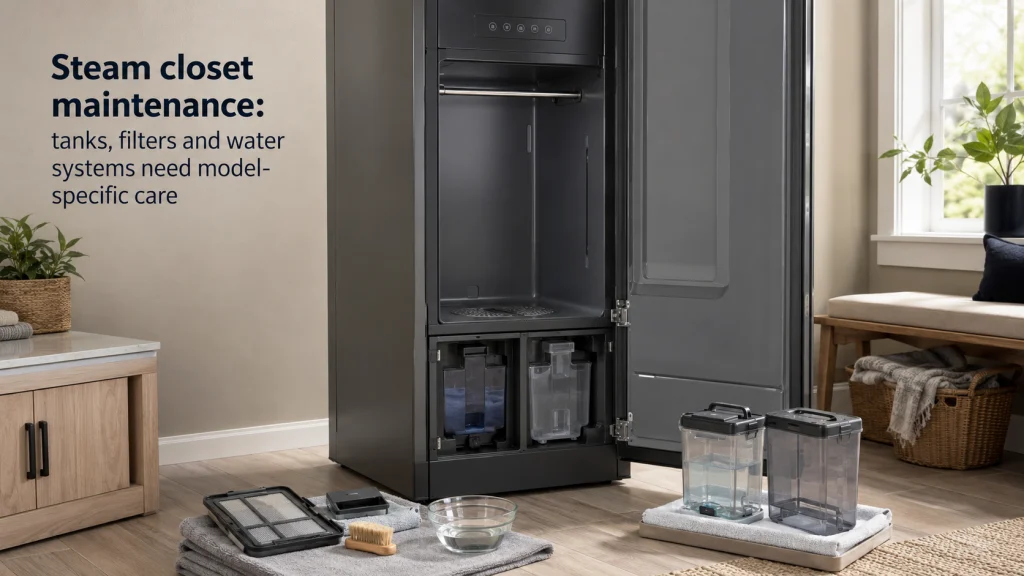
The maintenance shortcut most likely to go wrong is treating a steam closet like an oversized handheld steamer
Steam closet maintenance starts with one uncomfortable fact: the water path is not automatically yours to flush just because the appliance makes steam. A handheld steamer may have a simple reservoir, while a garment-care cabinet can combine removable tanks, pumps, filters, sensors, and drying hardware. If you are asking how to clean a steam closet, the safest first move is to identify what the manual calls owner maintenance before adding any cleaner. Pouring a familiar household acid into an unfamiliar water system is not a shortcut when the exact model never authorizes it.
That distinction matters because current manufacturer guidance is not uniform. Samsung documents a dedicated descaling function for AirDresser models that display the relevant prompt, while GE tells owners of its Steam Closet to use clean tap water in the supply tank and directs routine tank cleaning toward a brush and clean water. LG separately documents tank cleaning and filter care for Styler units, with model guidance that can differ from what another brand allows. The practical lesson is to separate removable-part cleaning from anything that sends a chemical through the appliance itself.

The Holikme Bottle Brush Cleaning Set includes long-handle brushes for narrow bottles, sports bottles, straws, tubes, and small spouts. Its 16-inch bottle brush reaches deep containers, while the sponge and firmer-bristle brushes cover different bottle shapes and cleaning needs. The smaller straw and spout brushes handle narrow openings and other areas that a standard bottle brush cannot easily reach.
Check On AmazonIf you click this link and buy, we earn a commission at no additional cost to you.
Find the exact model manual and maintenance section before adding water or cleaner
Start with the model number on the appliance, then open the matching owner manual or manufacturer support page rather than a generic steam-care article. The model controls permitted water, washable filters, fragrance parts, and any automated cleaning or descaling function. Two cabinets that look nearly identical from the outside can still require different maintenance. This is why a model name by itself is not enough when a series contains multiple revisions or configurations.
Use the manual to make a short owner-accessible map before you clean anything. The map should identify removable tanks, filters, trays, scent parts, wipeable surfaces, and documented self-care cycles, while leaving hidden pumps, tubing, electrical compartments, and sealed panels out of the owner task list. For broader use questions, keep maintenance separate from how to use a steam closet, because normal loading and cycle selection are different jobs. If a task is reserved for service, that boundary matters more than whether the part looks easy to reach.
| Area to check | Typical owner-level action | What must be verified first |
|---|---|---|
| Refill or supply tank | Remove, empty, brush or wipe, rinse, and reinstall only as directed | Approved water and approved cleaning method |
| Drain tank or tray | Empty and clean accessible surfaces | How the tank is removed and whether any cleaner is permitted |
| Lint or air filter | Brush, vacuum, or wash only when documentation allows it | Whether the filter is washable and how dry it must be before reinstallation |
| Aroma or scent component | Remove residue, replace the permitted sheet, and clean the holder as directed | Which sheet or cleaning method the exact model accepts |
| Interior and door surfaces | Wipe accessible surfaces without direct spraying | Allowed cloth, cleaner, and drying instructions |
| Internal water system | Use only a documented self-care or descaling function | Whether the exact model provides that owner function |
This map is not a substitute for the manual; it is a way to keep the manual’s boundaries visible while you work. Once the owner-accessible parts are clear, the rest of steam closet cleaning becomes much less likely to drift into improvised repair.

This compact LED flashlight is 4.2 inches long and produces about 140 lumens at full brightness. Its zoomable head adjusts between a wider and narrower beam, and three AAA batteries are included. The small size makes it practical for reading model labels or serial information in dim utility spaces before opening the correct manual.
Check On AmazonIf you click this link and buy, we earn a commission at no additional cost to you.
Power down and cool the cabinet before maintenance as the manual requires
Water, steam, warm surfaces, and household electricity are a poor combination for improvisation. Before wiping the cabinet or removing washable parts, follow the shutdown instructions and let hot or damp areas settle as directed. GE’s cleaning guidance, for example, tells owners to unplug the Steam Closet before cleaning and warns against spraying water directly on the product. That is a useful reminder that an exterior panel can look harmless while electrical components remain behind it.
Keep liquids on the cloth or removable part, not on the cabinet as a general rule unless the manual says otherwise. Do not use the maintenance session to investigate hidden wiring, remove service panels, probe a sensor, or reach into an inaccessible water path. If the unit has been moved for cleaning, recheck the placement requirements in steam closet installation before putting it back into service. Routine care should reduce ownership friction, not create a new fit, electrical, or stability problem.

This 24-pack contains 16 x 12-inch microfiber cleaning cloths designed to be soft, non-abrasive, absorbent, reusable, and washable. They can be used dry or with liquid for lint-free, streak-free cleaning. For a powered-down steam closet, the cloth format supports the article's instruction to keep permitted moisture on the cloth instead of spraying the cabinet directly.
Check On AmazonIf you click this link and buy, we earn a commission at no additional cost to you.
Empty and clean refill and drain tanks by model-approved methods
Removable tanks are often the most obvious maintenance points because standing water, residue, and odors show up there first. LG, GE, and Samsung all treat removable water tanks as owner-accessible, but their cleaning details differ. GE directs owners toward a wet cloth outside, a brush and clean water inside, and complete drying of the tank exterior before reinstallation. LG likewise documents brushing the inside of its Styler tanks and rinsing with clean water, while Samsung tells AirDresser owners to clean the tank interiors with a soft brush and let both tanks dry completely before reinstalling them.
The recurring mistake is carrying one brand’s chemical allowance into another brand’s water system. A cleaner mentioned for a removable tank on one support page does not automatically become an approved operating fluid, descaler, or disinfectant for another model. Keep supply and drain sides distinct, never reuse drain water when prohibited, and clean inlet or outlet areas only as documented. If a tank smells bad again soon after ordinary cleaning, treat that as a reason to recheck the manual and operating routine rather than escalating straight to a stronger chemical.
- Confirm the exact tank names and which side supplies versus collects water.
- Empty standing water before cleaning the removable tank.
- Use the brush, cloth, rinse method, and water type specified for the model.
- Clean filters only by the method documented for that exact filter, then dry them as required.
- Wipe accessible interior, gasket, glass, and drip areas without direct spraying or panel removal.
A simple tank routine catches a large share of normal ownership mess without touching the internal steam system. The important part is resisting the urge to make a removable tank procedure do the job of a descaling cycle the model may not even have.

The OXO bottle brush has a flexible neck, dual-action nylon bristles, and a non-slip grip. Its 12.5-inch length reaches into tall containers while the brush head handles interior walls and bottoms. It fits the article's brush-and-rinse approach for removable water tanks only when the exact steam-closet manual permits brushing.
Check On AmazonIf you click this link and buy, we earn a commission at no additional cost to you.
Clean lint, air, or inlet filters at the documented interval or condition
Filters affect airflow and drying, so a clogged filter can look like a larger performance problem. GE tells owners to keep the lint filter clean and allows brushing or vacuuming, with washing reserved for a very dirty filter followed by thorough drying. Samsung documents separate air and lint filters on AirDresser units and allows washing those filters with a soft brush and water before complete drying. LG’s Styler support similarly tells owners to clean the lint filter with a soft brush or vacuum and warns that reinstalling it wet can reduce performance.
Do not assume every filter is washable merely because another brand allows it. Some filters may be dry-cleaned only, while others have their own replacement or installation requirements. A filter that is torn, warped, missing, or still wet is not “clean enough” if the manufacturer says the appliance should not operate that way. Good steam closet care means checking the filter condition first, then choosing the least aggressive approved method that restores airflow.
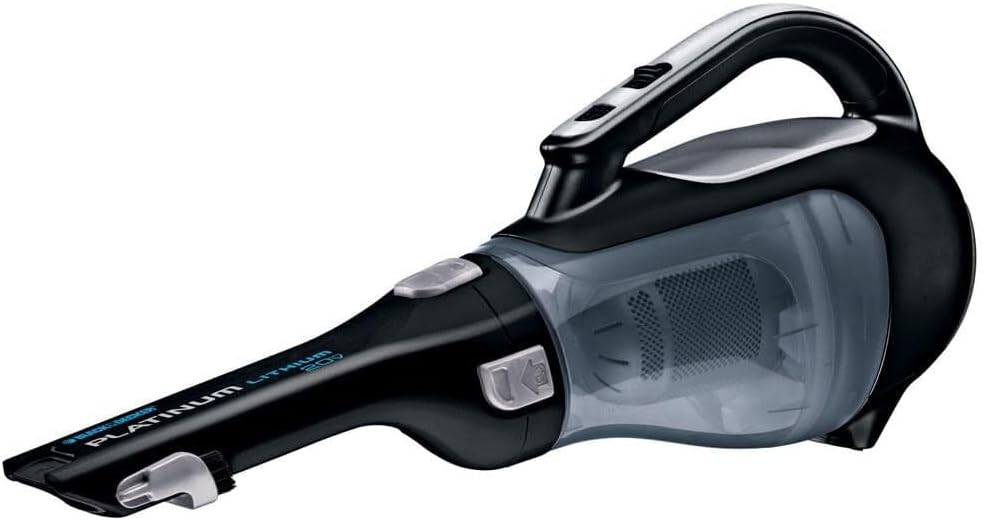
This cordless BLACK+DECKER hand vacuum uses a 20V MAX lithium-ion battery and includes an extendible crevice tool and flip-up brush. Its rotating slim nozzle helps reach narrow areas while the translucent dirt bowl shows collected debris. It can support dry debris removal around an owner-cleanable filter only where the appliance instructions specifically allow vacuuming.
Check On AmazonIf you click this link and buy, we earn a commission at no additional cost to you.
Clean aroma filters or scent-sheet holders only as the manufacturer permits
Fragrance parts look simple, but they still sit inside a warm, humid appliance. GE documents an aroma filter that accepts a dryer fabric softener sheet and provides a specific cleaning method for the holder. Samsung’s AirDresser guidance distinguishes its Fresh Finish filter and advises using the dedicated type of dryer sheet for that component rather than treating every fabric-softener sheet as interchangeable. LG also provides Styler aroma-filter instructions, reinforcing that the holder is a defined component rather than a generic scent tray.
If the scent holder is sticky or musty, clean only the removable piece intended for owner care. Do not drip fragrance oil into the cabinet, spray perfume into vents, or add scented liquid to a supply tank unless the exact manufacturer explicitly authorizes that use. The fragrance system is separate from the steam water path even when both exist in the same cabinet. Keeping those systems separate avoids turning an odor problem into residue on filters, sensors, clothing, or internal water components.

The OXO Deep Clean Brush Set includes a large brush and a smaller detail brush with a wiper blade. Durable nylon bristles reach tight spaces, and the grips are designed to be comfortable and non-slip. The smaller brush is a practical match for removable scent-sheet holders and similar crevices that the manufacturer identifies as owner-cleanable.
Check On AmazonIf you click this link and buy, we earn a commission at no additional cost to you.
Wipe interior walls, door glass, gaskets, and drip areas without flooding electrical sections
Some interior moisture is normal, but residue, lint, fingerprints, and drips should not build up inside the cabinet. Use a soft cloth and the approved surface-cleaning method, paying attention to the door glass, accessible wall surfaces, gasket area, removable tray, and tank bay. GE specifically advises damp-cloth cleaning for interior and exterior surfaces and warns against direct water spray, harsh chemicals, abrasive cleaners, and solvents. Samsung likewise directs owners to wipe the exterior rather than spray water directly on the appliance.
The same restraint should carry into the interior. A gasket can be wiped without pulling it apart, and a drip area can be dried without removing a panel. If you see moisture where the manual does not describe owner access, do not chase it deeper into the cabinet with towels or tools. At that point, the maintenance question may be turning into the kind of symptom triage covered in steam closet troubleshooting.
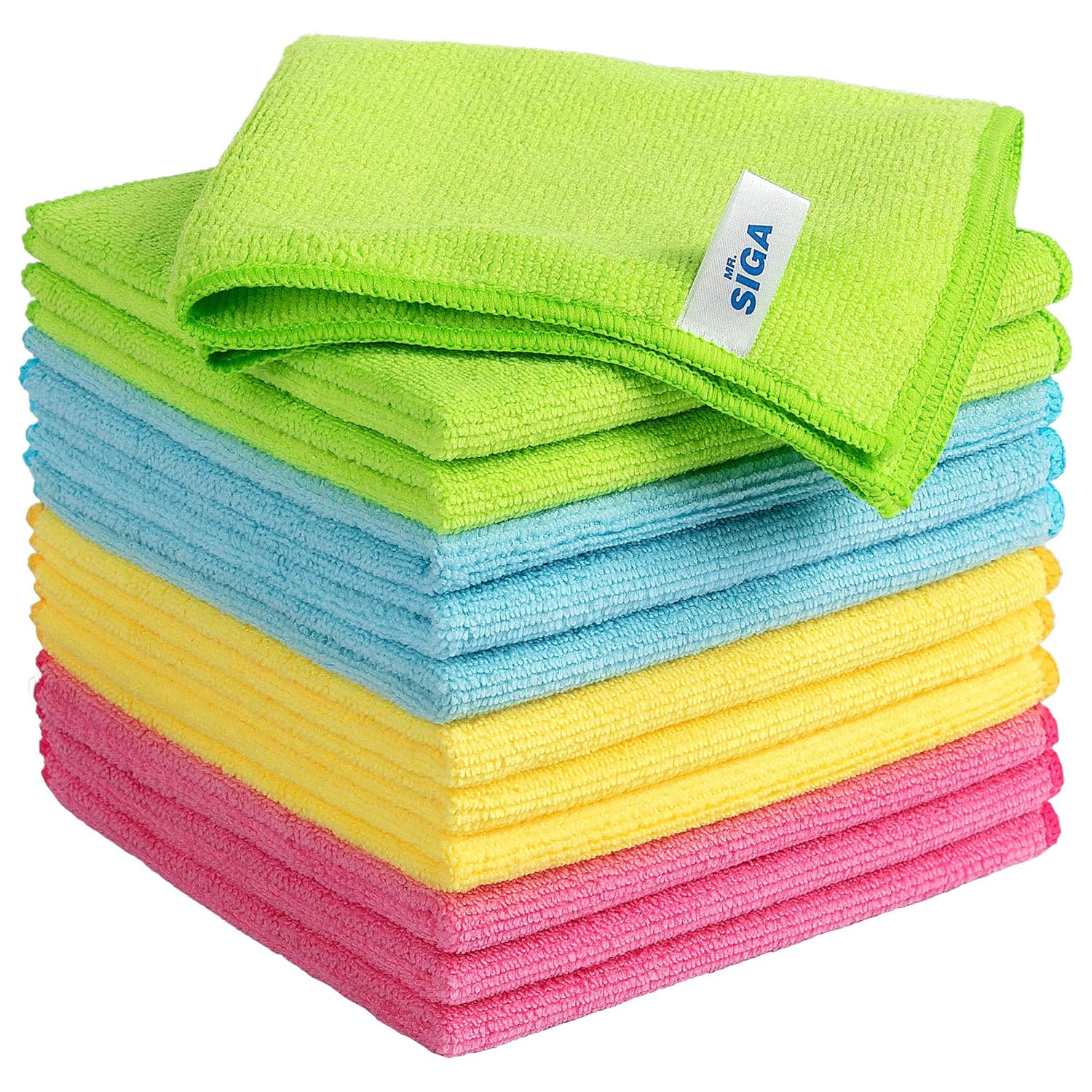
This MR.SIGA set contains 12 reusable microfiber cleaning cloths with an absorbent, high-density construction. The color-coded cloths are intended for household surfaces including glass, making it easy to reserve one cloth for appliance care. A soft cloth suits the article's wipe-only approach for accessible walls, door glass, gaskets, and drip areas without direct spraying.
Check On AmazonIf you click this link and buy, we earn a commission at no additional cost to you.
Dry washable filters and tanks completely where the manual requires it
Cleaning is only half the job when a damp part goes back into an airflow or water-management system. Samsung explicitly requires AirDresser air and lint filters, as well as cleaned water tanks, to be fully dry before they go back in. GE warns against operating its Steam Closet with a wet lint or aroma filter and also requires cleaned tank surfaces to be dry as directed. LG also warns that a wet lint filter can hurt Styler performance.
That makes drying a functional maintenance step, not cosmetic fussiness. Do not reinstall a washable filter just because it stopped dripping, and do not add heat unless the care instructions allow it. The safest method is the one the manufacturer describes, including shaded air drying when specified. Once the part is dry, reinstall it in the correct orientation and confirm covers, grills, and tank seats are fully engaged before the next cycle.

This S&T drying mat measures 18 x 24 inches and uses absorbent microfiber for items placed on a counter. The XL pad is machine washable and provides a broad surface for air-drying removable parts. It supports the article's complete-drying step without adding heat that a steam-closet manual may not authorize.
Check On AmazonIf you click this link and buy, we earn a commission at no additional cost to you.
Separate routine tank cleaning from anti-scale or descaling functions
Scale control is where generic advice becomes especially risky. Samsung documents a dedicated AirDresser descaling cycle with a specified liquid descaling agent, while Self Clean is a separate interior-care function rather than a substitute for scale removal. GE’s Steam Closet cleaning guidance, by contrast, focuses owner tank care on clean water and does not turn routine cleaning into an invitation to run vinegar or another household acid through the water system. Those are materially different maintenance designs.
Do not translate “vinegar works in some steam appliances” into “vinegar belongs in this steam closet.” Treat citric acid, bleach, disinfectant tablets, descaler, or other chemicals as unapproved unless the appliance documentation assigns them to that task. A substance allowed for a removable tank may still be prohibited as supply water. A descaling agent may also be limited to a dedicated guided cycle. The appliance instructions decide which path, if any, is legitimate.
Choose a familiar household cleaner first, then look for a way to flush it through the cabinet.
Identify whether the exact model has a documented tank-cleaning or descaling procedure, then use only the substance and path the manufacturer assigns to that procedure.
This one distinction prevents many maintenance shortcuts from becoming chemical compatibility guesses. If the manual does not authorize an internal flush, routine owner cleaning should stop at the parts and cycles it actually names.

DeLonghi EcoDecalk is a 16.9-ounce liquid descaling solution made for coffee and espresso machines, with five uses listed for the bottle. Samsung AirDresser guidance for the United States says its documented descaling cycle can use a liquid descaling agent meant for coffee makers. Use this product type only when the exact steam-closet model explicitly calls for that descaling procedure and agent category.
Check On AmazonIf you click this link and buy, we earn a commission at no additional cost to you.
Use manufacturer cleaning or self-care cycles only when the exact model provides them
A built-in cleaning cycle lets the manufacturer control what happens inside a system the owner cannot see. Samsung’s AirDresser Self Clean function is a clear example: it is intended for the interior, requires the cabinet to be empty, and is distinct from its dedicated descaling routine. That separation matters because a self-care label does not mean the cycle cleans every filter, tank, scent holder, or scale-prone component. Removable parts still need their own documented care.
Do not invent a self-clean routine for a cabinet that does not list one, and do not substitute a garment cycle because it happens to use steam or heat. The cycle name, prerequisites, water requirement, and follow-up steps should come from the listed instructions. If the cabinet offers app-based maintenance prompts, treat them as a reminder to check the matching care instructions rather than as permission to experiment. A guided function is helpful only when it is actually part of the appliance you own.
Connect persistent dampness or poor drying to loading, filter, and support checks
Reduced drying performance does not automatically prove scale, a failing heat pump, or an internal steam problem. Start with owner checks tied to airflow and moisture: filters, tanks, door closure, visible gasket condition, and loading that may block circulation. GE’s troubleshooting guidance, for example, points owners toward a clogged lint filter, damaged door gasket, or items caught in the door when clothes remain wet. Those checks are more defensible than diagnosing an inaccessible refrigeration or heating fault from one damp load.
Repeated interior dampness also deserves context. A cabinet can hold warmth and moisture after a steam cycle, while persistent pooling, leaking, or rapidly returning odor after approved routine care suggests more than ordinary post-cycle humidity. Review loading and care practices in the main steam closet overview before assuming a hardware failure. If routine checks do not explain the symptom, move from maintenance to manufacturer support rather than deeper disassembly.

The TempPro TP50 displays indoor temperature and humidity with a DRY, COMFORT, or WET indicator. It records high and low readings, refreshes data every 10 seconds, and can sit on a tabletop or attach magnetically. It can document room humidity trends around a steam closet while the article's filter, tank, loading, and support checks remain the primary appliance troubleshooting steps.
Check On AmazonIf you click this link and buy, we earn a commission at no additional cost to you.
Stop maintenance when the problem moves beyond owner care
Owner maintenance stops when symptoms suggest electrical damage, uncontrolled water, or a fault outside the owner-care instructions. A burning or electrical odor, smoke, sparking, overheating, a damaged power cord, water reaching electrical areas, or a persistent leak is not a cue to keep cleaning until the problem disappears. Error codes that the manufacturer identifies as system faults also belong on the support side of the line. The same is true when the only way to reach suspected scale or debris is to open a sealed panel or disconnect internal tubing.
When you stop, leave the cabinet off and use the official support path rather than repeatedly resetting or running cycles through an unresolved fault. Document the model, visible symptom, displayed code, approved cleaning already completed, and whether the issue returns with an empty cabinet. That gives support a clearer starting point without adding undocumented intervention. The wider garment care products section can help with equipment choices, but fault repair should remain model-specific and service-led.
Warning: Stop owner maintenance for a damaged cord, smoke, sparks, burning or electrical odor, overheating, a persistent leak, water entering electrical areas, repeated system error codes, uncontrolled operation, or any task that requires opening a service panel. Use the manufacturer’s support or qualified service path instead of internal disassembly or live electrical checks.
The most useful maintenance skill here is knowing when not to continue. A clean tank or filter is an owner task; a hidden leak, electrical fault, or inaccessible water-system problem is not.
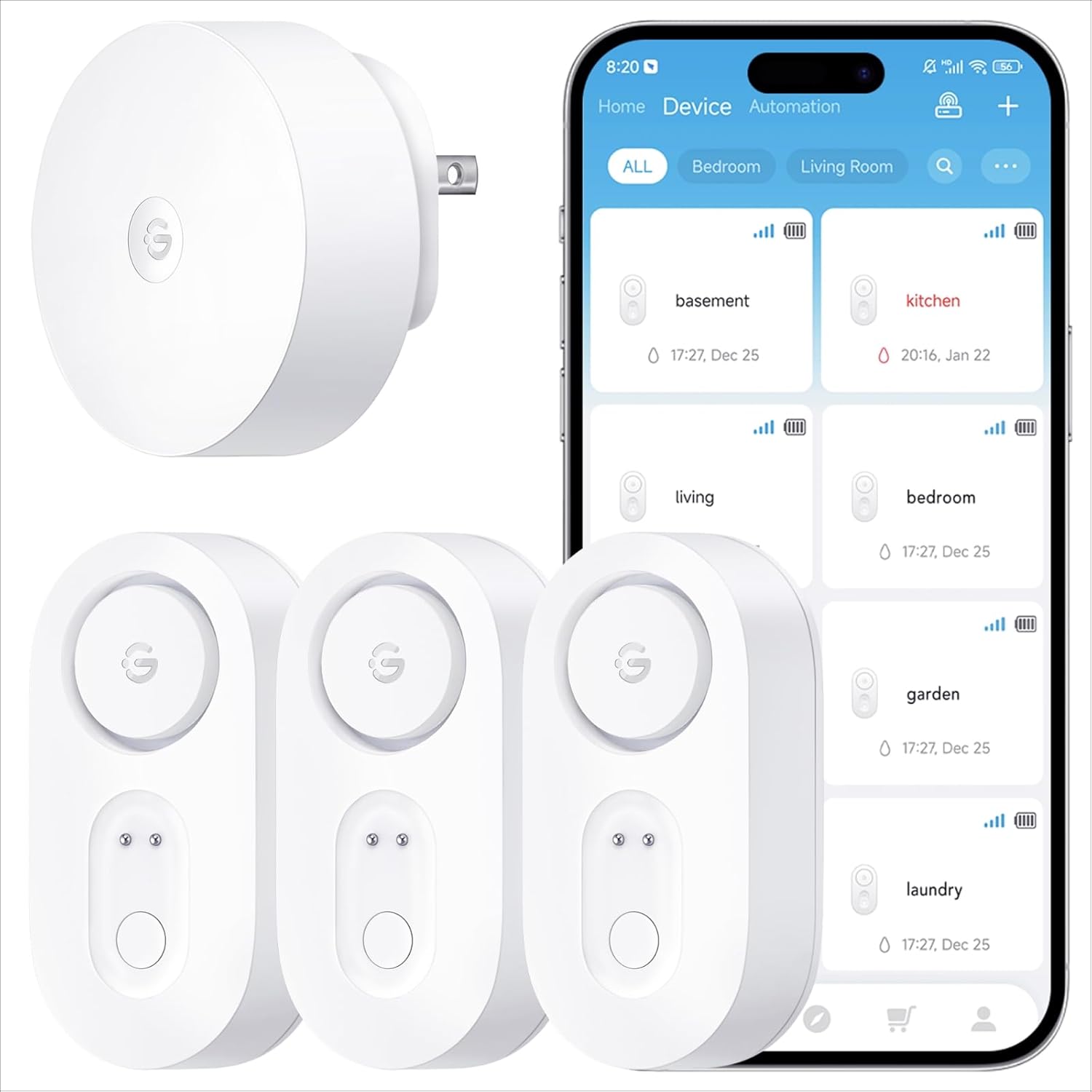
This GoveeLife kit includes three Wi-Fi-connected leak sensors with app, email, and audible alerts. The system supports up to 1804 feet of Sub-1G connectivity and offers a four-level alarm with a maximum of 105 decibels. It can flag water appearing around the appliance area, but a persistent leak or water near electrical components should still trigger the stop-and-support response described in the article.
Check On AmazonIf you click this link and buy, we earn a commission at no additional cost to you.
Build a model-specific maintenance record rather than a universal monthly schedule
Fixed schedules sound tidy, but they can be misleading when brands define maintenance around different conditions, prompts, loads, filter states, or owner actions. Instead of copying one universal calendar, record what your exact manual asks you to check and what condition triggers the work. Useful entries include tank care, filter service, scent-holder care, self-care cycles, descaling prompts, unusual odors, dampness, and support contacts. The record becomes a way to notice patterns without pretending every steam closet ages or clogs at the same rate.
Keep the record practical enough that you will actually use it. Note the task, part, approved method, drying requirement, and any performance change without turning routine care into a laboratory log. If the care guidance changes, update the method rather than preserving an old internet recipe because it is familiar. Steam closet cleaning works best when the maintenance history follows the appliance you own, not a generic schedule built around someone else’s model.

This Oxford pack includes six 1-subject spiral notebooks, each measuring 8 x 10.5 inches with college-ruled paper. Each notebook has 70 sheets, and the assorted cover colors can separate different records or appliances. One notebook can hold model numbers, approved methods, drying requirements, service dates, and recurring symptoms in the model-specific log the article recommends.
Check On AmazonIf you click this link and buy, we earn a commission at no additional cost to you.
Final Thoughts: clean only the parts and water path the manufacturer actually gives the owner
The safest maintenance plan is also the easiest one to defend: identify the model, clean removable tanks and filters by the approved method, wipe only accessible surfaces, dry parts as required, and use built-in care functions only when they are actually provided. That approach handles normal lint, standing water, residue, and interior moisture without turning a routine chore into an experiment with the internal steam system. It keeps chemical decisions tied to appliance instructions rather than household folklore. If a cleaner is not assigned to your task, leave it out.
When routine care no longer explains the symptom, change the question from “what else can I clean?” to “is this still owner maintenance?” Persistent leaking, electrical symptoms, system faults, and inaccessible scale belong with support or qualified service, not deeper disassembly. That boundary matters in an appliance combining water, heat, airflow, sensors, and household power. Clean what is intended for owner access. Stop where the owner instructions stop.

This Rubbermaid Commercial carry caddy is made from polyethylene and has a two-compartment design for organizing portable supplies. Its compact handled format can keep approved brushes, cloths, and other owner-care tools together between maintenance sessions. Keeping the kit separate from unapproved chemicals reinforces the article's final rule to clean only the parts and water path the manufacturer assigns to the owner.
Check On AmazonIf you click this link and buy, we earn a commission at no additional cost to you.
FAQs
💧 Can I put vinegar in a steam closet water tank?
Only if the exact model documentation explicitly allows vinegar for the exact cleaning or descaling task. Do not assume a vinegar routine from a handheld steamer applies to a garment-care cabinet.
🧽 What parts of a steam closet can I usually clean myself?
Owner-accessible parts commonly include removable supply and drain tanks, lint or air filters, scent holders, trays, and wipeable interior surfaces. Verify the exact manual because washing methods, cleaners, and drying requirements vary by model.
🌬️ Can I reinstall a filter while it is still damp?
Not when the manufacturer requires complete drying before reinstallation. Wet filters can affect airflow or performance, so follow the drying method for the exact filter in your model.
🧴 Is a self-clean cycle the same as descaling?
No. A model may separate interior self-care from scale removal, and some models may not offer an owner descaling function at all.
⚠️ When should I stop cleaning and call for service?
Stop for electrical odor, smoke, sparks, overheating, a damaged cord, persistent leaks, water near electrical areas, system fault codes, or any problem that requires opening a service panel. Use the manufacturer support path instead of internal disassembly.
References and Sources
- LG Styler water tank cleaning: Supports model-aware tank cleaning, brushing, rinsing, and removable-tank care.
- LG Styler lint filter cleaning: Supports soft-brush or vacuum cleaning and the requirement to dry a washed filter before reinstalling it.
- GE Steam Closet cleaning: Supports unplugging before cleaning, damp-cloth surface care, tank cleaning with clean water, and filter drying requirements.
- GE Steam Closet troubleshooting: Supports owner checks for filters, door sealing, wet garments, and service escalation for system faults.
- Samsung AirDresser cleaning and care: Supports separate Self Clean and descaling functions, water-tank care, filter cleaning, and complete drying before reinstallation.