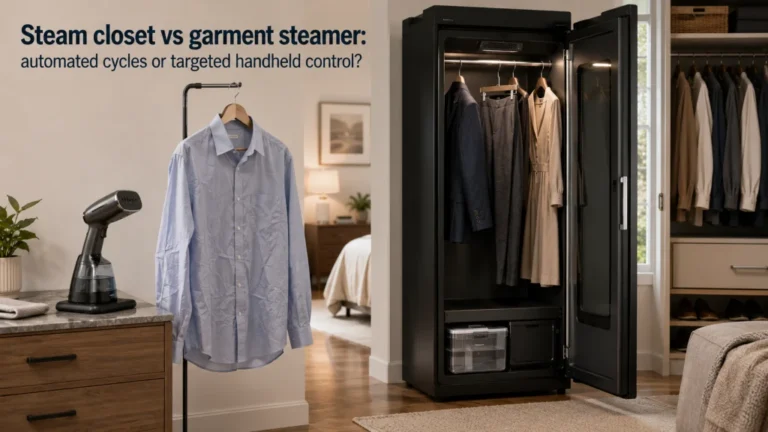
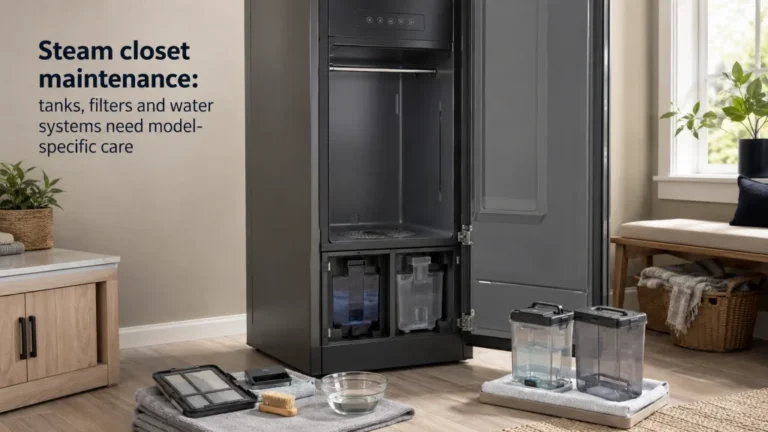
A steam closet is easiest to use when you sort the clothing problem before choosing a button. A basically clean garment that needs wrinkle or light-odor care, a damp item that needs drying, trousers that need crease care, and clothing with real soil do not belong in the same workflow. Loading, water preparation, accessories, and available functions vary across cabinets, so this article focuses on a shared operating sequence while leaving model-specific permissions to the appliance documentation. By the end, you should be able to decide whether the next step is refresh, drying, cleaning elsewhere, or stopping to verify.
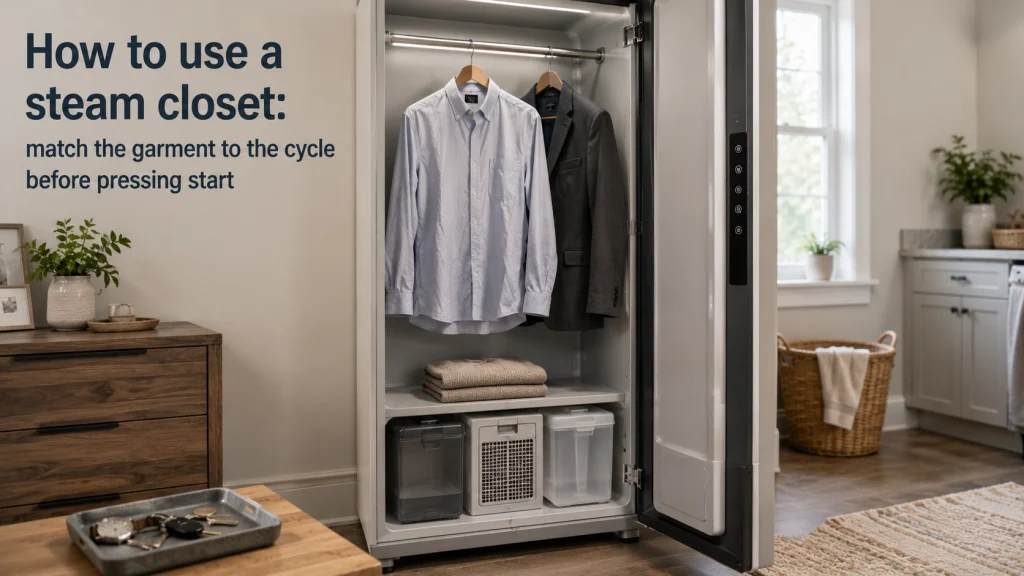
A cycle name is not permission to treat every garment the same way
Learning how to use a steam closet safely is mostly about matching the garment to an appropriate treatment, not memorizing cycle names. A setting labeled Refresh may suit one shirt yet be wrong for another item that cannot tolerate the same heat, steam, or movement. Special Care, Gentle Dry, and Sanitize describe functions, but they do not turn a control panel into a universal fabric chart. Decide what the garment needs first, then narrow the available options.
Cabinet-style garment care systems can combine steam, warm air, drying, moving hangers, shelves, and crease tools in different ways. Even basic preparation differs: Samsung specifies filtered water for its refill tank, while GE specifies clean tap water for its Steam Closet. That difference is enough to show why one brand’s operating routine should not be copied wholesale to another. General guidance can organize the decision, while the documentation for the cabinet in front of you supplies the operating details.

Three medium 12 x 16 inch polyester honeycomb mesh bags use zipper closures to hold delicate garments during machine washing and drying. Breathable mesh lets water and air move through the bag while helping keep smaller items together. They provide a practical route for suitable garments sent to a washer or dryer instead of forcing every item into a steam-closet cycle.
Check On AmazonIf you click this link and buy, we earn a commission at no additional cost to you.
Read the exact model cycle chart and garment care label first
Before building a routine, put the garment care label beside the cycle chart for your exact cabinet. The label tells you how the clothing may be treated, while the appliance documentation tells you what a particular function actually does and how the item must be loaded. Pay extra attention to delicate trims, coatings, leather components, wool, cashmere, embellishment, and mixed-material construction. A cycle is a candidate only when those two sets of instructions can coexist without contradiction.
| General workflow | Exact-model check |
|---|---|
| Check garment eligibility | Approved fabrics, trims, and care-label limits |
| Prepare water and drainage | Required water type and tank status |
| Load the garment | Hanger, shelf, spacing, and accessory rules |
| Select the care job | Cycle name, intensity, and material permission |
| Finish the run | Removal, ventilation, filter, and tank steps |
This two-source check is especially useful when comparing different garment care products. For the broader cabinet decision, the steam closet overview explains what this appliance type can and cannot reasonably take over. A steamer, dryer, iron, washer, and care cabinet may touch the same wardrobe while applying different combinations of heat, moisture, pressure, movement, and drying. Mixed construction is where labels become particularly important because the shell fabric, lining, trim, adhesive, and embellishment may not tolerate the same treatment. Once eligibility is settled, the next question is what job the garment actually needs.

The JMH handheld magnifier combines a large magnifying lens with 18 LEDs and three lighting modes for close reading. Its illuminated view can make small garment-care text and model documentation easier to inspect before choosing a treatment. It is a reading aid only, so the care label and exact appliance manual still determine what the garment and cabinet permit.
Check On AmazonIf you click this link and buy, we earn a commission at no additional cost to you.
Separate refresh, gentle drying, crease care, and actual cleaning jobs
A lightly worn dress shirt with mild wrinkles is a different problem from a rain-damp coat, and both differ from trousers that need a defined crease. Put those jobs in separate buckets before selecting a cycle. Refresh programs generally handle approved between-wear care, while gentle-dry functions address moisture without conventional tumbling. Crease accessories add another job that depends on correct placement rather than simply adding more steam.
Real soil is the boundary that keeps the cabinet from becoming a pretend washer. Grease, visible stains, heavy dirt, or a garment that truly needs laundering or professional care should move to the proper cleaning process. That is also why this appliance does not automatically replace professional garment care, a boundary covered in can a steam closet replace dry cleaning. Use the cabinet for approved care jobs, not as a shortcut around washing, stain removal, or dry cleaning. The desired outcome should stay narrower than the appliance menu.

This set includes two 75-liter freestanding laundry baskets with reinforced handles and a collapsible design. Separate baskets can help stage garments into different care jobs before a cabinet cycle is chosen. Use them for sorting only; the garment label and cabinet manual still decide whether an item belongs in refresh, drying, or cleaning elsewhere.
Check On AmazonIf you click this link and buy, we earn a commission at no additional cost to you.
Check pockets, fasteners, loose soil, and stains before loading
The few minutes before loading can matter more than another menu option. Empty pockets so paper, coins, keys, cosmetics, pens, or other objects are not heated or moved with the garment. Close zippers, buttons, hooks, and other fasteners when your manufacturer calls for it so the item stays secure. Brush away loose debris instead of expecting steam to turn visible dirt into a clean garment.
Inspect stains before the item goes inside, especially oily or heavily soiled areas. Heat and steam are not substitutes for stain removal, and a refresh cycle can leave the original cleaning problem untouched. If the item needs washing, spot treatment, or professional cleaning, handle that need before using a between-wear cycle. This check keeps the cabinet focused on work it is designed to do instead of repeating cycles for the wrong problem. It also keeps heat away from objects or residues that never belonged in the cycle.

SHOUT Active Enzyme is a 22-ounce prewash stain-remover spray for machine-washable whites and colored fabrics. The spray is designed to cling to and penetrate everyday stains before laundering. Use it only when the garment care instructions allow washing and stain treatment, not as an additive to the steam-closet water tank.
Check On AmazonIf you click this link and buy, we earn a commission at no additional cost to you.
Confirm the refill tank, drain tank, filters, and aroma parts your model requires
Tank preparation shows why model-specific instructions matter. Samsung tells AirDresser owners to use filtered water, GE describes clean tap water for its Steam Closet, and LG tells Styler owners to keep the supply tank adequately filled. Those directions should not be flattened into one universal water rule. Use the water type named in your manual, keep unapproved additives out of a water-only tank, and check the drain side before the cabinet refuses to run.
Airflow parts deserve the same pre-cycle glance because dust buildup can interfere with drying. Check the lint or air filter as directed, confirm the drain tank is seated correctly, and handle aroma sheets only if your cabinet actually uses them. An optional scent component is not automatically part of the care cycle itself. These small readiness checks reduce interruptions from a full tank, blocked filter, or incorrectly installed part. A ready cabinet is easier to operate consistently.
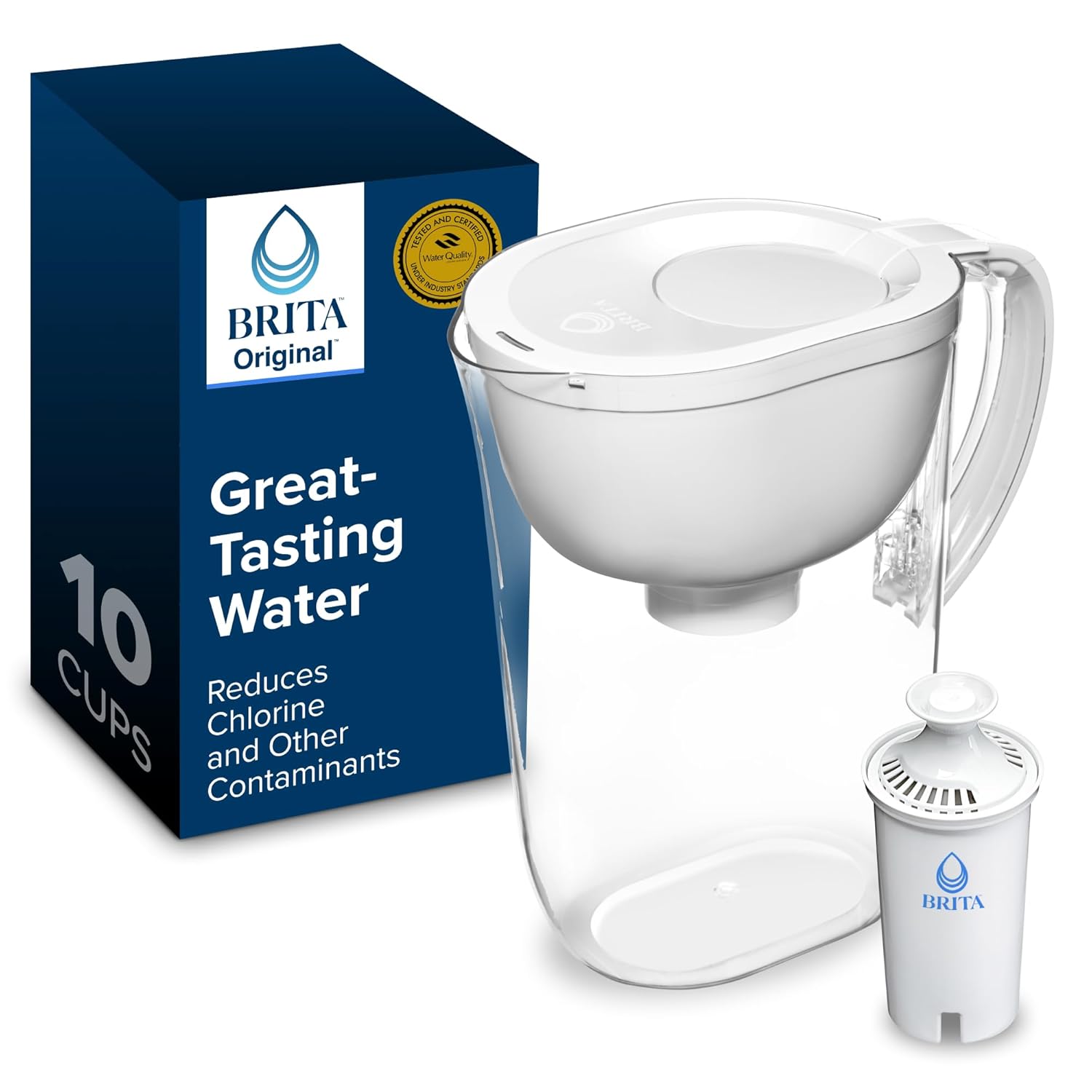
The Brita 10-cup pitcher includes one Standard filter and reduces chlorine taste and odor along with listed metals such as copper, mercury, zinc, and cadmium. It can supply filtered water only when a steam-closet manual specifically calls for filtered water. Do not substitute it for a manufacturer-specified tap-water rule or put filter additives in the cabinet tank.
Check On AmazonIf you click this link and buy, we earn a commission at no additional cost to you.
Load hangers, shelves, and crease accessories within the model’s spacing rules
Capacity is more than the number of garments that fit behind the door. Moving hangers need operating room, bulky items need airflow, and some knits belong on a shelf so they do not stretch. Crease accessories also need the garment aligned correctly. The usable limit is the load that preserves the spacing and placement required by your exact cycle.
Run the loading check before pressing Start instead of forcing every slot to earn its keep. A sweater that belongs folded should not hang simply because a hanger is empty. An ordinary hanger should not be used unless the manual permits its shape and fit. Accessories that look similar can still have model-specific placement or compatibility rules.
- Confirm each garment is approved for the selected cycle.
- Use the shelf for items the manual says should not hang.
- Keep garments clear of the door seal and interior air paths.
- Use only approved hanger types, crease tools, weights, or racks.
- Reduce the load if items are crowded, touching heavily, or preventing normal movement.
Function comes before maximum count. If one extra item blocks airflow, interferes with movement, or compromises the door seal, it does not represent useful capacity for that run. Two smaller loads can be more sensible than one crowded load with uneven results. Treat loading limits as part of garment care, not as a number to beat.
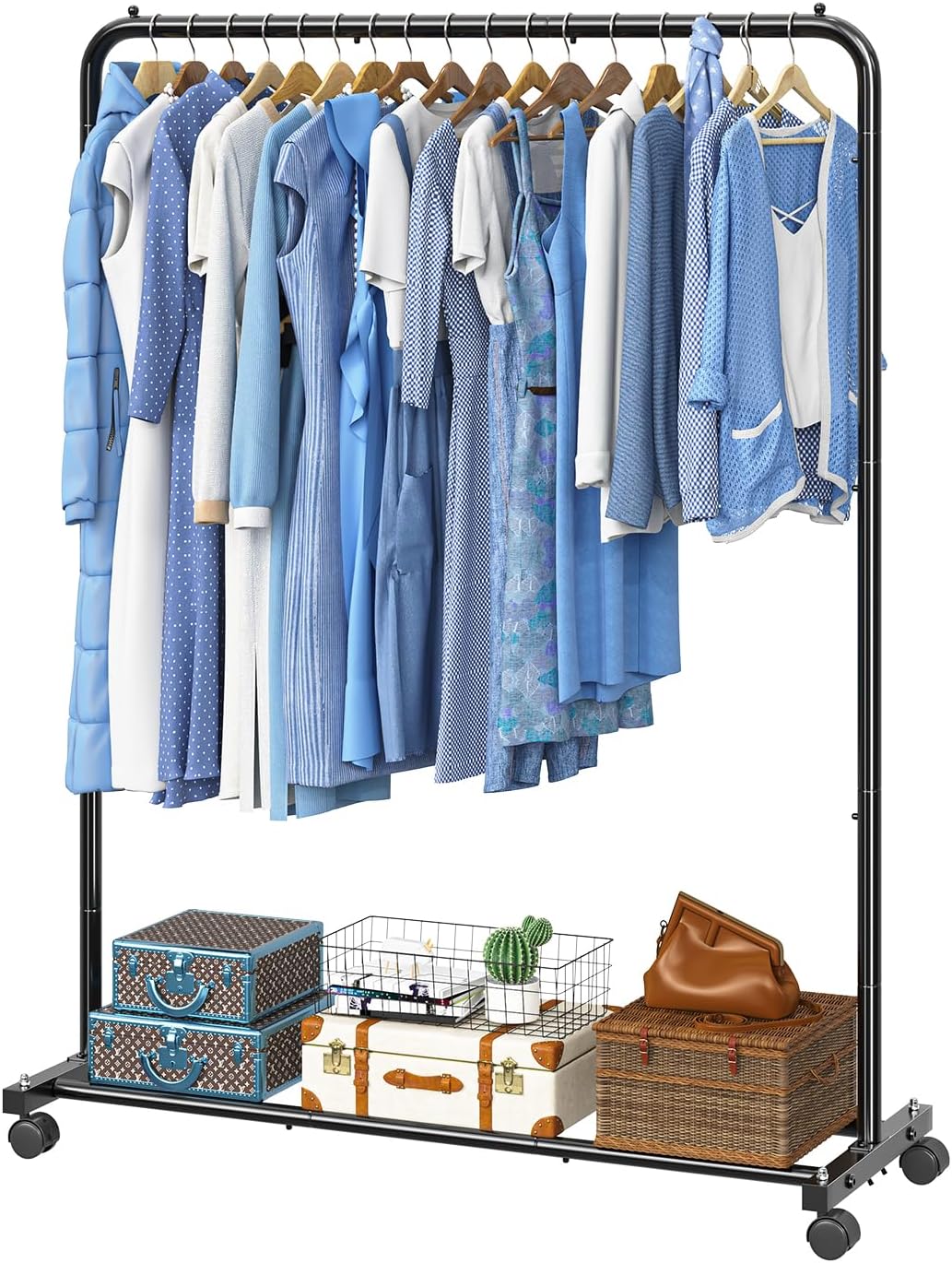
This metal garment rack has a bottom storage area, 360-degree wheels, and two lockable casters for movable clothing storage. It works as an outside-the-cabinet staging area so garments can be checked and spaced before loading instead of being piled together. Do not treat the rack or its hangers as cabinet-compatible accessories unless the appliance manual specifically permits them.
Check On AmazonIf you click this link and buy, we earn a commission at no additional cost to you.
Use refresh-type cycles for approved lightly worn garments
Refresh-type cycles make the most sense when a garment is already basically clean but needs between-wear care. Think of a shirt with light wrinkles, a jacket with a mild storage odor, or everyday clothing that does not need a full wash after brief wear. The goal is modest: improve presentation or freshness within the manufacturer’s limits. Do not make Refresh the automatic response to visible soil, oil, strong contamination, or a care label that restricts the treatment.
Cycle names and intensities vary, so a setting called Heavy on one cabinet does not prove equivalence to a similarly named option elsewhere. Choose the mildest approved setting that reasonably matches the garment condition, then judge the result after the cycle. If strong odor or soil remains, move the item to washing or professional care instead of stacking refresh cycles. The cabinet is useful when it reduces unnecessary cleaning on suitable garments, not when it is pushed beyond that role.

This three-pack of Scotch-Brite lint rollers provides 300 adhesive sheets for picking up lint, pet hair, and fuzz from clothing and other surfaces. It can handle removable surface debris on a basically clean garment before you decide whether a refresh cycle is still useful. It is a manual prep tool, not a replacement for washing when visible soil or stains require actual cleaning.
Check On AmazonIf you click this link and buy, we earn a commission at no additional cost to you.
Use special-care or fabric-specific cycles only when the manual approves the material
Special-care menus are where confident guessing becomes risky. A cabinet may offer options for suits, coats, wool, knits, activewear, denim, or other named groups, but the menu label alone cannot account for every blend, coating, adhesive, decorative trim, or construction method. Two garments sold under the same fabric name can react differently because the whole garment, not just the fiber on the tag, goes through the treatment. Treat a fabric-specific label as a narrowed option, not automatic permission.
Placement can also change with the material. Samsung, for example, directs owners to place certain wool and knit items on a shelf rather than hanging them, which helps protect shape while the cycle runs. That example is useful because it shows that cycle selection and loading method are connected, not because every cabinet uses the same shelf rule. When material, trim, or placement remains uncertain, stop and verify rather than choosing the closest-sounding menu option.

The OXO Folding Sweater Dryer uses a 26 x 26 inch mesh surface that supports garments while they dry flat. Its legs fold and the rack folds in half for compact storage, making it practical for sweaters and other delicates outside the cabinet. Use it when the garment needs a flat-drying route rather than assuming a fabric-named steam-closet cycle is automatically suitable.
Check On AmazonIf you click this link and buy, we earn a commission at no additional cost to you.
Use gentle-dry functions for approved damp or delicate items
A drying cycle solves a moisture problem, which is not the same job as refreshing a dry garment. GE describes Gentle Dry as warm-air drying without tumbling, while Samsung separates drying functions from its care cycles. Samsung also warns against using certain care or sanitize cycles on wet garments. Treat moisture level as its own decision point before you reach for a familiar refresh setting.
Do not assume every dry cycle uses steam, and do not assume every steam cycle is suitable for wet clothing. A dripping or heavily saturated item may fall outside the cabinet’s intended conditions even when a gentler damp item is acceptable. Shelf placement can also matter for knits or pieces that stretch under wet weight. The useful question is whether this cabinet has a documented drying path for this garment in its current moisture state.

This Amazon Basics foldable drying rack measures 14.5 inches deep by 29.5 inches wide by 41.8 inches high and is designed for indoor air drying. Its collapsible frame provides a non-tumble drying option for garments that should not go through an unapproved cabinet cycle. Follow the garment care label for air-drying suitability and keep the rack outside the steam closet.
Check On AmazonIf you click this link and buy, we earn a commission at no additional cost to you.
Treat sanitize-labeled cycles as high-heat, model-specific care
A sanitize label should make you more cautious, not less. These cycles can use higher temperatures, longer treatment, or more steam than a normal refresh routine, and delicate fabrics may have tighter restrictions. Do not make Sanitize the default merely because it sounds more thorough. Reserve it for supported loads where that specific function is actually called for.
Keep the claim boundary just as narrow. A manufacturer’s sanitize function is a documented appliance cycle, not a promise that every item becomes medically disinfected or suitable for every health concern. Load size, material, and the specific cycle can change what the manufacturer supports. For ordinary wrinkle or light-odor care, escalating to the hottest-sounding setting adds intensity without necessarily adding value. If the garment does not have a clear path into that cycle, choose a supported lower-intensity option or stop and verify.

Lysol Laundry Sanitizer Additive is a 90-ounce Crisp Linen laundry additive intended for use as part of a washing routine. It provides a separate laundry-path option when a garment needs treatment beyond ordinary wrinkle or light-odor refresh care. Use it only as its label and the garment instructions direct, and never pour it into a steam-closet water tank.
Check On AmazonIf you click this link and buy, we earn a commission at no additional cost to you.
Start the cycle only after the door is clear, then keep it closed during operation
Before starting, make sure no sleeve, belt, hanger, shelf item, or accessory is caught near the door. Confirm the selected cycle, close the door fully, and use the Start or Start/Pause control exactly as your model specifies. Once the cycle is running, keep the door closed unless the manual gives a specific stopping procedure. GE tells owners not to open its Steam Closet during operation, and LG cautions that hot vapor may be present when the door is opened.
Opening a steam cabinet can release hot moisture, disturb the programmed treatment, and create condensation around the appliance. If you need to stop a cycle, use the documented pause or stop control first and follow the manual before opening the door. Smoke, sparks, burning odor, damaged wiring, uncontrolled operation, or a serious leak is not a normal pause situation. Stop using the appliance and follow the manufacturer’s service guidance for those conditions.
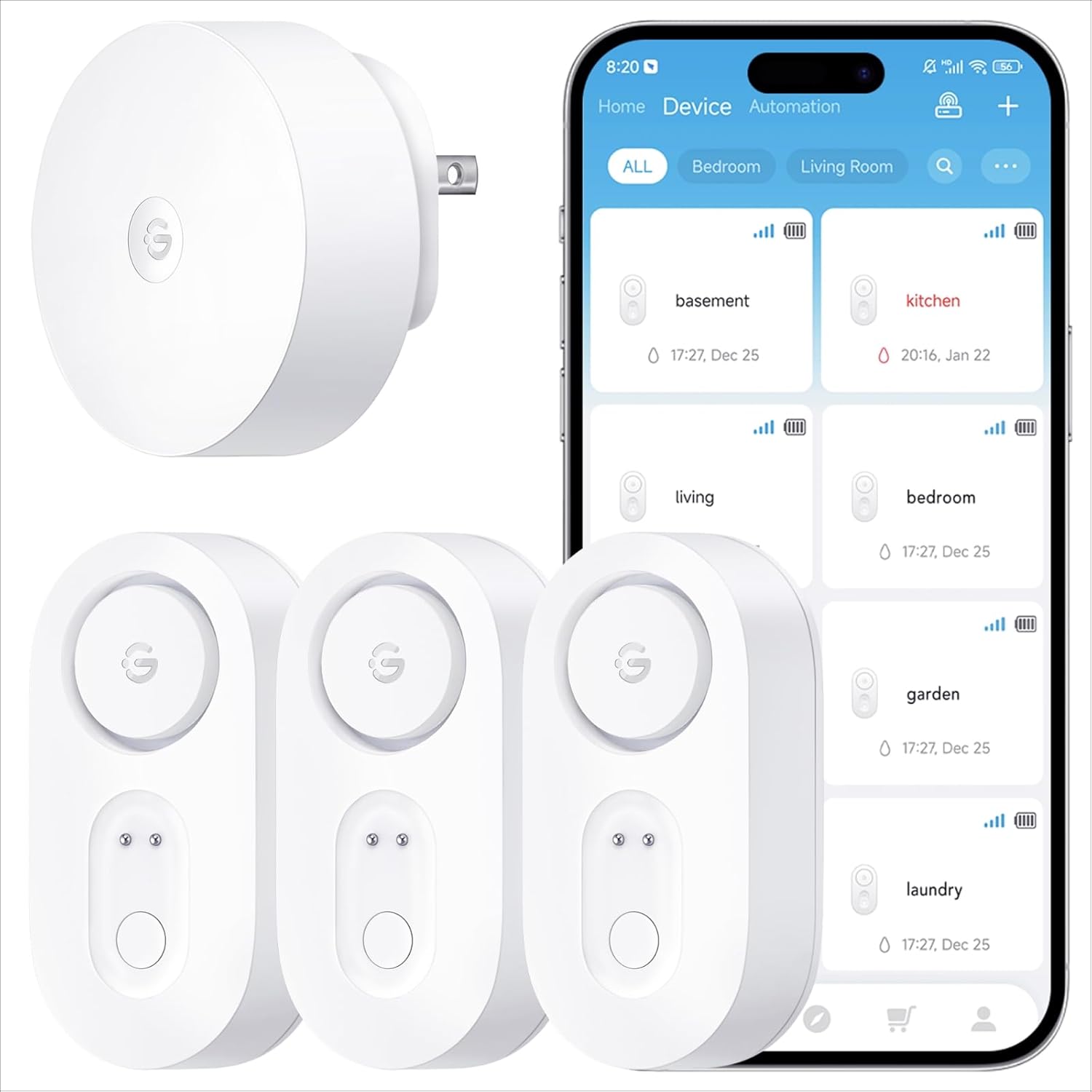
The GoveeLife three-pack includes a gateway and three water sensors with a 105 dB local alarm plus SMS, app, and email notifications. The system uses long-range Sub-1G connectivity and is rated for up to five years of sensor battery life. Positioned near an appliance area, it can provide an independent alert if water appears while the steam closet itself stays closed during normal operation.
Check On AmazonIf you click this link and buy, we earn a commission at no additional cost to you.
Remove items, inspect dryness, and reset the cabinet after the cycle
When the cycle ends, remove garments as directed instead of using the cabinet as permanent storage. Check whether the original job was solved: wrinkles reduced enough, light odor improved, garment dry enough, or crease positioned correctly. Some fabrics may retain a little moisture by design. If the result is incomplete, look for the cause before simply repeating the same cycle.
Then reset the parts that affect the next run. Depending on the model, that can mean checking a drain tank, refilling the supply tank, cleaning a filter, handling an aroma sheet, wiping moisture, or ventilating the cabinet. Do not turn those possibilities into one rigid routine for every brand. Use the checklist as a reminder, then follow your manual for the actual frequency and method.
- Remove garments and accessories that should not remain inside.
- Check the drain tank or water tray and empty it when the model requires.
- Refill the supply tank with the water type specified for your cabinet.
- Inspect lint and air filters for visible buildup.
- Ventilate or wipe the interior when the manufacturer recommends it.
A consistent reset makes changes easier to notice. A tank filling unusually fast, a filter collecting more debris, or moisture persisting after a familiar load can signal that normal operation is changing. Those patterns belong in maintenance or troubleshooting rather than being ignored. Ending one cycle cleanly also makes the next cycle easier to prepare correctly.
This pack includes twelve 12.5 x 12.5 inch microfiber cloths designed for reusable cleaning of liquid and grime. The towels can serve as dedicated cloths for wiping residual moisture when a steam-closet manufacturer recommends that post-cycle step. Keep them for external or manual-approved wiping rather than reaching into the cabinet during operation.
Check On AmazonIf you click this link and buy, we earn a commission at no additional cost to you.
Move persistent odor, scale, tank, and filter problems into maintenance
Normal post-cycle checks should not become a substitute for actual maintenance. If odors remain after appropriate loads, water tanks smell stale, filters clog repeatedly, scale warnings appear, or moisture persists despite correct loading, move from daily operation to the maintenance instructions for the exact model. Cleaning methods, descaling products, self-clean functions, and service intervals can differ enough that a generic recipe is not appropriate. The separate steam closet maintenance article owns that deeper routine.
The same boundary applies when the cabinet behaves abnormally rather than merely needing cleaning. Repeated error messages, leaks into electrical areas, damaged seals, smoke, burning odor, overheating, sparks, abnormal mechanical locking, or operation that no longer responds normally should not be treated with improvised owner repair. Use the exact manual and manufacturer support path, and move persistent operating symptoms to steam closet troubleshooting. A good owner workflow knows when a normal reset ends and when the appliance needs a different kind of attention.

This OXO set includes a larger cleaning brush and a smaller detail brush with durable scrubbing bristles and nonslip grips. The smaller brush is shaped for tight spaces, while the larger brush handles broader scrubbing jobs. Use either brush on steam-closet parts only when the exact maintenance instructions permit manual brushing; it is not a substitute for a model-specific descaling procedure.
Check On AmazonIf you click this link and buy, we earn a commission at no additional cost to you.
Build four outcomes before choosing the cycle
The easiest way to avoid button-first decisions is to work through four outcomes in a fixed order. Start by ruling out real cleaning needs, then decide whether moisture makes drying the primary job, and only then consider a refresh or crease-care function. An unclear material, trim, or treatment permission ends the process with a stop-and-verify outcome. This order keeps convenience from outranking a stricter garment need.
Work through the questions below from top to bottom. A yes answer sends the garment to an outcome; a no answer moves you to the next question. If two conditions apply, follow the stricter path first, such as cleaning a stained damp garment before deciding how it should be dried. That makes this a usable decision path instead of a list of four equally weighted options.
- Is the garment stained, oily, heavily soiled, or in need of actual cleaning? If yes, wash, spot-treat, or dry clean elsewhere as the garment instructions allow. If no, continue.
- Is moisture removal the main job? If yes, use a documented dry function only when the garment and its moisture state are suitable. Otherwise, stop and verify or use another approved drying method. If no, continue.
- Is the garment basically clean and only in need of light wrinkle, odor, crease, or between-wear care? If yes, choose the supported refresh, special-care, or crease function that fits that job, then prepare the required load and accessories. If no, continue.
- Is the material, trim, coating, setup, or treatment permission still unclear? If yes, stop and verify. If the intended job is outside the cabinet’s role, use the appropriate garment-care method elsewhere.
This sequence also prevents overusing premium or high-heat cycles. A modest between-wear problem does not become a better candidate for a more aggressive setting simply because that setting sounds stronger. Real soil exits the cabinet workflow, moisture moves into the drying branch, and uncertainty stops the run. The useful outcome is the one that solves the actual garment problem with the least unnecessary treatment.

The ROMOON sorter uses four removable bags on a rolling frame with lockable wheels and a total listed capacity of 180 liters. Four compartments can keep cleaning, drying, refresh, and stop-and-verify garments separated while you work through the article's decision path. The sorter is for staging outside the appliance, so each garment still needs its own care-label and cabinet-permission check.
Check On AmazonIf you click this link and buy, we earn a commission at no additional cost to you.
Final thoughts: choose the garment job and permission before the cycle name
A reliable steam-closet routine starts by naming the job: refresh, dry, crease care, real cleaning, or verify before proceeding. Once that choice is clear, prepare the cabinet, load the garment in the right position, select the matching supported function, and let the run finish normally. This keeps the control panel in its proper role as the last part of the decision rather than the first. It also makes it easier to notice when the cabinet is simply the wrong tool for the clothing problem.
After the cycle, inspect the result and reset the parts that affect the next load. Persistent soil belongs in proper cleaning, while recurring tank, filter, odor, moisture, or operating problems belong in maintenance or troubleshooting. If the appliance itself is not yet correctly positioned or set up, resolve steam closet installation before treating operation as the next step. A useful routine is one you can repeat without forcing every garment through the same treatment.

The Conair Turbo ExtremeSteam handheld garment steamer uses 1875 watts, a 7.3-ounce water tank, and a 40-second heat-up. It includes five steam settings and a three-in-one attachment for different fabric-care tasks. It provides a separate wrinkle-care tool when a steam closet is not the right treatment path, subject to the garment and steamer instructions.
Check On AmazonIf you click this link and buy, we earn a commission at no additional cost to you.
FAQs
Most steam-closet questions come down to what the garment needs, how wet or soiled it is, and what the cabinet can do. The answers below keep those choices separate. Use them to resolve the immediate decision, not to build another cycle chart. Unfamiliar garments or functions still deserve verification.
Water, loading, and accessories also vary across cabinets. A full drain tank, crowded load, unsuitable hanger, or wrong water type can interrupt an otherwise simple run. Strong soil or abnormal operation changes the problem. In those cases, move to cleaning, maintenance, or troubleshooting instead of repeating the same cycle.
👔 Can I put any dry-clean-only garment in a steam closet?
No. Check both the garment care label and the exact cabinet cycle chart. Dry-clean-only wording does not automatically prove that a particular steam or heat cycle is safe.
💧 What kind of water should I put in a steam closet?
Use the water type specified by your exact manufacturer. Some cabinets call for filtered water while others specify clean tap water, so do not copy another brand’s rule.
🌧️ Can I put wet clothes in a steam closet?
Only when your model has a drying function that approves the garment and its moisture condition. Do not assume a refresh or sanitize cycle is intended for wet items.
🧴 Can a refresh cycle remove stains or grease?
Do not rely on it for real cleaning. Stained, oily, or heavily soiled garments should move to the cleaning method allowed by the care label.
🔥 Should I use the sanitize cycle for delicate clothing?
Only if the exact manual and garment care instructions approve it. Sanitize-labeled cycles can use more heat or steam than routine refresh care.
🚪 Can I open the door while the steam closet is running?
Follow the model’s stop or pause instructions and keep the door closed during normal operation. Opening it can release hot steam or air and can interfere with the cycle.
References and sources
These manufacturer pages support the article’s actionable claims about cycles, water, loading, door use, and post-cycle care. They do not replace the documentation for the cabinet in your home. Cycle names and garment permissions can vary even within one brand. Use the source that matches your appliance and narrow to its exact model.
GE, LG, and Samsung share a broad prepare, load, select, run, and reset workflow. Their water rules, accessories, and garment permissions can differ. That is why the article separates general operating logic from brand-specific instructions. Only sources used for those published claims are listed below.
- GE Profile Steam Closet support: verifies GE water-tank, loading, cycle, door, filter, and post-cycle guidance.
- LG Styler cycle support: verifies the general LG sequence for loading, checking the water tank, choosing a cycle, and removing items after completion.
- LG Styler setup and use: supports garment preparation, hanger placement, tank handling, filter checks, and post-cycle ventilation.
- Samsung AirDresser cycle support: verifies care-tag checks, filtered-water instructions, hanger and shelf placement, cycle selection, and post-cycle filter and water checks.
- Samsung garment-care troubleshooting: supports the boundary between light refresh care and garments that need washing, dry cleaning, or another treatment.