A heavy stand mixer is easiest to live with when storage matches use frequency and tolerated handling. Countertop storage minimizes retrieval, while hidden routes trade space, lifting and installation commitment. Start with the exact mixer’s weight, dimensions and operating movement, then compare the full path to ready-to-use position. The goal is easy use and return.
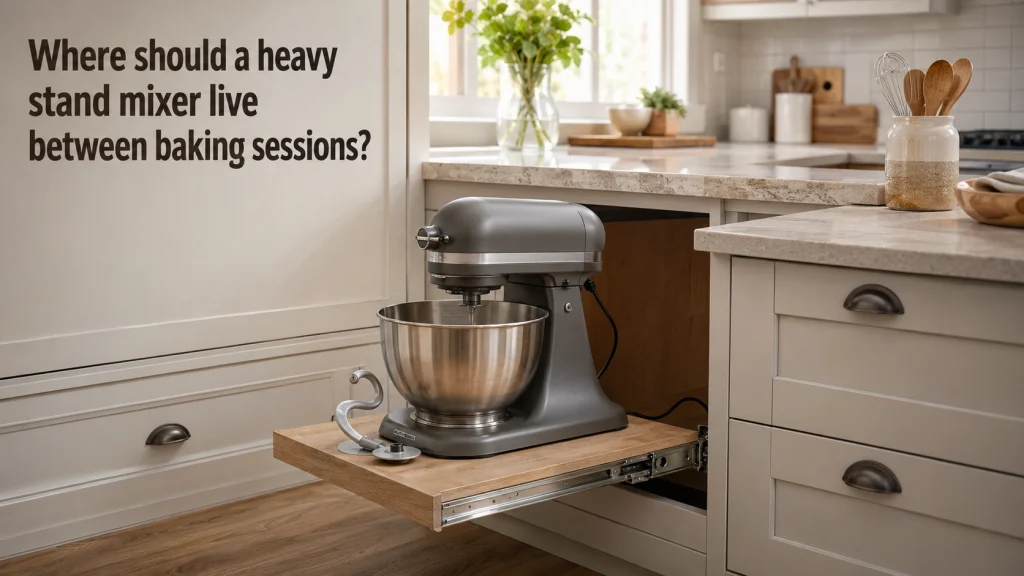
Count the steps from stored mixer to ready-to-use mixer
Imagine baking tonight and count every action between deciding to mix and the mixer being ready to use. Include each door, moved object, extended shelf, lift, carry, cord step and cleared landing surface before you compare storage photos. A mixer on the counter may need almost no retrieval, while one in a lower cabinet can add a full lift-and-carry step every time. That repeated path matters more than how tidy the mixer looks when stored.
The most useful stand mixer storage ideas therefore begin with frequency and handling. A household that mixes often can reasonably value permanent access more than one that uses the machine occasionally. The question of where to store a stand mixer also changes if the unit crosses an aisle, comes up from a low shelf, or moves to another surface before use. Once those steps are visible, the trade between open counter space and hidden storage becomes easier to judge.
| Check | Count | Why it matters |
|---|---|---|
| Access | Doors, drawers and moved items | Frequent use magnifies extra setup |
| Handling | Lifts, carries, slides and turns | Physical fit does not prove convenient access |
| Working position | Operating space and moving parts | Stored size does not prove working fit |
| Return path | Wiping, cord and tool storage | Friction continues after mixing |
Use the worksheet with the real kitchen rather than an idealized layout. If a route saves counter space but adds several repeated handling steps, count that cost before buying hardware.

A 165-foot green-beam laser distance measure designed for fast indoor and jobsite measurements. The bright green laser improves visibility compared with standard red beams, while the color display keeps readings easy to check. It supports straightforward distance measuring in a compact handheld format and provides a longer working range than the Bosch GLM100-23 it replaces.
Check On AmazonIf you click this link and buy, we earn a commission at no additional cost to you.
Keep mixer selection separate from the storage decision
This page assumes the household already owns a stand mixer or has narrowed the choice enough to know the exact model being stored. It does not decide which motor, capacity or mixer architecture performs better, nor does it judge dough performance or attachment capability. Those questions belong with the different types of mixers and the stand mixer buying decision. Here, mixer design matters only when it changes fit, retrieval or operating movement.
That boundary prevents a storage problem from quietly turning into a product-selection problem. A household should choose equipment for the work it needs to do, then make the storage route fit that known machine. If the mixer has not been purchased yet, measuring realistic storage zones before buying is useful, but smaller exterior dimensions should not be treated as the only reason to choose a model. Storage is one household constraint among several, not a substitute for the performance decision.

This dust cover is sized for KitchenAid 6-, 7-, and 8-quart bowl-lift mixers and includes a zippered accessory pocket. Its top handle makes the cover easier to remove while keeping small tools near the mixer. It supports storage planning after the exact mixer size is known rather than substituting for the mixer selection decision.
Check On AmazonIf you click this link and buy, we earn a commission at no additional cost to you.
Start with use frequency and tolerated handling
Frequency changes the value of almost every storage route. A mixer used often benefits more from a short access path because every door, transfer and lift repeats many times. A mixer used occasionally can justify a less convenient location if the saved counter or cabinet space matters more between uses. Stand mixer storage is therefore a recurring workflow, not just a one-time fit problem.
The second variable is how much handling the household actually wants. Some people are comfortable moving a heavy appliance from a lower shelf, while others do not want that step in the routine. Judge the path using the exact mixer weight, shelf height, aisle distance and landing surface. If a route already sounds tedious before installation, extra concealment will not make the mixer easier to use in a normal baking routine.
| Routine | Start with | Main trade-off |
|---|---|---|
| Frequent use | Countertop | Counter footprint |
| Occasional use | Lower cabinet or pullout | Handling and load rating |
| Concealed frequent use | Garage or pull-out shelf | Clearance and depth |
| No remodel | Cart or stand | Floor space and stability |
| Lifting is the main friction | Assisted lift | Cabinet volume and installation |
This table only narrows the field. Exact dimensions and documented ratings decide whether the route actually fits.

This set includes eight self-adhesive appliance sliders designed for countertop appliances such as stand mixers. The small rollers reduce drag when an appliance needs to move across a work surface. They are most useful when frequent handling, rather than vertical lifting, is the repeated friction in the storage route.
Check On AmazonIf you click this link and buy, we earn a commission at no additional cost to you.
Record the exact mixer before choosing storage
Do not plan a shelf, drawer, garage or lift around a generic mixer outline. Record the model, listed weight, closed width, depth and height, then note what moves during normal setup. KitchenAid, for example, states that its stand mixers can weigh about 20 to 30 pounds depending on model. Other brands and models can differ, so use the current manufacturer specification or manual.
Also record the parts that travel with the machine. A bowl, beater, whisk, dough hook and cord can turn a mixer-only footprint into a larger storage system. Measure the whole routine, not just the motor housing. Verify every shelf, slide or lift rating against the load it will actually carry.
- Exact model, listed weight and closed dimensions
- Movement needed to open the head, move the bowl and change tools
- Bowls and accessories that need nearby storage
- Cord path and intended plug location
- Documented rating for supporting hardware
If an opening, load rating or working position is unknown, treat the fit as unverified. A cabinet label or product photo is not enough evidence.
Weight and closed dimensions
Weight affects shelves, slides, carts and lift mechanisms as well as handling. Closed dimensions show whether the mixer occupies the storage zone, but not whether doors close or the bowl comes out. Measure the narrowest usable opening and real interior depth. If the support rating is unknown, do not infer it from appearance.
Tilt-head or bowl-lift movement as a storage-envelope issue
A tilt-head mixer needs room for the head to move, while a bowl-lift design changes access around the bowl and tools. Neither architecture is universally better for storage. The location must accommodate the exact model’s movement, especially if it may operate inside an enclosure. Performance comparisons belong outside this storage decision.
Bowl, attachment and cord storage that moves with the mixer
A route can look efficient until the bowl and tools live somewhere else. Retrieving accessories from several locations adds setup effort. KitchenAid advises keeping accessories off the beater shaft, which supports nearby storage instead. Keep the cord path simple without pinching it in moving hardware.

This 25-foot tape has measurements readable from either direction for left- or right-handed use. It gives a simple way to record mixer height, width, cabinet openings, and the landing surface before choosing storage. Keep the recorded numbers tied to the exact mixer and hardware documentation rather than a generic appliance outline.
Check On AmazonIf you click this link and buy, we earn a commission at no additional cost to you.
Route 1: leave the mixer on the counter when frequent use earns the footprint
Countertop storage is simple because storage and working position can be almost identical. It removes most lifting and cabinet access, so frequent users benefit every time the mixer is needed. KitchenAid lists countertop storage as a primary option and recommends placing the mixer near the prep area. The cost is permanent work-surface use while the machine is idle.
This route works only if the location leaves room for prep, bowl handling and the exact model’s movement. Do not judge fit with the mixer merely pushed under an upper cabinet, because opening the head or changing tools can require more space. Cleaning access and cord reach also matter. If moving the mixer is the main friction, spending counter space can be practical.
Trade-off: Counter storage spends work surface to buy the shortest retrieval path. Hidden storage reclaims the counter but adds movement or hardware.
Make that trade from real use rather than a preference for empty counters. Perfect concealment has little value if it discourages using the mixer.

This wood slider is sized for KitchenAid 4.5- to 5-quart tilt-head mixers. It lets a compatible mixer move forward on the counter without requiring a full lift. Confirm the mixer size and countertop clearance before treating the slider as part of a permanent storage setup.
Check On AmazonIf you click this link and buy, we earn a commission at no additional cost to you.
Route 2: use an existing lower cabinet or deep drawer when the handling path works
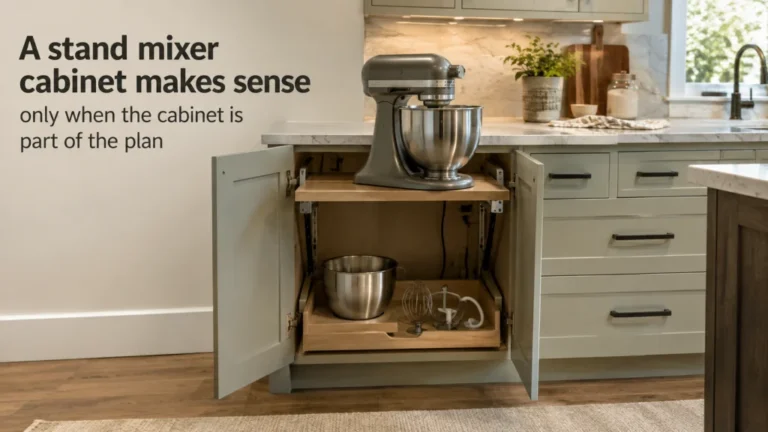
An existing lower cabinet is often the least expensive way to reclaim counter space because it uses storage the kitchen already has. KitchenAid includes a lower baking cabinet and pullout drawer among common storage routes, while also noting that a heavy appliance needs appropriate support and enough clearance when the pullout is extended. A fixed shelf and a supported pullout are not the same experience. The first usually requires reaching in and lifting; the second can bring the mixer closer before any transfer.
Check internal height, opening width, usable depth, bottom construction and slide rating before calling a drawer suitable. Then identify the stable counter where the mixer lands after removal, because the appliance still needs a safe destination. A lower cabinet makes sense when the household accepts the lifting or transfer and wants to avoid specialized hardware. If the drawer or shelf rating is not documented for the load, stop at that evidence boundary instead of relying on a vague “heavy-duty” label.

This two-tier steel pullout measures about 14.75 inches wide by 22 inches deep by 19 inches high and is rated for up to 100 pounds. Its full-extension ball-bearing design brings stored items forward from a base cabinet. Verify the cabinet opening and exact mixer footprint before loading a mixer onto the system.
Check On AmazonIf you click this link and buy, we earn a commission at no additional cost to you.
Route 3: use an appliance garage when concealment and counter-height access both matter
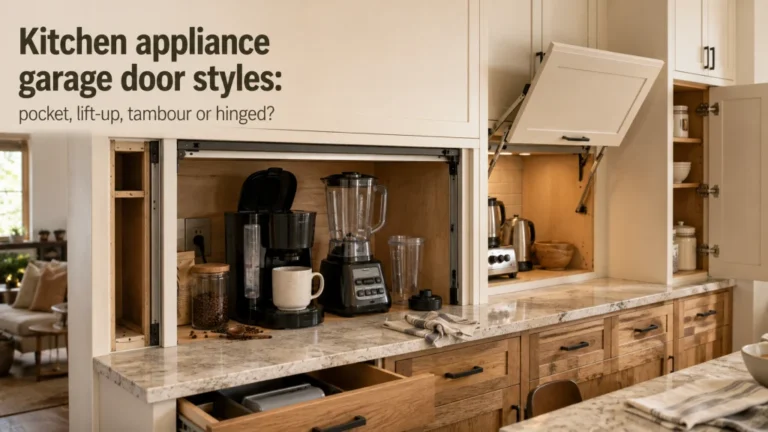
An appliance garage can hide a mixer without dropping it into a lower cabinet, which is useful when countertop-height access matters. The mixer still has to fit with the door open, the bowl accessible and the operating movement clear, so closed dimensions alone are not enough. Door travel, usable depth and nearby prep space can determine whether the mixer stays in place or must be pulled out for every batch. A garage that only works as a resting box has not removed much handling.
For full door-style and enclosure planning, use the site’s appliance garage planning. At routing level, this option is strongest when the household wants both concealment and short access, and is willing to dedicate counter depth or tall-cabinet volume to that goal. Cleaning also matters because flour and batter still need wipe-down access around the machine. If the mixer must be removed every time the enclosure is cleaned, the practical advantage is smaller than the closed cabinet suggests.

This eight-pack of stick-on cord organizers is made for countertop appliances including mixers. It keeps the appliance cord gathered instead of trailing across nearby storage space. Use it only on a stationary, undamaged cord path that does not pass through doors, slides, or other moving cabinet hardware.
Check On AmazonIf you click this link and buy, we earn a commission at no additional cost to you.
Route 4: use a freestanding cart or stand when built-in work is not justified
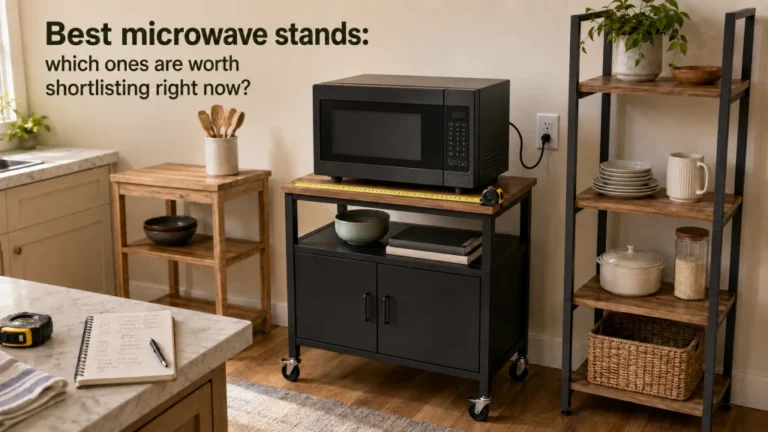
A freestanding support can solve a storage problem without committing a base cabinet to specialized hardware. It can work well in a rental, in a kitchen with full cabinets, or when the household wants to test a new location before remodeling. Check the support’s documented load, top dimensions, stability, wheel or foot behavior and the path it occupies when moved. A cart that feels easy to roll while empty may behave differently with a heavy mixer and accessories on it.
If the mixer will operate on the cart, verify that the furniture is intended to support that load in use and that the work surface is large and stable enough. If the cart is only for storage, count the transfer to the counter as part of the retrieval path. The site’s appliance stand and cart considerations cover the furniture side of this choice. This route buys flexibility at the cost of floor space, so it works only when the cart does not become a new obstacle in the aisle.

This stainless steel work table provides a 36-by-24-inch top and rolls on four casters, two with brakes. The top shelf is rated for 176 pounds, with a second 176-pound undershelf for storage. Its mobile format creates a freestanding mixer station when floor space and a clear rolling path are available.
Check On AmazonIf you click this link and buy, we earn a commission at no additional cost to you.
Route 5: use a horizontal pull-out shelf when simple forward access is enough
A horizontal pull-out shelf changes the access problem without raising the mixer to a different height. Instead of reaching into a deep cabinet or enclosure, the shelf brings the appliance forward, which can improve grip, visibility and working clearance. Some systems are designed to lock in the extended position and carry substantial loads; Blum documents that kind of pull-out work surface. That does not make every sliding shelf suitable for mixer storage or operation, so the exact hardware rating and intended use still control the decision.
This route is useful when depth is the real problem and vertical assistance is unnecessary. It may sit inside an appliance garage, pantry or base cabinet, but it does not remove lifting if the mixer still has to move to another counter. If the machine will operate on the extended shelf, verify that the system allows it and measure the aisle with the shelf fully open. A simple forward slide can be a better solution than a lift when the household already likes the storage height.

This two-tier pull-out organizer is 11.5 inches wide by 21 inches deep and supports up to 50 pounds. Its industrial-grade ball-bearing glide brings cabinet contents forward without requiring a deep reach. Confirm that the exact mixer dimensions and load fit the organizer before using it as part of the storage route.
Check On AmazonIf you click this link and buy, we earn a commission at no additional cost to you.
Route 6: use an assisted mixer lift when reducing repeated lifting is worth the cabinet trade
An assisted mixer lift stores the appliance in a base cabinet and uses spring or gas assistance to raise a platform toward counter height. The appeal is reduced manual lifting, but the mechanism still has to fit the cabinet, carry the exact load and move through a clear path. Knape & Vogt, for example, lists a 60-pound capacity for its appliance lift, which shows why hardware claims must be checked at the exact-system level. That number is not a universal rule for other lift mechanisms.
The trade is cabinet volume, aisle projection and installation commitment. Lift arms, platform travel and the mixer occupy space that could otherwise hold drawers or other equipment, and the platform extends into the room when raised. Do not improvise spring adjustment, reinforcement or mounting instructions from generic storage advice; follow the chosen hardware documentation and use qualified cabinet help when needed. For the full mechanism decision, continue to the site’s mixer lift planning.

A heavy-duty cabinet appliance lift designed for stand mixers and other bulky kitchen appliances. It uses a spring-assisted mechanism with soft-close dampening and a locking system to make raising and lowering stored appliances easier and more controlled. The lift mounts inside a full-height base cabinet and is intended to free countertop space while keeping heavier appliances accessible.
Check On AmazonIf you click this link and buy, we earn a commission at no additional cost to you.
Route 7: specify a dedicated mixer cabinet when remodeling around frequent use
A dedicated mixer cabinet makes the most sense when the kitchen is already being designed or remodeled and the mixer earns permanent base-cabinet space. The cabinet can be planned around the exact appliance, access hardware, accessory storage and nearby work surface instead of forcing a retrofit into an existing opening. That can create a cleaner retrieval path, but it also makes the largest commitment to one appliance category. Real use frequency should justify that commitment before cabinetry is built around it.
Plan with the current mixer dimensions while leaving reasonable flexibility for a future replacement rather than creating a skin-tight enclosure. The cabinet designer should verify opening size, hardware load, door interference and shelf or lift travel using the chosen components’ documentation. This article stops at routing level and does not provide cabinet construction or reinforcement instructions. For the complete built-in decision, use the site’s stand mixer cabinet planning.

This metal attachment holder provides four hook mounts for KitchenAid-compatible mixer tools with hanging holes. It can be installed with adhesive strips or screws to keep beaters, dough hooks, and whisks near a dedicated mixer cabinet. Confirm attachment compatibility and available cabinet clearance before mounting.
Check On AmazonIf you click this link and buy, we earn a commission at no additional cost to you.
Compare all seven routes on the costs that repeat in real use
Compare every route with the same criteria instead of judging each by its strongest selling point. Countertop storage spends work surface, lower cabinets may add lifting, and carts use floor area. Garages, pull-out shelves, lifts and dedicated cabinetry can shorten particular parts of the workflow but consume more specialized space. The useful question is which cost the household is most willing to repeat.
Measure drawers, shelves and lifts in their extended position because stored footprint and in-use footprint are often different. Include cleaning too, since in-place mixing still needs wipe-down access around the mixer. If cleanup forces the appliance to be relocated, the route saves less handling than it first appears. A route should work both stored and fully deployed before it counts as a fit.
| Route | Space spent | Handling | Projection | Use in place | Cleaning access | Commitment |
|---|---|---|---|---|---|---|
| Countertop | Counter | Minimal | Working zone | Usually straightforward if operating clearance is available | Usually open on several sides | Minimal |
| Lower cabinet | Base cabinet | Often lifting | Door or drawer | Usually requires transfer to a work surface | Cleaning normally happens after transfer | Low |
| Appliance garage | Counter or cabinet depth | Often low | Door or pullout | Possible only when the exact enclosure and mixer allow full operation | Depends on door position and side access | Moderate |
| Cart or stand | Floor | Varies | Circulation area | Possible when the support is stable and rated for the intended use | Often accessible, but location can constrain one side | Low |
| Pull-out shelf | Cabinet depth | Varies | Shelf | Only when the hardware is documented for the appliance load and use condition | Check access behind and beside the deployed shelf | Moderate |
| Assisted lift | Base cabinet | Reduced | Lift platform | System-specific and not proven by storage load rating alone | Depends on platform position and surrounding cabinetry | High |
| Dedicated cabinet | Dedicated cabinet | Varies | System-specific | Depends on the cabinet design and documented hardware limits | Must be planned into the working position | Highest |
The matrix shows the broad trade-offs, but a route still needs a simple elimination test. Start with the condition that creates the most friction in the household, then reject any route that fails fit, support or operating-clearance checks. This keeps a visually appealing option from surviving after the practical requirements have already ruled it out. The goal is not to force one universal winner, but to narrow the choices in a consistent order.
| If this is the main condition | Route to test first | Reject it when |
|---|---|---|
| The mixer is used often and counter space is acceptable | Countertop | Operating movement, prep space or cleaning access is blocked |
| Counter space matters more than retrieval speed | Existing lower cabinet or deep drawer | The lifting, carrying or support path is not acceptable |
| Concealment matters but counter-height access should remain | Appliance garage | The door, depth or operating envelope blocks real use |
| Built-in work is not justified | Freestanding cart or stand | The floor footprint, stability or circulation path does not work |
| Forward access is enough without vertical assistance | Horizontal pull-out shelf | The deployed shelf blocks the aisle or the hardware is not documented for the load and intended use |
| Repeated lifting is the main unwanted step | Assisted mixer lift | Cabinet volume, movement limits or installation commitment outweigh the access benefit |
| A remodel already dedicates permanent cabinet space to the mixer | Dedicated mixer cabinet | The design becomes too specific for the current mixer or leaves poor replacement flexibility |
Aisle projection deserves its own check because a route that fits while closed can still interfere with circulation when deployed. Measure from the fixed cabinet or counter face to the farthest point reached by the open drawer, shelf, lift platform, cart or door, then look at the remaining path people actually use. Do the same with the mixer in its operating position, including any bowl or head movement that extends beyond the stored footprint. No universal aisle number is assumed here because the kitchen layout, hardware and household movement pattern control whether the deployed route is workable.
| Footprint check | What to measure | What can disqualify the route |
|---|---|---|
| Stored position | Closed cabinet, parked cart or retracted hardware | The route consumes space needed for normal storage or circulation even before use |
| Retrieval position | Open door, drawer, shelf or lift at its farthest projection | The access system blocks the working aisle or another cabinet |
| Operating position | Mixer plus required bowl, head and tool movement | The appliance works only after another transfer or relocation step |
| Cleaning position | Space needed to wipe around the mixer and return accessories | Cleanup requires moving the appliance again or reaching into a cramped enclosure |
For broader planning, see household equipment storage planning and utility and organization topics. For this mixer, choose the route that keeps retrieval, use, cleaning and return workable. If two routes survive the same checks, favor the one with fewer repeated handling steps unless the saved counter or floor space is worth the extra routine. That makes the final choice a household trade-off rather than a contest between storage mechanisms.

This 2-in-1 measuring tool combines a 165-foot laser measure with a 9.8-foot tape. It can measure longer route distances and shorter cabinet dimensions with one tool. Use the same measurement method across storage routes so stored footprint, deployed projection, and working clearance are compared consistently.
Check On AmazonIf you click this link and buy, we earn a commission at no additional cost to you.
Leave replacement tolerance instead of designing around one mixer forever
A storage route can fit the current mixer perfectly and still create a future problem if every dimension is planned with no tolerance. Mixer bodies, bowls and operating movements vary by model, and a replacement may be slightly taller, deeper, wider or heavier even when it serves the same household job. That does not justify inventing a universal clearance number. It means the design should avoid unnecessary pinch points and document which dimensions are truly fixed by cabinetry or hardware.
Less specialized routes usually preserve more flexibility. Open counter space, a roomy existing cabinet or a freestanding stand can often accept model changes more easily than a custom enclosure or lift platform. Purpose-built cabinetry can still make sense, but the designer should know that replacement flexibility matters and should verify the intended range of appliance sizes against the selected hardware. The more expensive the built-in solution, the more important it is to ask what happens if the mixer changes later.

This compact DEWALT tape measure has a 30-foot blade for checking cabinet and aisle dimensions. It is useful for documenting extra clearance rather than designing around the current mixer with no tolerance. Record fixed opening dimensions so future replacement models can be checked against the same storage boundary.
Check On AmazonIf you click this link and buy, we earn a commission at no additional cost to you.
Keep outlets and cabinet modifications within model-specific professional boundaries
Storage planning should include the cord and receptacle location, but it should not become a shortcut to electrical installation advice. A mixer stored inside a garage, cabinet or lift system still needs a safe owner-level plug and unplug path that follows the appliance instructions and does not pinch the cord in doors, slides or moving hardware. If a new receptacle or concealed electrical work is part of the plan, use a qualified professional under applicable requirements. Do not route cords through moving cabinet parts just to make a storage concept work.
The same boundary applies to structural cabinet changes. Heavy pullouts and lift mechanisms depend on the cabinet construction, fasteners, platform and installation method specified by their manufacturers. This article does not provide spring adjustment, reinforcement or drilling instructions because those details change by system and can create pinch, crush or equipment-drop hazards. If a mechanism binds, a cord is damaged, wiring is exposed, or the mixer behaves abnormally, stop using the setup and follow the manufacturer or qualified service path.
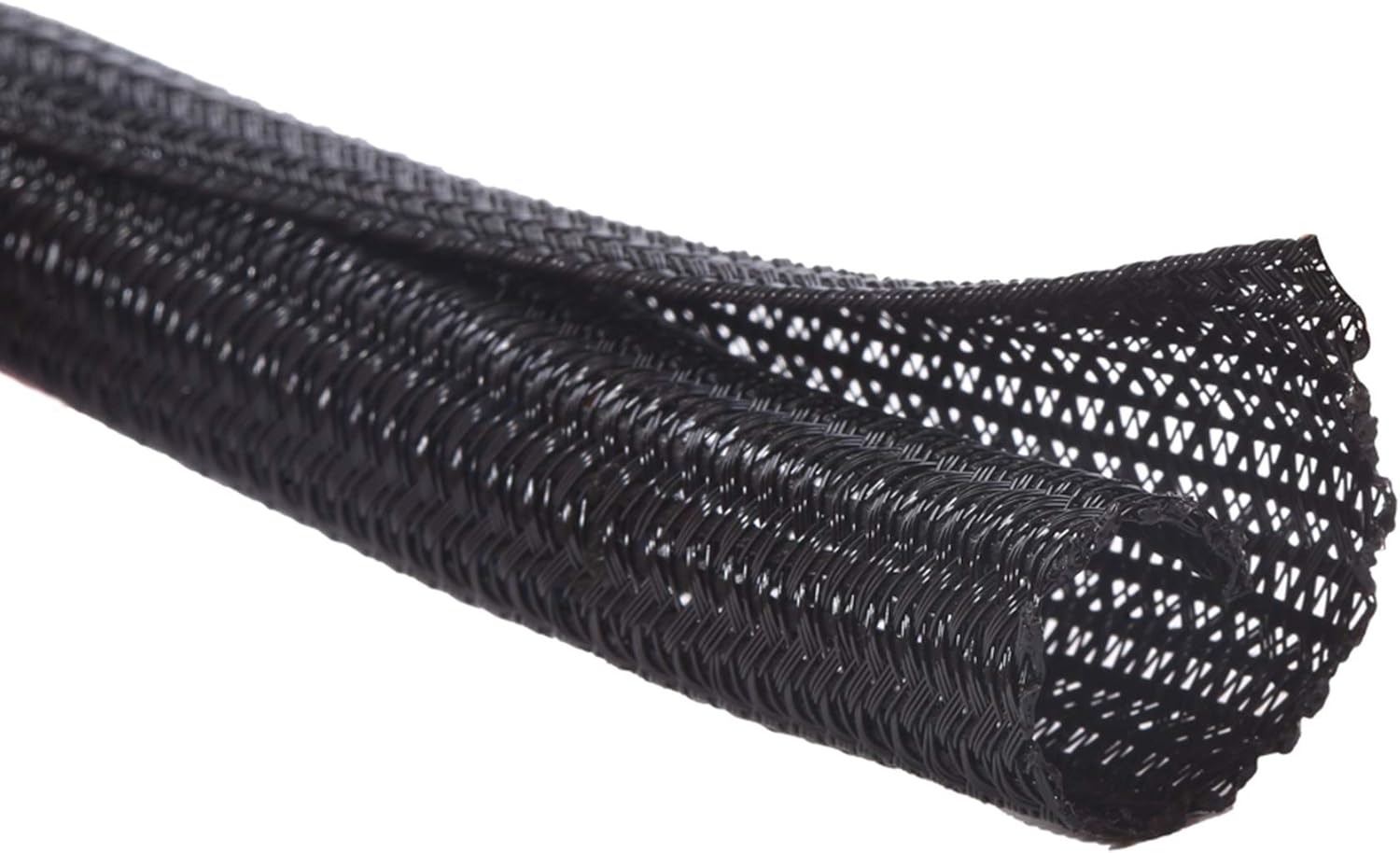
This 10-foot split cable sleeve has a 1/4-inch diameter for organizing loose cable runs. It can help keep a stationary cord path tidy where it does not cross doors, slides, or moving hardware. It is not a substitute for repairing a damaged appliance cord or for professional electrical work.
Check On AmazonIf you click this link and buy, we earn a commission at no additional cost to you.
Compare current lift options only after the storage route is chosen
Shopping for lift hardware too early reverses the decision. A mechanism can look impressive and still be unnecessary if the mixer is used often enough to stay on the counter, rarely enough to live comfortably in an existing cabinet, or better served by a simple pullout. First decide whether assisted vertical movement is the problem that actually needs solving. Only then compare current mechanisms by cabinet fit, documented load, platform size, movement, locking behavior and installation requirements.
This order also prevents one product from quietly dictating the kitchen layout. Current hardware lines can change, and exact cabinet requirements differ even when two mechanisms look similar in photos. The site’s current mixer lift comparison is the next step only after an assisted lift has already won the routing decision. If another route fits better, skip lift shopping and keep the simpler solution with fewer specialized parts and less cabinet commitment overall.

This spring-loaded cabinet appliance lift supports up to 60 pounds and measures 22.5 by 12 by 20.63 inches. The RAS-ML-HDCR is a standard heavy-duty lift mechanism, giving a distinct option to compare after the assisted-lift route has already been chosen. Verify cabinet opening, appliance weight, and installation requirements before selecting it.
Check On AmazonIf you click this link and buy, we earn a commission at no additional cost to you.
Final thoughts: choose the storage path that keeps the mixer easy enough to use
The strongest storage route is not the one that hides the mixer most completely. It is the one that matches use frequency, exact size and weight, available space, tolerated handling, aisle footprint and installation commitment. Count the full retrieval and return path, verify support ratings, and confirm enough room for operation and cleaning. If a counter, cabinet or cart solves the problem, specialized hardware is unnecessary.
More elaborate storage earns its space only when it removes a repeated burden the household genuinely notices. A garage can preserve counter-height access, a pull-out can solve depth, and an assisted lift can reduce manual raising, but each adds its own requirements. Keep performance decisions separate, keep electrical and structural work within the right professional boundary, and leave some replacement flexibility. Easy access matters more than perfect concealment.

This expandable appliance tray adjusts from 6 by 11 inches to 11 by 20 inches and uses 360-degree rollers with locking brakes. It lets a compatible countertop appliance move for access without committing to cabinet lift hardware. Check the mixer footprint and working clearance before using the tray as the final storage aid.
Check On AmazonIf you click this link and buy, we earn a commission at no additional cost to you.
Explore the next stand mixer storage decisions
Once the general route is clear, move to the article that owns the next narrower decision. A mixer lift, dedicated cabinet, appliance garage and freestanding support solve different access problems, so they should not be compared as interchangeable versions of the same idea. Use the table to continue only into the route that survived the frequency, handling, fit and aisle checks above. That keeps a narrower hardware or furniture decision from replacing the broader storage decision too early.
| Topic | What it helps you decide |
|---|---|
| Mixer lift planning | Whether assisted lift hardware fits the cabinet, appliance load and access path. |
| Stand mixer cabinet planning | How to plan dedicated cabinetry around access, storage volume and replacement flexibility. |
| Current mixer lift comparison | How current mechanisms compare after an assisted-lift route has already been chosen. |
| Appliance garage planning | How countertop-height concealment changes door, depth, operating and cleaning requirements. |
| Appliance stand and cart considerations | How to compare freestanding support when built-in cabinetry is not the preferred route. |
Choose the narrower article only after the storage route itself makes sense. If assisted vertical movement is the chosen route, continue into lift planning before comparing current mechanisms. If concealment at counter height or freestanding floor support won instead, follow the matching path without forcing a cabinet-lift solution into the kitchen. The same rule applies throughout: frequency, handling, the exact mixer and the deployed footprint decide the route before product-specific details decide the implementation.

This acacia wood slider mat is shaped for KitchenAid 4.5- to 5-quart tilt-head stand mixers. It lets a compatible mixer move forward and back on a countertop while keeping the storage route simple. It is a practical next-step accessory when countertop access wins the broader route decision and the exact mixer fit has been confirmed.
Check On AmazonIf you click this link and buy, we earn a commission at no additional cost to you.
FAQs
🏠 Is it better to keep a stand mixer on the counter or in a cabinet?
Counter storage gives the shortest access path, while cabinet storage frees work surface but adds handling. Choose from use frequency, space and tolerated retrieval effort.
⚖️ Can a stand mixer go in a pull-out drawer?
Yes, if the dimensions, drawer bottom, slides and cabinet are rated for the exact load. Verify the hardware documentation first.
📐 How much cabinet space does a mixer lift need?
There is no universal size because mechanisms have different opening and motion requirements. Use the exact lift manufacturer’s dimensions.
🧁 Can I use a stand mixer on a pull-out shelf?
Only if the shelf system is documented for that load and use condition. Storage approval alone does not prove operating use.
References and sources
- KitchenAid stand mixer storage guidance: Supports the main stand mixer storage routes.
- KitchenAid stand mixer use guidance: Supports the model-dependent weight and accessory-storage points.
- Knape & Vogt appliance lift specifications: Supports the documented 60-pound lift-capacity example.
- Blum pull-out shelf information: Supports the documented load-rated pull-out shelf distinction.